cedar sage Care (Salvia roemeriana)

cedar sage

About cedar sage

Cedar sage, Salvia roemeriana, is a compact perennial sage native to shaded canyons and rocky woodlands of Texas and northern Mexico. It is often grown as a short-lived perennial or annual in cooler regions.

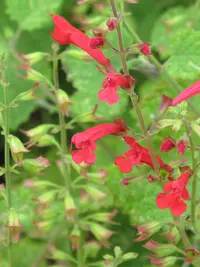
Plants form low clumps with soft, scalloped leaves and upright stems topped with bright red, tubular flowers that attract hummingbirds and pollinators. The overall look is informal and naturalistic.

This species adapts well to dry or partially shaded gardens, which makes it relatively simple to care for cedar sage in suitable climates. It prefers dappled light, well-drained, rocky or gravelly soil, and moderate moisture that does not stay wet for long periods.

Main Plant Requirements

Care Difficulty

Easy Care

Light Preference

Partial Shade

Water Requirements

Moderate Water

Temperature Preference

Warm Climate

Hardiness Zone

7–9

Soil Texture

Sandy, Loamy, Rocky

Soil pH

Acidic (5.5–6.5), Slightly acidic (6.5–7.0)

Soil Drainage

Well-drained

Fertilization

Minimal (feed rarely)

Get Personalized Care Plan

Scan your plant to receive care tips personalized for your specific plant

Available on iOS and Android

How to Care for the cedar sage

This shade-tolerant perennial prefers bright, soft light rather than harsh, all-day sun.

  • Provide 2–4 hours of morning sun with dappled or open shade the rest of the day; north or east exposures are ideal for cedar sage.
  • In hot climates, protect from strong afternoon sun, which can scorch leaves and shorten flowering; light filtered shade under trees works well.
  • In spring and fall, it can handle a bit more direct light, but in midsummer shift exposure toward deeper shade if foliage looks pale or crispy.

This species prefers evenly moist but never saturated soil and responds best to observation-based watering.

  • Outdoors in well-drained soil, water when the top 3–5 cm feels dry, then soak the root zone thoroughly and let excess drain away.
  • In spring and early summer, when Salvia roemeriana is actively growing, expect faster drying; in midsummer heat or partial dormancy, extend intervals between waterings.
  • Watch for yellowing, limp foliage as a sign of overwatering and crisp, drooping leaves plus very dry soil as a signal it needs water soon.

This species performs best in mild to warm conditions and dislikes hard freezes or extreme, prolonged heat.

  • Aim for 65–80°F (18–27°C) during active growth for strongest foliage and flowering in partial shade sites.
  • It tolerates brief dips to about 25°F (-4°C) with mulch protection, but repeated freezes below this can kill top growth or entire plants.
  • In hot regions, periods above 95°F (35°C) may cause stress; provide extra shade and soil moisture, and expect slower growth in peak summer.

This species is naturally drought adapted and performs well in dry to moderately humid air.

  • Aim for 30–50% humidity, which matches typical indoor and outdoor conditions in much of its native range.
  • Cedar sage tolerates very dry air; humidity stress rarely occurs unless combined with prolonged underwatering and high heat.
  • If leaves crisp at the edges during extreme heat, increase local humidity slightly with a nearby water tray rather than misting foliage.

Salvia roemeriana prefers mineral, sharply drained soil that mimics rocky woodland or limestone slopes.

  • Use a gritty mix such as 40% commercial potting soil, 40% coarse sand, and 20% fine gravel or perlite to prevent waterlogging.
  • Aim for slightly alkaline to neutral pH around 7.0–7.8, which supports this limestone-associated species.
  • Improve aeration by avoiding dense peat-based mixes and by incorporating mineral aggregates that keep pore spaces open.
  • Avoid heavy clay, compacted sites, or low spots that stay wet, as roots are sensitive to chronic saturation and rot.

This sage can be grown successfully in containers when drainage and root space are managed carefully.

  • Choose a squat, wide container rather than a deep one to accommodate its shallow, spreading root system and reduce tipping in wind.
  • Select unglazed clay if extra evaporation is needed, as it dries faster than plastic and helps keep the crown from staying wet.
  • Elevate the pot on feet or bricks so drainage holes remain clear, allowing rapid runoff after heavy rain or deep watering.

This hill-country native needs only light feeding to maintain healthy growth and flowering.

  • Use a balanced, slow-release fertilizer (around 10-10-10) or a thin layer of compost in spring as new growth starts.
  • Apply fertilizer once at the start of the growing season; in poor soils a second light application in midsummer can help blooms.
  • Dilute liquid feeds to 1/2 strength to avoid burning the roots of cedar sage in containers.
  • Stop feeding in late summer and do not fertilize during winter dormancy to prevent weak, cold-tender growth.

Pruning supports compact growth and repeated flowering in Salvia roemeriana.

  • Use clean, sharp hand pruners or scissors to remove dead, damaged, or diseased stems whenever noticed.
  • Shear or pinch back spent flower spikes in late spring and summer to encourage new buds and a bushier habit.
  • Thin out crowded interior stems in early spring to improve air flow and reduce fungal issues.
  • Cut back leggy or winter-damaged growth to healthy green tissue as new shoots emerge in spring.

This species is more often transplanted in beds than kept long term in containers.

  • Transplant garden plants in early spring or early fall, when temperatures are mild and soil is workable.
  • Shift container plants only when roots circle the pot, drainage slows, or growth and flowering decline.
  • Move into a container just 1–2 in wider, using a gritty, fast-draining mix to limit root rot risk.
  • Water thoroughly after transplanting, then keep soil lightly moist for 1–2 weeks to reduce transplant shock.

Salvia roemeriana is commonly propagated from seed and short stem cuttings.

  • Sow ripe seeds in late summer or fall on the soil surface, barely covering, in a gritty, well-drained mix.
  • Provide bright light and moderate moisture; seeds germinate best in cool to mild conditions around 60–70°F.
  • Take 7–10 cm softwood cuttings in late spring, remove lower leaves, and insert into moist, sterile medium.
  • Maintain high humidity and gentle bottom warmth if possible, and pot on once roots are well established.

This perennial is moderately cold hardy but benefits from simple winter care in cooler climates.

  • In USDA zones near its hardiness limit, add a 5–7 cm layer of mulch around the crown after the first hard frost.
  • Allow top growth to die back naturally, then trim away soggy or collapsed stems to reduce rot.
  • For container plants, move pots to a sheltered, frost-free but cool spot and water sparingly through winter.

Care Tips

Shade-tolerant placement

Use this plant to underplant open-canopy trees or north-facing walls where many sun-loving salvias fail, as its natural preference for bright shade helps stabilize challenging, dry sites.

Mulch for cool roots

Apply a thin 2–3 cm layer of fine gravel or shredded bark around the crown to keep roots cool, suppress weeds, and reduce splash that can spread soil-borne diseases to the foliage.

Self-seeding management

If you want it to naturalize, leave some spent flower stalks until seed pods dry and shatter, but if you prefer tight clumps, shear off flower stems as they fade to limit self-sowing.

Container renewal cycle

In pots, plan to replant from fresh nursery stock or new self-sown seedlings every 2–3 years, since older plants often decline and perform better when periodically restarted.

Summer dormancy support

In hot regions allow plants to enter light summer dormancy by keeping soil on the dry side and marking planting spots with labels so you do not accidentally disturb crowns when they are not visible, which is key when caring for cedar sage in mixed beds.

Common Pests and Diseases

Whiteflies

These insects feed on leaf undersides, causing stippling, leaf yellowing, and reduced vigor, and may leave a sticky honeydew that attracts sooty mold.

Solution

Use a strong stream of water to dislodge adults from the foliage, then apply insecticidal soap or a neem oil spray to the undersides of leaves every 5–7 days until activity drops; reduce nearby weeds and overcrowded growth to limit reinfestation when growing cedar sage in shady borders or containers.

Aphids

These insects cluster on young stems and flower spikes, sucking sap and causing distorted new growth and sticky honeydew deposits on leaves.

Solution

Pinch or rinse off heavily infested tips, then treat remaining colonies with insecticidal soap, repeating at 5–7 day intervals; encourage lady beetles and lacewings by avoiding broad-spectrum insecticides and by maintaining diverse flowering plants nearby.

Spider mites

This pest thrives in hot, dry conditions, leading to fine webbing, stippled leaves, and a dusty, dull appearance on the foliage.

Solution

Increase humidity around plants, hose down foliage thoroughly to knock mites off, and follow with neem oil or horticultural oil on both upper and lower leaf surfaces, reapplying as needed while monitoring for renewed webbing.

Powdery mildew

This disease produces white, powdery patches on leaves, especially in shaded, humid sites, which can lead to leaf yellowing and premature drop.

Solution

Improve air circulation by thinning nearby vegetation, water at soil level rather than overhead, remove heavily infected leaves, and apply a sulfur or potassium bicarbonate fungicide labeled for ornamental salvias at the first sign of symptoms.

Botrytis blight

This disease causes soft, water-soaked spots on leaves and flowers that develop into gray, fuzzy mold, especially in cool, damp, and shaded conditions where Salvia roemeriana is often planted.

Solution

Promptly remove and discard affected flowers and foliage, avoid overhead watering, space plants to dry quickly after rain, and if needed use a labeled fungicide for gray mold, rotating products to reduce resistance risk.

Interesting Facts

Cedar brake specialist

This species is naturally restricted to shaded limestone ledges and canyons in the Edwards Plateau and nearby regions of Texas, where it often grows among Ashe juniper and live oak rather than in typical open prairie habitats common to many other salvias.

Winter rosette strategy

It forms a low, compact rosette of rounded, lobed leaves in the cooler months, then sends up short flowering stems in spring, an adaptation that allows it to use stored energy and favorable moisture conditions early in the growing season.

Bee and hummingbird favorite

The deep red, tubular flowers are shaped for pollination by small bees and hummingbirds, which can easily access the nectar while transferring pollen between plants, supporting local pollinator communities in its limited native range.

Botan icon

Did you know?

This species is considered one of the few shade-tolerant salvias native to the southern US, making it unusual within a genus that is dominated by sun-loving plants and giving it a niche in dim, juniper-dominated woodlands where many other sages cannot compete.

FAQs about cedar sage

Lack of blooms often comes from too much shade, excess nitrogen fertilizer, or overcrowding. Ensure at least bright dappled light, avoid high‑nitrogen feed, and deadhead spent spikes so energy goes into new flower production.

Grow Healthy Plants with Botan Care

Keep your plants happy and healthy with plant identification, disease detection, and easy care guidance.

Botan plant care app — identify plants on mobile

Explore More Plants