Cool-site selection
Choose a planting site with consistently cool conditions, such as north-facing slopes or near late-melting snow patches, to extend flowering and reduce stress during warm spells.

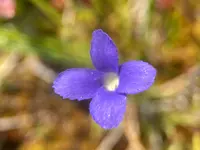
Oneflower fringed gentian (Gentianopsis simplex) is a small, delicate wildflower in the gentian family, known for its striking, fringed blue to violet petals. It is typically an annual or short-lived perennial, growing upright with slender stems and a single showy flower per stem.
This species occurs in cool, open habitats such as moist meadows, stream banks, and high-elevation clearings in parts of North America. It can be challenging to cultivate because it prefers undisturbed, consistently moist but well-drained soils and cool conditions. Gardeners who want to learn how to care for oneflower fringed gentian need to focus on mimicking its natural habitat as closely as possible.

Care Difficulty
Hard Care

Light Preference
Full Sun

Water Requirements
Keep Soil Moist

Temperature Preference
Cold Hardy

Hardiness Zone
3–7

Soil Texture
Loamy, Silty, Organic-rich

Soil pH
Acidic (5.5–6.5), Slightly acidic (6.5–7.0)

Soil Drainage
Moist but well-drained

Fertilization
Minimal (feed rarely)
Scan your plant to receive care tips personalized for your specific plant
Available on iOS and Android
This alpine annual prefers cool, bright conditions with moderate direct sun exposure.
This species needs consistently moist but not stagnant soil, especially during active growth and flowering.
This cool-climate native performs best in mild summers and cold, stable winters.
Humidity plays a minor role for oneflower fringed gentian, which is adapted to open, often breezy habitats.
Gentianopsis simplex prefers cool, moist, sharply draining soil that never stays stagnant or compacted.
This species can be grown in containers for short-term display if moisture and drainage are controlled carefully.
This native wildflower is adapted to low-nutrient soils, so oneflower fringed gentian needs only light, careful feeding in cultivation.
Gentianopsis simplex needs only minimal pruning, mainly to tidy plants and support flowering performance.
This species is usually grown in the ground, so focus on careful outdoor transplanting rather than frequent repotting.
Propagation of Gentianopsis simplex is typically done from seed and requires attention to timing and moisture.
This cold-hardy native usually needs little winter care when grown in suitable climates.

Plant Health Check
Not sure what's wrong with your plant? Check your plant's health inside the app.
Unlike many related gentians that produce clusters of flowers, this species typically carries just one fringed, tubular flower per stem, which is the basis for its common name oneflower fringed gentian.
This annual often flowers late in the growing season, taking advantage of cooler temperatures and reduced competition for pollinators compared with earlier-blooming alpine and montane herbs.
In its native range of western North America, it is usually found in moist montane meadows, stream margins, and seeps, where consistent soil moisture and open light conditions support its short annual life cycle.
This species behaves mainly as an annual or short-lived biennial. It usually germinates, grows, flowers, sets seed, and then dies within 1–2 seasons, relying on reseeding rather than long-lived roots or crowns.
Keep your plants happy and healthy with plant identification, disease detection, and easy care guidance.