Mimic moss mats
Establish a shallow, well-drained mossy or liverwort layer over the substrate to help retain surface moisture and provide a microhabitat similar to natural turf where fruiting bodies are more likely to appear.

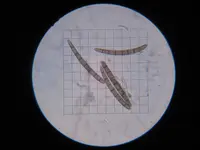
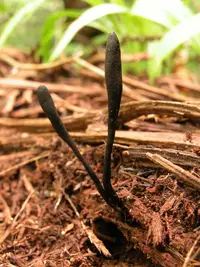
Plain earthtongue, Geoglossum umbratile, is a small, club-shaped fungus rather than a leafy plant. It produces dark, tongue-like fruiting bodies that emerge from the soil surface. Clusters often appear in mossy grassland, woodland edges, and damp, undisturbed turf in temperate regions.
This species is considered uncommon and can be sensitive to soil disturbance and changes in moisture. It favors stable, humid conditions, low competition, and nutrient-poor, well-aerated soils, which makes it challenging to cultivate. Gardeners who wish to learn how to care for plain earthtongue should understand that it is best appreciated as a specialist fungus in semi-natural habitats rather than as a typical garden or indoor specimen.

Care Difficulty
Hard Care

Light Preference
Partial Shade

Water Requirements
Keep Soil Moist

Temperature Preference
Cool Climate

Hardiness Zone
Unknown

Soil Texture
Loamy, Peaty, Organic-rich

Soil pH
Strongly acidic (4.5–5.5), Acidic (5.5–6.5)

Soil Drainage
Moist but well-drained

Fertilization
Minimal (feed rarely)
Scan your plant to receive care tips personalized for your specific plant
Available on iOS and Android
This fungus thrives in low, woodland light rather than direct, open sun.
Moist, cool, well-drained soil supports healthy development of Geoglossum umbratile fruiting bodies.
This species prefers cool to mild conditions typical of shaded forest floors.
This fungus prefers consistently moist, cool air and substrate rather than specific room humidity management.
Geoglossum umbratile grows best in cool, consistently moist, organic-rich soil with soft structure.
This species is generally unsuitable for long-term container growing because it depends on complex soil and root community interactions.
Geoglossum umbratile is a small, soil-dwelling fungus that usually needs no fertilization in naturalistic plantings or woodland-style beds.
Geoglossum umbratile does not require active pruning because the fruiting bodies are short-lived and the underground mycelium persists independently.
This fungus is rarely grown in containers, so management focuses on transplanting or establishing it in suitable outdoor soil rather than classic repotting.
Propagation of Geoglossum umbratile is specialized and not usually attempted by home growers, since it depends on complex soil and microbial relationships rather than simple cuttings or division.
In regions with cold winters, plain earthtongue is naturally hardy in the ground and generally requires no special winter care beyond maintaining a stable habitat.

Plant Health Check
Not sure what's wrong with your plant? Check your plant's health inside the app.
This fungus is typically found fruiting on bare, compact, often disturbed soil in grasslands and path edges, rather than in deep leaf litter or moss where many other earthtongues grow.
Its spores are unusually dark and thick-walled for a grassland earthtongue, a feature that helps mycologists separate it from closely related, paler-spored Geoglossum species under the microscope.
In much of its range it fruits in late summer to autumn, with the simple, club-shaped heads often appearing after many other grassland fungi have already declined for the season.
This fungus is best grown outdoors, mimicking its natural woodland or grassland setting with cool, moist, undisturbed soil. Indoors it is very difficult to maintain stable conditions, so plain earthtongue indoor care is rarely successful long term.
Keep your plants happy and healthy with plant identification, disease detection, and easy care guidance.