dusky crane's-bill Care (Geranium phaeum)

Also known as: mourning widow, black widow
dusky crane's-bill

About dusky crane's-bill

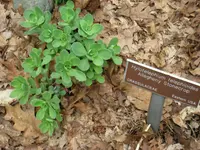
Dusky crane's-bill, Geranium phaeum, is a hardy perennial from woodland and meadow edges in central and southern Europe. It forms clumps of divided, soft green leaves.

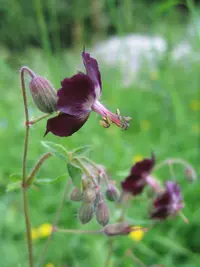
In late spring to early summer it carries slender stems with nodding, dusky purple or maroon flowers, giving a naturalistic, slightly wild look. Plants often self-seed lightly, helping a patch fill in over time.

This species tolerates partial shade, cool summers, and a range of garden soils, so it suits low-maintenance borders and informal plantings. It is generally straightforward to grow if the soil does not dry out completely.

Gardeners who learn how to care for dusky crane's-bill usually find it a reliable plant for shaded or mixed beds.

Main Plant Requirements

Care Difficulty

Easy Care

Light Preference

Partial Shade

Water Requirements

Moderate Water

Temperature Preference

Cold Hardy

Hardiness Zone

4–8

Soil Texture

Loamy, Silty, Organic-rich

Soil pH

Acidic (5.5–6.5), Slightly acidic (6.5–7.0)

Soil Drainage

Moist but well-drained

Fertilization

Minimal (feed rarely)

Get Personalized Care Plan

Scan your plant to receive care tips personalized for your specific plant

Available on iOS and Android

How to Care for the dusky crane's-bill

Geranium phaeum performs best in cool, dappled light rather than intense sun.

  • Provide 3–5 hours of morning sun with light or partial shade in the afternoon, especially in warmer regions, to prevent leaf scorch.
  • Plant in sites with high, open shade or under deciduous trees; dusky crane's-bill tolerates quite deep shade but may flower less with under 2–3 hours of direct light.
  • In hot summers, avoid strong afternoon sun; use mulch to protect roots and reduce stress from reflective heat.

This species prefers evenly moist but not saturated soil, especially during its main growing season.

  • Water when the top 3–5 cm of soil feels dry, soaking the root zone thoroughly, then allow excess to drain away.
  • In spring and early summer, monitor closely during dry spells; in cool, rainy periods, reduce or skip watering to avoid soggy conditions and root rot.
  • Signs of underwatering include limp, folding leaves and dry soil; overwatering shows as yellowing foliage, blackened stems, or persistent surface wetness around Geranium phaeum clumps.

This hardy perennial is adapted to cool to mild climates and tolerates significant cold once established.

  • Active growth is strongest at 55–70°F (13–21°C); foliage may slow or scorch above 80°F (27°C), especially in full sun or dry soil.
  • Mature plants usually survive down to about 0°F (−18°C) in the ground with mulch; crowns benefit from 5–8 cm of winter mulch in colder regions.
  • In hot summers, provide shade and consistent soil moisture to reduce heat stress; temporary light frosts in spring or fall rarely cause lasting damage.

Geranium phaeum grows well in typical outdoor humidity and rarely needs special humidity management.

Geranium phaeum prefers cool, moisture-retentive but free-draining soil to support steady growth and flowering.

  • Use a loamy, organic-rich soil with a crumbly structure that holds moisture yet does not stay waterlogged.
  • Aim for slightly acidic to neutral pH, around 6.0–7.0, which suits most garden loam-based mixes.
  • Blend garden loam with compost and leaf mold, adding coarse sand or fine grit to sharpen drainage on heavier sites.
  • Avoid compacted clay, standing water, or very sandy soil that dries out quickly and stresses roots.

This species is suitable for container growing outdoors in cool to mild climates.

  • Choose a wide, medium-deep pot that allows space for its clump-forming root system to expand without crowding.
  • Use a heavier material such as ceramic or clay to keep taller, leafy growth stable in wind and rain.
  • Elevate the pot slightly on feet or bricks so drainage holes stay clear and excess water escapes quickly.

Geranium phaeum is a modest feeder but responds well to light nutrition in poor soils during the active growing season.

  • Apply a balanced, water-soluble fertilizer (around 10-10-10) diluted to 1/2 strength every 4–6 weeks from spring to mid-summer.
  • Alternatively, top-dress with a thin layer of garden compost in early spring for slow, steady nutrients.
  • Avoid fertilizing in fall and winter, when growth slows and roots are less active.
  • In rich garden soil, caring for dusky crane's-bill may require no additional fertilizer beyond organic mulch.

Geranium phaeum benefits from light, well-timed pruning to maintain a compact clump and encourage fresh foliage.

  • Cut back spent flowering stems in late spring or early summer to tidy plants and sometimes encourage a light rebloom.
  • Remove dead, damaged, or diseased leaves whenever noticed, using clean, sharp hand pruners or scissors.
  • Shear back tired foliage by about 1/3 after flowering to promote dense new growth from the crown.
  • Thin congested stems at the base to improve air movement and reduce foliar disease risk.

This species is most often grown in the ground, so focus on occasional lifting and transplanting rather than frequent repotting.

  • Transplant clumps in early spring or early fall, when temperatures are mild and soil moisture is steady.
  • Lift and divide every 3–5 years if flowering declines, growth becomes crowded, or the center of the clump dies out.
  • For container-grown plants, move to a slightly larger pot only when roots circle the container or water runs straight through.
  • Reduce root stress by watering well before and after moving, handling roots gently, and shading plants for a few days if weather is bright.

Geranium phaeum is commonly propagated by division, with seed and cuttings used when more plants are needed.

  • Divide established clumps in early spring or early fall, replanting vigorous sections with healthy buds and roots.
  • Sow fresh seed in pots or trays in fall, leaving them outside for natural winter chilling to break dormancy.
  • For cuttings, take non-flowering shoots in late spring, use a free-draining mix, and maintain even moisture and high humidity.
  • Space new plants 30–45 cm apart so each clump can establish without competition.

This hardy perennial tolerates typical temperate winters well and usually needs only minimal attention outdoors.

  • Foliage often dies back after hard frosts; leave it in place until late winter, then clear to reduce disease carryover.
  • Apply a 3–5 cm mulch of compost or leaf mold around the crown in late fall, keeping material off the stems.
  • Container-grown plants benefit from moving against a sheltered wall or into an unheated garage in very cold regions.

Care Tips

Self-seeding control

Deadhead spent flower stems as soon as petals drop if you want to limit self-seeding, but leave some seed heads on less visible plants if you want a naturalized colony over several years.

Strategic clump division

Divide crowded clumps every 3–4 years in early spring or early fall, replanting outer vigorous sections at the same depth to maintain flowering quality and prevent bare, woody centers.

Shade-edge positioning

Plant at the bright edge of partial shade, such as the front of a shrub border, so foliage stays dense while taller neighbors provide protection from intense afternoon sun.

Slug and snail management

Protect young spring growth from slugs and snails by using physical barriers like copper tape around containers or sharp grit around crowns, checking and removing pests on damp evenings.

Underplanting companion use

Use it as an underplanting beneath deciduous shrubs or open-canopy trees so emerging foliage hides bare stems of taller plants in spring, an approach that simplifies caring for dusky crane's-bill in mixed borders.

Common Pests and Diseases

Geranium sawfly

This pest chews ragged holes along leaf edges and can quickly skeletonize foliage in late spring and early summer.

Solution

Hand-pick and destroy larvae from leaf undersides, then remove heavily damaged leaves to reduce populations; if defoliation continues, apply a targeted insecticide containing spinosad or a contact soap spray in the evening, making sure to cover both leaf surfaces.

Geranium rust

This disease causes orange-brown pustules on the undersides of leaves and yellow spotting on the upper surfaces, often leading to premature leaf drop.

Solution

Promptly remove and discard infected leaves, avoid overhead watering, and improve spacing and airflow; in persistent cases, rotate a suitable ornamental fungicide according to label directions to protect new growth.

Botrytis blight

This disease produces soft, water-soaked spots on leaves and flowers that turn brown and may develop a fuzzy gray mold, especially in cool, damp weather.

Solution

Cut off and discard all affected plant parts, thin crowded stems to improve air circulation, and water at soil level in the morning; in severe or recurring outbreaks, use a labeled fungicide for ornamental perennials during prolonged wet periods.

Aphids

These insects cluster on young shoots and flower stems, sucking sap and causing distorted growth while excreting sticky honeydew that can attract sooty mold.

Solution

Spray plants with a firm stream of water to dislodge colonies, then treat lingering populations with insecticidal soap or neem oil, repeating every 5–7 days until new growth appears clean and vigorous.

Powdery mildew

This disease appears as a white, powdery coating on leaves and stems, which can cause yellowing and reduced vigor in shaded or crowded plantings.

Solution

Remove the worst-affected leaves, increase light and air circulation, and avoid late-evening overhead watering; where conditions favor ongoing infection, apply a preventative fungicide labeled for powdery mildew on ornamentals and monitor new foliage closely as part of general Geranium phaeum care.

Interesting Facts

Native woodland specialist

This species is native to central and eastern Europe, where it grows naturally in light shade at woodland edges and in mountain forests, which explains its good tolerance of cool, low-light garden conditions compared with many other hardy geraniums.

Distinctive dark nectar guides

The petals often show a darker central blotch that acts as a nectar guide for pollinating insects, helping them locate the flower’s reproductive structures more efficiently.

Long-tongued pollinator partner

Its narrow, backward-pointing floral spurs hold nectar that is most easily reached by long-tongued insects such as certain bumblebees, so the species plays a particular role in supporting these pollinators in late spring to early summer.

Botan icon

Did you know?

The species name phaeum comes from the Greek word phaios, meaning dusky or dark, a reference to the characteristically somber purple-brown flower color that distinguishes this crane's-bill from many of its brighter-flowered relatives.

FAQs about dusky crane's-bill

This species spreads moderately by self-seeding and short rhizomes, forming loose clumps rather than invasive mats. Deadhead spent flowers before seed forms and divide clumps every few years if space is limited or plants become crowded.

Grow Healthy Plants with Botan Care

Keep your plants happy and healthy with plant identification, disease detection, and easy care guidance.

Botan plant care app — identify plants on mobile

Explore More Plants