Support Tall Stems
In windy or exposed sites, place short twiggy branches or low wire hoops around young plants so the stems can lean on them as they elongate, reducing lodging and broken flower stalks later in the season.

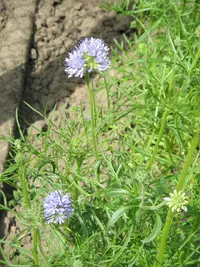
Bluehead gilia, Gilia capitata, is a small annual wildflower native to western North America, often seen in meadows, open slopes, and coastal bluffs. It forms upright, slender stems topped with rounded clusters of tiny blue to violet flowers.
The plant has fine, dissected leaves and a delicate, airy look that fits well in naturalistic beds and wildflower mixes. It attracts bees, butterflies, and other pollinators, which makes it useful in habitat and restoration plantings.
Gilia capitata is generally easy to grow where conditions match its origins, favoring full sun, well-drained soil, and relatively low to moderate moisture. Gardeners who understand these preferences will find it straightforward to care for bluehead gilia.

Care Difficulty
Easy Care

Light Preference
Full Sun

Water Requirements
Low Water

Temperature Preference
Cool Climate

Hardiness Zone
3–10

Soil Texture
Sandy, Loamy, Rocky

Soil pH
Slightly acidic (6.5–7.0), Neutral (7.0)

Soil Drainage
Well-drained

Fertilization
Minimal (feed rarely)
Scan your plant to receive care tips personalized for your specific plant
Available on iOS and Android
This sun-loving annual thrives in open, bright locations for best flowering.
This species prefers dry to moderately dry conditions and is sensitive to excess moisture.
This cool-season annual performs best in mild temperatures with low humidity.
Humidity is not a critical factor for Gilia capitata, which thrives in dry air.
Gilia capitata prefers lean, well-drained, sandy soil that mimics dry meadow or roadside conditions.
This species can be grown in containers if the pot is set up to drain quickly and stay relatively lean.
Gilia capitata evolved in lean soils and usually needs little to no fertilizer in garden beds.
Pruning needs for Gilia capitata are minimal and focus on maintaining bloom and tidiness.
This species is most often grown as a direct-sown annual, so transplanting Gilia capitata requires gentle handling of its sensitive roots.
Propagation of Gilia capitata is almost always done from seed rather than by cuttings or division.
In most climates Gilia capitata behaves as a cool-season annual and needs little dedicated winter care.

Plant Health Check
Not sure what's wrong with your plant? Check your plant's health inside the app.
This species is an important nectar and pollen source for a wide range of native bees and small wasps in its western North American range, especially in dry, open habitats where floral resources are limited later in spring.
In the wild, it often grows on gravelly, sandy, or otherwise low-fertility soils, showing a strong adaptation to nutrient-poor and disturbed sites where many other annuals struggle to establish.
The apparent single flower head is actually a tight spherical cluster of many small, tubular flowers, each contributing to the overall blue globe shape that gives the plant its common name, bluehead gilia.

Historical seed collections and herbarium records show that Gilia capitata was among the native wildflowers early botanists used to document the botanical diversity of the Pacific coast, so it appears in many classic floras that shaped understanding of western North American plant communities.
Lack of flowers usually comes from too much shade, excess fertilizer, or soil that stays wet. This species needs full sun, lean, well-drained soil, and no heavy feeding to form strong buds and good bloom displays.
Keep your plants happy and healthy with plant identification, disease detection, and easy care guidance.