Staggered Succession Planting
Plant corms in small batches every 10–14 days in late spring so flowering is spread over several weeks instead of all at once.

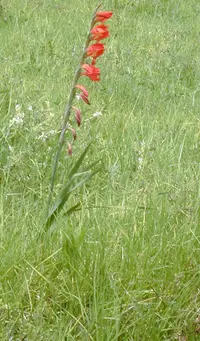
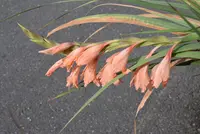
Dragon's-head lily (Gladiolus dalenii) is a clump-forming, corm-grown flowering plant in the iris family. It produces tall, upright spikes lined with funnel-shaped blooms in warm shades of yellow, orange, or red. Leaves are narrow, sword-like, and grow in fans from the base. This gives the plant a vertical, architectural look in borders or mixed plantings.
In nature, G. dalenii occurs across parts of Africa, often in grasslands and open, sunny slopes. It is considered moderately easy to grow where winters are mild or corms can be lifted and stored. Gardeners who learn how to care for Dragon's-head Lily find it rewards them with showy, seasonal color. It generally prefers bright light, free-draining soil, and steady but not excessive moisture during active growth.

Care Difficulty
Moderate Care

Light Preference
Full Sun

Water Requirements
Moderate Water

Temperature Preference
Tropical / Frost Sensitive

Hardiness Zone
8–11

Soil Texture
Sandy, Loamy, Organic-rich

Soil pH
Acidic (5.5–6.5), Slightly acidic (6.5–7.0)

Soil Drainage
Well-drained

Fertilization
Light (every 4–6 weeks)
Scan your plant to receive care tips personalized for your specific plant
Available on iOS and Android
This sun-loving species flowers best with strong, direct light in the growing season.
This bulb prefers steadily moist but not waterlogged soil during active growth.
This species grows best in warm conditions with frost protection for the corms.
Humidity has little impact on healthy Gladiolus dalenii growth in most home and garden conditions.
Gladiolus dalenii performs best in loose, well-aerated, sharply drained soil that does not stay wet after watering or rain.
This species is well suited to container growing when the pot provides depth, fast drainage, and stability for tall flowering spikes.
Gladiolus dalenii responds well to moderate feeding during its active growing season for strong stems and sustained flowering.
Pruning needs for Gladiolus dalenii are simple and focus on cleaning and directing energy to the corms.
Transplanting Gladiolus dalenii mainly involves lifting and replanting corms rather than frequent container repotting.
Multiplying Gladiolus dalenii is commonly done by corm division and planting small offset cormels.
Cold protection needs for Gladiolus dalenii vary by climate and planting depth.

Plant Health Check
Not sure what's wrong with your plant? Check your plant's health inside the app.
This species is one of the main wild ancestors used in breeding modern large-flowered garden gladiolus hybrids, contributing both its striking bicolor patterns and its tolerance of warm summer climates.
In parts of its native range in eastern and southern Africa, this geophyte often flowers more profusely after grassland fires, taking advantage of the open, ash-enriched conditions to produce tall, showy spikes.
The tubular, often bright orange to red flowers with yellow markings are adapted for bird pollination, particularly by African sunbirds that can easily access the nectar with their curved beaks while transferring pollen.

Historical herbarium and field records show that this species, once described under several different names from scattered African localities, helped botanists understand the diversity and biogeography of wild gladiolus, clarifying how modern ornamental cultivars originated from multiple African lineages.
Lack of flowers often comes from insufficient sun, crowded or undivided corms, or nutrient imbalance. Ensure plenty of light, avoid heavy nitrogen fertilizer, and lift and divide crowded clumps every few years to restore flowering.
Keep your plants happy and healthy with plant identification, disease detection, and easy care guidance.