Rhizome Sprawl Control
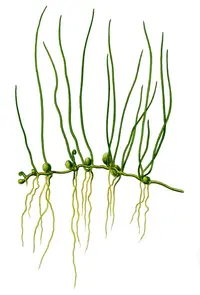
Plant in a wide, shallow container or bed and periodically trim or redirect creeping rhizomes so the fern forms a controlled colony instead of overrunning neighboring plants.

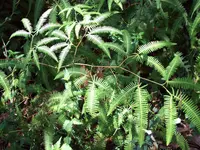
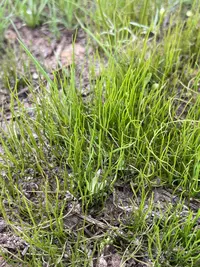
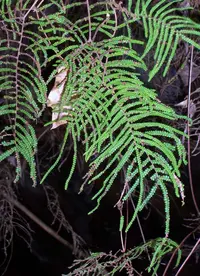
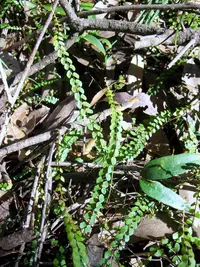
Comb forkedfern (Gleichenella pectinata) is a terrestrial fern with finely divided, comb-like fronds that create a soft, airy texture. It often forms loose clumps or colonies over time rather than a single dense rosette.
In nature it occurs in warm, humid regions of the Americas, typically in open woodland, forest margins, or moist slopes with good drainage. Its thin fronds and shallow roots mean it can be sensitive to drying out and low humidity, which makes it less forgiving than many common houseplants.
Those who care for comb forkedfern should provide stable moisture, free-draining, organic-rich soil, and gentle, filtered light to mimic its natural understory conditions.

Care Difficulty
Moderate Care

Light Preference
Partial Shade

Water Requirements
Keep Soil Moist

Temperature Preference
Tropical / Frost Sensitive

Hardiness Zone
10–12

Soil Texture
Loamy, Silty, Organic-rich

Soil pH
Acidic (5.5–6.5)

Soil Drainage
Moist but well-drained

Fertilization
Minimal (feed rarely)
Scan your plant to receive care tips personalized for your specific plant
Available on iOS and Android
This fern prefers bright, indirect light that mimics dappled forest shade.
This species needs consistently moist but not waterlogged soil around its fibrous roots.
This fern thrives in warm, frost-free conditions typical of subtropical and tropical climates.
This fern prefers moderately humid air and reacts if conditions are too dry.
This species performs best in loose, moisture-retentive but well-drained soil that mimics a forest floor.
This fern adapts well to container growing when pot and moisture are managed carefully.
This fern grows naturally in low-nutrient habitats, so Gleichenella pectinata care requires only light, infrequent feeding in containers or depleted soils.
Pruning Gleichenella pectinata is minimal and mainly focused on hygiene and maintaining a neat clump.
Transplanting or repotting this fern is only needed occasionally, mainly when roots outgrow the space or soil quality declines.
Propagation is possible but slow, as this fern naturally spreads through spores and creeping rhizomes.
In mild to warm climates, this fern is largely evergreen and needs little structured winter care outdoors.

Plant Health Check
Not sure what's wrong with your plant? Check your plant's health inside the app.
This species often grows as a scrambling or climbing fern, with long, wiry fronds that can weave through shrubs and small trees in moist tropical forests.
Its fronds are divided into many narrow, evenly spaced segments that create a comb‑like outline, which is a key visual feature used by botanists to distinguish it from related ferns.
In parts of its range, this fern frequently colonizes edges of trails, clearings, and other disturbed, humid areas, showing an ability to take advantage of increased light and open soil.
This species spreads by creeping rhizomes and spores, forming loose colonies over time. In suitable humid, frost-free climates it can slowly expand, but it is generally not considered aggressively spreading or difficult to manage with light edging.
Keep your plants happy and healthy with plant identification, disease detection, and easy care guidance.