Layered basket culture
Grow this fern in a wide, shallow, slatted basket or mesh pot lined with long-fiber sphagnum to let the creeping rhizomes wander and root naturally, which keeps the plant dense and reduces dieback in the center.

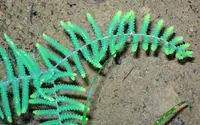
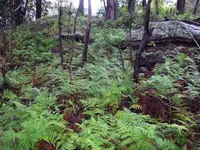
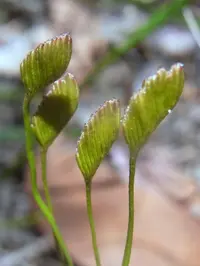
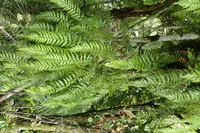
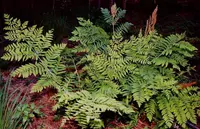
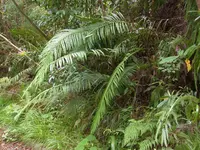
Scrambling coral-fern (Gleichenia microphylla) is a wiry, evergreen fern with repeatedly forked fronds that form open, tangled layers. It has small, bead-like leaf segments along thin, arching stems.
This species naturally occurs in Australia, New Zealand, and some Pacific islands, often in moist heath, peat bogs, and open forest edges. It typically prefers cool to mild conditions with consistent moisture and good air movement.
The plant can be challenging in cultivation because it dislikes root disturbance, drying out, or poor drainage. It suits more experienced growers, though patient beginners can learn how to care for scrambling coral-fern with careful attention to moisture, light, and substrate.
In general, it favors bright, filtered light, evenly moist but not waterlogged soil, and an acidic, low-nutrient growing mix.

Care Difficulty
Hard Care

Light Preference
Partial Shade

Water Requirements
Keep Soil Moist

Temperature Preference
Warm Climate

Hardiness Zone
9–11

Soil Texture
Sandy, Loamy, Organic-rich

Soil pH
Strongly acidic (4.5–5.5), Acidic (5.5–6.5)

Soil Drainage
Moist but well-drained

Fertilization
Minimal (feed rarely)
Scan your plant to receive care tips personalized for your specific plant
Available on iOS and Android
Gleichenia microphylla grows best in bright, indirect light that mimics dappled woodland conditions.
This fern prefers evenly moist, never waterlogged soil that does not fully dry out.
This species prefers mild, frost-free conditions with stable temperatures.
This fern needs consistently moist air and suffers in dry indoor conditions.
This species prefers moist, airy, acidic soil that mimics a sandy, organic forest or bog edge.
This fern can be grown in containers if its spreading, scrambling habit and moisture needs are managed carefully.
Gleichenia microphylla grows naturally in low-nutrient habitats, so scrambling coral-fern needs only light, careful feeding in cultivation.
Pruning needs for Gleichenia microphylla are modest and focus on health and safety rather than shaping.
This fern is more often grown in the ground, so focus on careful transplanting and only occasional repotting in containers.
Propagation of Gleichenia microphylla is possible but slower and more technical than many common houseplants.
This species prefers mild, frost-free climates and needs protection in colder regions, especially when container-grown.

Plant Health Check
Not sure what's wrong with your plant? Check your plant's health inside the app.
This fern produces repeatedly forked fronds that form a distinctive triangular, ladder-like pattern, a growth habit that helps it climb over low shrubs and rocks in its native habitats.
It is naturally restricted to acidic, nutrient-poor wetlands, peat swamps, and damp heathland, where it often grows in saturated, even periodically flooded, soils that would kill many other ferns.
In parts of Australia and New Zealand, it can re-establish in open, disturbed, or post-fire sites, taking advantage of increased light and reduced competition to spread across wet ground.

In New Zealand, this species is considered a characteristic component of the threatened restiad bog ecosystems, where it weaves through wire rush (Empodisma spp.) and other bog plants, contributing to the complex three-dimensional structure that supports specialized wetland biodiversity.
This species can spread steadily via creeping rhizomes and branching fronds, especially in mild, moist climates. It is not usually classed as invasive in managed gardens, but edging, root barriers, or selective thinning may be needed.
Keep your plants happy and healthy with plant identification, disease detection, and easy care guidance.