Create microhabitat
Maintain a small, consistently damp patch of short mossy grass or leaf litter over compacted or low‑fertility soil to improve the chances of fruiting in the same area year after year.

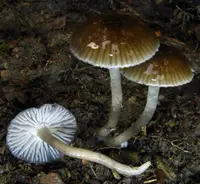
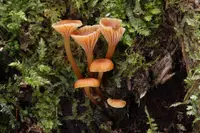
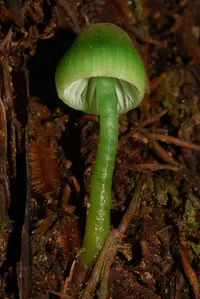
Slimy waxcap, Gliophorus irrigatus, is a small mushroom-forming fungus, not a traditional leafy plant. It usually appears in tight clusters, with smooth, slimy caps and slender, pale stems that give it a delicate look.
This species is typically found in unimproved grasslands, lawns, and mossy areas in temperate regions, often in autumn. It relies on undisturbed, low-nutrient turf, which makes it sensitive to heavy fertilizing and frequent soil disturbance.
Because it depends on specific soil conditions and long‑established grassland, it is not easy to cultivate intentionally, and guides on how to care for Slimy Waxcap are very limited. It generally favors moist, cool, well‑drained sites with low nutrient input.

Care Difficulty
Hard Care

Light Preference
Partial Shade

Water Requirements
Keep Soil Moist

Temperature Preference
Cool Climate

Hardiness Zone
Unknown

Soil Texture
Loamy, Silty, Organic-rich

Soil pH
Strongly acidic (4.5–5.5), Acidic (5.5–6.5)

Soil Drainage
Moist but well-drained

Fertilization
Minimal (feed rarely)
Scan your plant to receive care tips personalized for your specific plant
Available on iOS and Android
This grassland fungus prefers cool, evenly lit conditions rather than strong, direct sun exposure.
This waxcap needs consistently moist but not waterlogged soil to form healthy fruiting bodies.
This species favors cool, temperate conditions and fruits best during mild autumn weather.
This fungus needs constantly moist, high-humidity conditions to fruit reliably.
Gliophorus irrigatus develops best in consistently moist, fine-textured, organic-rich soil.
This species is generally unsuitable for long-term container cultivation and is best grown in natural or semi-natural ground conditions.
This woodland fungus relies on natural soil nutrients and typically does not need supplemental fertilizer when growing Slimy Waxcap outdoors.
Pruning Gliophorus irrigatus is generally unnecessary and is limited to removing spent or unhealthy fruiting bodies for hygiene.
This species is rarely grown in containers, so guidance focuses on transplanting habitat patches rather than individual Gliophorus irrigatus fruiting bodies.
Propagation of Gliophorus irrigatus is difficult for home growers because it depends on complex soil and microbial relationships.
This fungus is naturally cold hardy in its native range and needs no special winter care in the ground.

Plant Health Check
Not sure what's wrong with your plant? Check your plant's health inside the app.
The fruiting body has a distinctly slimy, often translucent cap surface when moist, caused by a thick gelatinous layer that helps reduce water loss and may protect against desiccation and microorganisms.
This species often occurs in unimproved, low-nutrient grasslands and is used in Europe as one of the indicator fungi for semi-natural waxcap grassland, a habitat of conservation concern.
Unlike many mushrooms, it is not clearly mycorrhizal or strongly decomposer; molecular and ecological studies suggest waxcaps, including this species, may associate loosely with mosses rather than forming typical tree-root symbioses.

In some regions, long-term declines of this species and other waxcaps are closely linked to agricultural intensification, so its continued presence can signal grasslands that have avoided heavy fertilization and reseeding for decades.
This fungus is generally regarded as inedible or of very poor culinary value. It is small, fragile, and has a slimy cap that makes handling and cooking impractical. Identification mistakes with similar species also pose safety risks.
Keep your plants happy and healthy with plant identification, disease detection, and easy care guidance.