Host tree selection
Establish the fungus near compatible host trees such as birch or aspen, since this mycorrhizal species relies on forming root partnerships rather than growing in isolated beds.

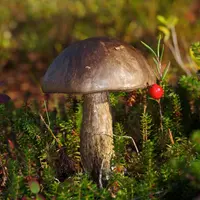
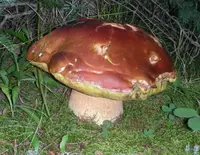
Mottled bolete (Leccinum variicolor) is a wild, mycorrhizal mushroom that grows in association with trees, especially birch, in temperate and boreal forests. It forms fleshy, short-lived fruiting bodies rather than long-term structures like a typical garden plant.
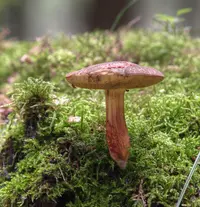
The cap is usually brownish with a mottled pattern, and the stem carries dark scabrous dots, which help with field identification. It appears on soil in woodland or woodland-edge habitats, often in moist, well-drained, slightly acidic conditions.
This species is not suited to standard home cultivation and is generally left to experienced mushroom growers and foragers. Most plant owners will not actively care for Mottled Bolete, but may simply recognize and respect it in natural settings.

Care Difficulty
Moderate Care

Light Preference
Partial Shade

Water Requirements
Regular Water

Temperature Preference
Cool Climate

Hardiness Zone
3–7

Soil Texture
Loamy, Sandy, Organic-rich

Soil pH
Acidic (5.5–6.5)

Soil Drainage
Moist but well-drained

Fertilization
Minimal (feed rarely)
Scan your plant to receive care tips personalized for your specific plant
Available on iOS and Android
Leccinum variicolor, a mycorrhizal woodland mushroom, develops best in bright shade rather than direct open sun.
Leccinum variicolor fruits best in consistently moist, not saturated, forest soil.
This woodland species favors cool to mild conditions and is sensitive to hard freezes and extreme heat.
Humidity is not a meaningful factor for the wild, mycorrhizal Mottled Bolete.
Leccinum variicolor relies on its forest soil and tree partners rather than a conventional potting substrate.
This ectomycorrhizal forest mushroom is not suitable for container growing, since it depends on living tree roots in natural soil profiles.
Leccinum variicolor is a mycorrhizal fungus that gathers nutrients through partner tree roots, so direct fertilizing is usually unnecessary and often harmful.
Pruning is not applicable to Leccinum variicolor, since the visible mushroom is a temporary fruiting body rather than a woody plant structure.
Transplanting for Leccinum variicolor focuses on moving its tree partners or soil containing its underground mycelium, not the mushroom itself.
Practical propagation of Leccinum variicolor is challenging, since it depends on a specific mycorrhizal relationship with suitable host trees.
No special winter care is required, as this wild mycorrhizal species survives underground as mycelium and fruits only in suitable seasons.

Plant Health Check
Not sure what's wrong with your plant? Check your plant's health inside the app.
The cap can shift from bluish or gray-brown tones when young to a more mottled, patchy brown as it matures, which is why it is called the mottled bolete.
When the cut flesh is exposed to air, some parts may slowly develop pale bluish or grayish stains, a bruising reaction used by mycologists to help separate it from similar Leccinum species.
This species forms an ectomycorrhizal partnership with birch trees, meaning its underground mycelium exchanges water and minerals for sugars from birch roots, so it is typically found in or near birch woodland.

The species name variicolor refers to the variable colors of its fruiting body, and this variability has contributed to past taxonomic confusion and reclassification within the Leccinum genus by different mycologists.
This species is generally regarded as edible when correctly identified and thoroughly cooked, but quality is variable. Some people experience digestive upset. Always avoid specimens with significant blue staining or signs of decay, and never eat undercooked wild mushrooms.
Keep your plants happy and healthy with plant identification, disease detection, and easy care guidance.