Select Proper Substrate
Use freshly cut, untreated birch or other light hardwood logs with intact bark, as Lenzites betulinus colonizes clean sapwood far more reliably than old, decomposed, or chemically treated wood.

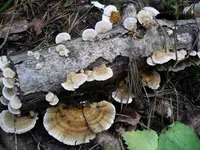
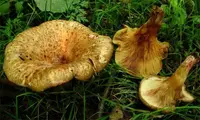
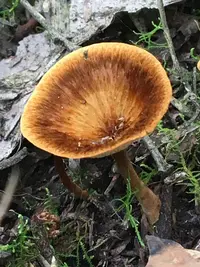
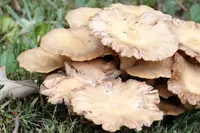
Gilled polypore, Lenzites betulinus, is a bracket fungus that grows on dead or dying wood, especially birch. It is not a foliage plant but a wood-decaying organism. The fruiting bodies form thin, fan-shaped shelves with zoned bands of brown, gray, and cream, and distinctive gill-like ridges on the underside. It is common in temperate forests across North America, Europe, and parts of Asia, playing an important role in breaking down hardwood. This species is generally not cultivated indoors or in pots, so care for Gilled Polypore focuses on providing suitable logs, shade, and consistent outdoor moisture rather than typical houseplant conditions.

Care Difficulty
Moderate Care

Light Preference
Partial Shade

Water Requirements
Keep Soil Moist

Temperature Preference
Cool Climate

Hardiness Zone
Unknown

Soil Texture
Loamy, Organic-rich

Soil pH
Acidic (5.5–6.5)

Soil Drainage
Moist but well-drained

Fertilization
Minimal (feed rarely)
Scan your plant to receive care tips personalized for your specific plant
Available on iOS and Android
Lenzites betulinus is a wood-inhabiting fungus that thrives in shaded to partially shaded forest conditions rather than direct, open sun.
Water needs for Lenzites betulinus focus on keeping its woody substrate evenly moist rather than targeting the fungus directly.
This bracket fungus prefers cool to mild conditions and tolerates a fairly wide temperature range once established on wood.
This wood-decaying bracket fungus does not depend on strict humidity control in outdoor cultivation.
This fungus develops best on dead birch or other hardwood in consistently moist, well-aerated conditions rather than conventional garden soil.
This species is suitable for container cultivation only when grown on wood-based substrates rather than potting soil.
Lenzites betulinus is a saprophytic bracket fungus that obtains nutrients from decaying wood and usually needs no added fertilizer in typical cultivation or observation settings.
Lenzites betulinus requires only minimal intervention, since it naturally forms shelf-like brackets on dead or decaying wood.
This fungus is normally established on outdoor logs or stumps, so management focuses on relocating or renewing colonized wood rather than classic repotting.
Practical home propagation of this bracket fungus is possible by moving colonized wood but is more specialized than typical plant division or cuttings.
This wood-decaying bracket fungus is naturally cold hardy in temperate climates and usually needs no special winter care beyond normal habitat stability.

Plant Health Check
Not sure what's wrong with your plant? Check your plant's health inside the app.
This bracket fungus is a classic white-rot species that selectively degrades lignin in birch and other hardwoods, leaving a whitish, fibrous wood residue and playing a key role in forest nutrient recycling.
Although it has clear, zoned gills on the underside, its gills are actually a labyrinthine pore layer rather than true agaric gills, which is why it is placed among polypores instead of typical gilled mushrooms.
In the wild it is most frequently found on dead or weakened birch trunks and logs, a host preference reflected in the species name betulinus, which refers to the birch genus Betula.

Genetic and morphological studies have shown that this species forms a distinct lineage within the polypores, which led to it being moved from the genus Daedalea into the separate genus Lenzites to reflect its unusual gilled pore surface.
This wood-decay fungus spreads steadily on dead or weakened wood but is not usually invasive in managed landscapes. It does not jump to healthy structures easily, but regular removal of infected branches limits spread and spore production.
Keep your plants happy and healthy with plant identification, disease detection, and easy care guidance.