Preserve Grass Sward
When managing a site with heath waxcaps, keep mowing high (7–10 cm) and remove clippings so the grass stays short and open without building a dense, thatchy layer that smothers fruiting bodies.

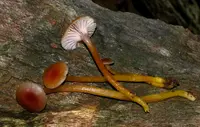
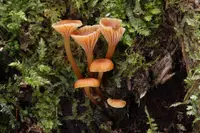
Heath waxcap, Gliophorus laetus, is a small, colorful waxcap fungus rather than a true plant. It produces slender stems topped with smooth, often glossy caps in warm yellow, orange, or pinkish tones. The caps and gills can appear slightly translucent or greasy when damp. It typically grows in short, unimproved grasslands, heaths, and mossy turf, especially on nutrient-poor, well-drained soils in Europe and some other temperate regions. Populations often indicate long-established, low-fertilizer grassland. Because it relies on specific soil conditions and low disturbance, it is not easy to cultivate, and attempts to care for Heath Waxcap at home are usually unsuccessful.

Care Difficulty
Hard Care

Light Preference
Partial Shade

Water Requirements
Keep Soil Moist

Temperature Preference
Cool Climate

Hardiness Zone
Unknown

Soil Texture
Loamy, Silty, Organic-rich

Soil pH
Strongly acidic (4.5–5.5), Acidic (5.5–6.5)

Soil Drainage
Moist but well-drained

Fertilization
Minimal (feed rarely)
Scan your plant to receive care tips personalized for your specific plant
Available on iOS and Android
This grassland fungus prefers cool, low-intensity light typical of open, unimproved meadows.
This species depends on consistently moist but not waterlogged grassland soil.
This fungus favors cool, temperate conditions typical of autumn grasslands.
This woodland fungus prefers consistently moist, humid air similar to damp grassland conditions.
This grassland mushroom requires cool, undisturbed turf over specific low‑fertility soils rather than a conventional potting substrate.
This species is not realistically suited to container growing because it depends on complex, low-nutrient grassland soils.
Gliophorus laetus is a mycorrhizal waxcap fungus that relies on low-nutrient soils and does not benefit from added fertilizer.
Gliophorus laetus does not require pruning, but spent fruiting bodies can be tidied if desired.
This waxcap is not suited to typical container culture, so management focuses on careful in-ground habitat handling rather than repotting.
Propagation of Gliophorus laetus is challenging and usually left to natural spore dispersal in suitable habitats.
In suitable climates this waxcap is naturally cold hardy and generally needs no special winter care.

Plant Health Check
Not sure what's wrong with your plant? Check your plant's health inside the app.
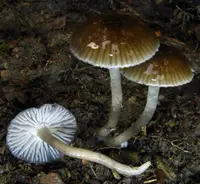
This waxcap typically shows soft lilac to violet caps with yellowish or greenish tones on the gills and stipe, giving it a multicolored, almost translucent appearance when wet due to its slimy surface layer.
Populations of this species in Europe often occur in long‑unimproved, low‑nutrient grasslands and are used, together with other waxcaps, as indicators of ancient, semi‑natural grassland habitats with high conservation value.
The fruiting body has a distinctly viscid to slimy cap and stipe when moist, a trait caused by a gelatinous layer in the outer tissues, which helps distinguish it from drier, more brittle waxcap species.

Molecular studies have shown that waxcaps like this species are not typical decomposers but are likely associated with living plant roots in complex, still not fully understood ecological relationships, making their nutritional strategy unusual among classic grassland mushrooms.
This fungus is best grown outdoors in low-nutrient, unimproved grassland or heath. It needs natural seasonal changes, high light, and complex soil life. Indoors, it is extremely difficult to maintain and is not recommended.
Keep your plants happy and healthy with plant identification, disease detection, and easy care guidance.