Substrate anchoring
When mounting this fungus on display wood for study or ornamental use, secure the base firmly with biodegradable twine or mesh so the fruiting body can expand without detaching as it gains weight and surface area.

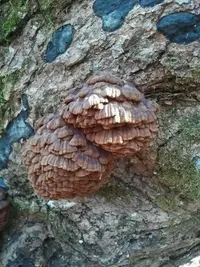
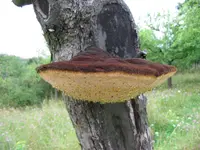
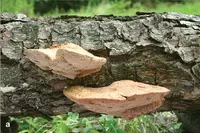
Sweet knot, Globifomes graveolens, is a wood-decaying fungus that forms hard, cushion-like growths on dead or dying conifer wood. It is usually seen as irregular, knobby masses with a pale to yellowish surface and a firm, tough texture.
This species occurs mainly in temperate forests, especially in North America, where it helps break down woody material. It is not grown as a typical ornamental plant, so care for Sweet knot focuses more on understanding its role in forest ecosystems than on home cultivation.
In nature it favors cool, moist woodland conditions and well-rotted conifer logs, rather than garden soil or containers.

Care Difficulty
Moderate Care

Light Preference
Partial Shade

Water Requirements
Moderate Water

Temperature Preference
Warm Climate

Hardiness Zone
Unknown

Soil Texture
Loamy, Organic-rich

Soil pH
Slightly acidic (6.5–7.0)

Soil Drainage
Well-drained

Fertilization
Minimal (feed rarely)
Scan your plant to receive care tips personalized for your specific plant
Available on iOS and Android
This wood-decaying fungus prefers stable, shaded forest light rather than open, direct sun.
Moist, but not waterlogged, host wood supports the most consistent fruiting.
This species develops best in cool to mild woodland conditions without temperature extremes.
This bracket fungus has minimal humidity requirements and usually grows well in typical outdoor air conditions.
This wood-decaying bracket fungus does not rely on conventional soil but on woody substrates.
This species is not suitable for conventional container growing, since it is specialized for colonizing dead wood rather than potting media.
Globifomes graveolens typically grows on wood and gains nutrients from its substrate, so extra fertilizer is rarely necessary for healthy development.
Pruning needs for Globifomes graveolens are minimal and mainly relate to aesthetics or safety on host trees.
This wood-decaying fungus is not usually grown in containers, so management focuses on transplanting or managing colonized wood rather than classic repotting.
Intentional propagation of Globifomes graveolens is uncommon and technically demanding, so it is rarely attempted outside specialized mycology or forestry contexts.
This species is naturally cold hardy and usually needs no specific winter care when growing outdoors on suitable host wood.

Plant Health Check
Not sure what's wrong with your plant? Check your plant's health inside the app.
Fresh fruiting bodies of this fungus release a strong anise or licorice-like smell, which is unusual among bracket fungi and makes it easy to recognize in the field.
This species is a white-rot fungus that decomposes lignin in conifer wood, leaving a pale, fibrous residue and playing an important role in nutrient recycling in cool, coniferous forests.
It is most often found on downed conifer logs rather than on standing trees, forming thick, cushion-like brackets that can persist for several seasons as they slowly break down the wood.
Growth is slow. As a wood-decaying bracket fungus, it expands gradually across dead conifer wood rather than producing tall stems or leaves. Individual fruiting bodies may enlarge over several seasons but rarely change dramatically in size year to year.
Keep your plants happy and healthy with plant identification, disease detection, and easy care guidance.