Select proper substrate
Mount the fungus on well-decayed conifer wood, ideally old yew or similar resinous species, since this species is specialized for lignin-rich, already-rotting timber rather than fresh logs or hardwood chunks.

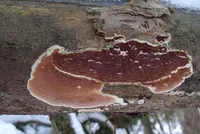
Gloeoporus taxicola is a wood-decaying polypore fungus, not a leafy houseplant. It forms thin, crust-like patches with small pores on the surface of dead conifer wood. The fruiting body usually appears in irregular, spreading layers that can range from pale to deeper brown tones as it ages.
This species occurs mainly in temperate forests of the Northern Hemisphere, especially on old yew and other conifers. It plays an important role in breaking down lignin and cellulose, the main structural components of wood. For enthusiasts trying to care for Gloeoporus taxicola in cultivation, the main challenges are providing constant moisture, stable cool conditions, and suitable decaying wood as a substrate.

Care Difficulty
Moderate Care

Light Preference
Partial Shade

Water Requirements
Moderate Water

Temperature Preference
Cool Climate

Hardiness Zone
Unknown

Soil Texture
Loamy, Organic-rich

Soil pH
Acidic (5.5–6.5)

Soil Drainage
Moist but well-drained

Fertilization
Minimal (feed rarely)
Scan your plant to receive care tips personalized for your specific plant
Available on iOS and Android
This wood-decaying fungus thrives on shaded, decaying conifer wood rather than in open, direct sun.
This species depends on consistently moist, but not waterlogged, wood rather than direct soil watering.
This fungus is adapted to cool to mild woodland climates with moderate seasonal shifts.
Humidity is not a key factor for Gloeoporus taxicola, which naturally tolerates variable outdoor air moisture.
This species grows naturally on decaying conifer wood, not in soil, so substrate preparation should mimic rotting wood rather than garden earth.
This wood-decaying fungus is not suitable for conventional container growing as a house or patio plant.
This wood-decaying fungus lives on dead conifer wood and does not benefit from direct fertilization.
Gloeoporus taxicola forms thin bracket-like fruiting bodies on dead wood and does not need horticultural pruning.
This species naturally colonizes dead yew and other conifer wood and is not suited to pot culture or routine transplanting.
Propagation of this fungus is mainly of interest to specialists and relies on managing spores and colonized wood rather than standard plant techniques.
In natural settings this fungus is cold hardy and needs no special winter care.

Plant Health Check
Not sure what's wrong with your plant? Check your plant's health inside the app.
This species forms thin, soft, resupinate fruiting bodies with tiny round pores on dead conifer wood, rather than forming bracket-like shelves. Its pore surface is often pale to pinkish, which helps separate it from many tougher, corky polypores.
In nature it is strongly associated with dead or decaying conifer wood, especially yew and other gymnosperms. It acts as a wood-decay fungus that recycles lignin-rich tissues and accelerates nutrient return to forest soils.
Microscopically it has a monomitic hyphal system, meaning only generative hyphae are present, which are thin-walled and typically clamped. This combination of hyphal features and small, smooth spores is important for accurate identification in mycology.
This bracket fungus is regarded as inedible due to its tough, corky texture and lack of culinary value. It is not used as food and should be left on its woody substrate for ecological purposes.
Keep your plants happy and healthy with plant identification, disease detection, and easy care guidance.