Retain Natural Substrate
When collecting, cut a small section of the decaying conifer wood with the fungus attached instead of scraping it off, as this preserves the mycelium network that actually sustains the fruiting bodies.

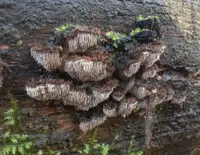
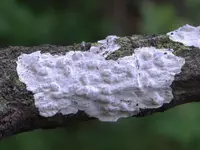
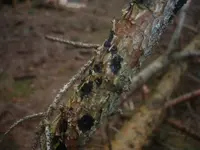
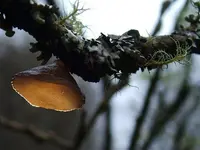
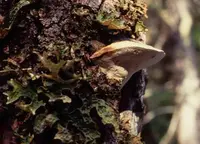
Gloiodon strigosus is not a leafy houseplant but a small, toothed bracket fungus that grows on dead or decaying conifer wood. It forms flat to cushion-like patches with dense, bristly spines on the underside. These fruiting bodies are usually pale to yellowish brown and often blend into the bark surface, making them easy to overlook in the forest. It is mainly found in temperate coniferous forests of Europe and North America, where it plays a role in wood decay. Because this species is a specialized wood-inhabiting fungus, there is very little practical information on how to care for Gloiodon strigosus in a home or garden setting.

Care Difficulty
Moderate Care

Light Preference
Shade

Water Requirements
Keep Soil Moist

Temperature Preference
Cool Climate

Hardiness Zone
Unknown

Soil Texture
Loamy, Organic-rich

Soil pH
Acidic (5.5–6.5)

Soil Drainage
Moist but well-drained

Fertilization
Minimal (feed rarely)
Scan your plant to receive care tips personalized for your specific plant
Available on iOS and Android
This wood-inhabiting fungus prefers cool, shaded forest conditions rather than direct sun exposure.
Moist but not waterlogged wood is essential for reliable fruiting and mycelial health.
This species favors cool to mild conditions and is sensitive to prolonged heat and hard frost at the fruiting stage.
This crust-forming fungus does not depend on ambient humidity in typical outdoor conditions, so targeted humidity management is unnecessary.
Gloiodon strigosus is a wood-decaying fungus that relies on its substrate rather than conventional soil.
This species is not naturally suited to traditional container culture and is best established on outdoor wood substrates rather than in pots.
This wood-decay fungus grows on nutrient-rich dead conifer wood and generally does not need additional fertilizer in cultivation or observation settings.
Pruning is not applicable to Gloiodon strigosus, as it is a resupinate wood-decay fungus rather than a woody or herbaceous plant.
Transplanting is usually unnecessary, since this fungus naturally colonizes dead conifer wood rather than growing as a potted plant.
Propagation of Gloiodon strigosus is mainly of research interest and is not typically attempted by general growers.
Special winter care is not required, as this wood-inhabiting fungus is naturally cold hardy across temperate climates.

Plant Health Check
Not sure what's wrong with your plant? Check your plant's health inside the app.
This species forms small, tough, resupinate fruiting bodies with dense, bristly, tooth-like spines rather than gills or pores, placing it among the so‑called tooth fungi (family Meruliaceae).
It occurs mainly in cool, boreal and montane coniferous forests, where it is typically found on dead or decaying conifer wood such as spruce and fir, helping to decompose lignin-rich substrates.
The fertile surface is distinctly strigose, meaning covered with stiff, bristly hairs, which is a key microscopic and macroscopic trait mycologists use to distinguish this species from similar toothed crust fungi.

This fungus has a widespread but patchy distribution across the Northern Hemisphere, documented in North America, Europe, and parts of Asia, yet it often goes unnoticed because its thin, crust-like fruiting bodies closely blend into the bark and wood they colonize.
This wood-inhabiting fungus is not considered edible. It is tough, leathery, and lacks culinary value. Field guides usually list it as inedible. It should not be collected for food or home consumption.
Keep your plants happy and healthy with plant identification, disease detection, and easy care guidance.