Pin-stripe calathea Care (Goeppertia ornata)

Also known as: pin-stripe calathea
Pin-stripe calathea

About Pin-stripe calathea

Pin-stripe calathea, Goeppertia ornata, is a tropical understory plant valued for its striking striped foliage and compact clumping habit. It is commonly grown indoors as a decorative foliage plant.

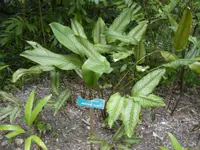
Leaves are dark green to deep olive with fine pink to light cream lines, giving a painted appearance, and the undersides are often purple. Plants grow from short rhizomes and form dense rosettes rather than tall stems.

In nature, it occurs in warm, humid rainforests of South America, especially in shaded locations. This origin explains its preference for stable warmth, high humidity, and evenly moist, well-drained soil.

Understanding how to care for Pin-stripe calathea is mainly about providing soft, indirect light, avoiding cold drafts, and keeping the root zone consistently but not waterlogged moist.

Main Plant Requirements

Care Difficulty

Moderate Care

Light Preference

Bright Indirect Light

Water Requirements

Keep Soil Moist

Temperature Preference

Tropical / Frost Sensitive

Hardiness Zone

11–12

Soil Texture

Loamy, Peaty, Organic-rich

Soil pH

Acidic (5.5–6.5)

Soil Drainage

Moist but well-drained

Fertilization

Light (every 4–6 weeks)

Get Personalized Care Plan

Scan your plant to receive care tips personalized for your specific plant

Available on iOS and Android

How to Care for the Pin-stripe calathea

This species prefers bright, indirect light that mimics a forest understory.

  • Provide 6–8 hours of filtered light daily, such as light through a sheer curtain or dappled shade under taller plants, ideal for Pin-stripe calathea indoor care.
  • Allow gentle early morning sun but avoid direct midday and afternoon sun, which can cause leaf scorch and faded striping.
  • In winter, move the plant closer to bright windows or supplement with grow lights if leaf color dulls or new growth becomes sparse.

This plant prefers evenly moist but not waterlogged soil.

  • Water when the top 2–3 cm of soil feels dry, letting water flow through freely and emptying any saucer so roots do not sit in standing water.
  • In spring and summer, expect to water more often as growth and evaporation increase; in fall and winter, lengthen intervals as growth slows.
  • Watch for yellowing, limp leaves as a sign of overwatering and crisp, curling leaf edges or drooping petioles as a sign the plant is staying too dry.

Stable, warm temperatures support healthy growth and leaf patterning.

  • Aim for 65–80°F (18–27°C) as the main growing range, where Goeppertia ornata maintains steady growth and good foliage color.
  • Protect from temperatures below 60°F (16°C); growth slows near this point and damage can occur if exposed to 50°F (10°C) or brief chills.
  • Avoid hot, stagnant conditions above 86°F (30°C); increase air movement and humidity while keeping the plant away from cold drafts, heaters, and air conditioners.

This species needs consistently high humidity to maintain healthy foliage and stable growth.

  • Aim for 60–75% humidity; use a humidifier or closed-door bathroom placement if home air is drier.
  • Brown, curling leaf edges and leaf tip burn indicate humidity stress rather than underwatering.
  • Group plants, place pots on water-filled pebble trays, and keep Pin-stripe calathea away from heating or AC vents.

This plant prefers a loose, airy, organic-rich mix that drains quickly yet holds steady moisture.

  • Use roughly 40% peat or coco coir, 40% fine bark, and 20% perlite to balance moisture retention and aeration.
  • Ensure water drains through the pot within seconds; soggy, heavy mixes promote root rot and leaf yellowing.
  • Maintain slightly acidic to neutral pH around 6.0–7.0, typical of peat- or coir-based houseplant mixes.
  • Avoid dense garden soil or straight potting compost, and lighten any heavy mix by adding extra perlite or fine bark.

This species is well suited to container growing due to its shallow, fibrous root system and compact habit.

  • Choose a wide, shallow pot that matches the root spread so the mix dries evenly and does not sour at the bottom.
  • Select a slightly heavier ceramic pot to stabilize the foliage mass and reduce accidental tipping when soil is moist.
  • Use containers with several small drainage holes so water exits fast and does not pool in one area under the root ball.

This plant responds well to light, consistent feeding during its active season.

  • Use a balanced liquid houseplant fertilizer (around 10-10-10 or 20-20-20) at 1/4–1/2 strength for caring for Pin-stripe calathea.
  • Apply every 4–6 weeks in spring and summer when growth is strongest.
  • Stop or reduce feeding to 1 light application in late fall and none in midwinter.
  • Flush the pot with plain water every 2–3 months to prevent salt buildup and leaf tip burn.

Pruning Goeppertia ornata focuses on removing tired foliage rather than reshaping the plant.

  • Trim yellow, brown, or torn leaves at the base using clean, sharp scissors or pruners.
  • Carry out most pruning in spring or early summer, when recovery is fastest.
  • Remove crowded or inward-facing leaves if air circulation is poor, but keep the clump fairly full.
  • Discard pruned material and disinfect tools if leaf spots or other diseases are present.

Repotting helps maintain healthy roots and stable growth in this container-focused species.

  • Check for roots circling the pot, pushing through drainage holes, compacted soil, or unexplained slow growth as signs to repot.
  • Plan to repot every 2–3 years in spring, shifting to a container only 2–5 cm wider with drainage holes.
  • Use a light, peat- or coco-based mix with added perlite, keeping the root ball intact to limit stress.
  • Water thoroughly after repotting, keep humidity high, and place Goeppertia ornata in shaded, stable conditions for 1–2 weeks.

Division is the standard and most reliable method for propagating this species.

  • Divide the root clump in late spring or early summer, when active growth supports recovery.
  • Lift the plant from its pot and separate natural clumps, ensuring each division has several healthy leaves and a strong rhizome section.
  • Plant divisions in small pots with a loose, evenly moist mix and moderate, steady warmth (68–80°F).
  • Maintain high humidity and gentle, indirect light until new leaves appear and growth stabilizes.

This tropical plant is frost sensitive and needs warm, stable indoor conditions in winter.

  • Keep indoor temperatures above 60°F and away from cold drafts, radiators, and exterior doors or windows.
  • Allow the top 2–3 cm of soil to dry slightly between waterings, as growth slows in low light.
  • Maintain 50–70% humidity using trays, room humidifiers, or grouping plants.
  • If grown outdoors in warm months, move containers indoors before temperatures drop below 55°F.

Care Tips

Rotate For Symmetry

Rotate the pot 90° every 1–2 weeks so the leaves receive light from different angles, which keeps the foliage rosette even and reduces leaning toward one side.

Use Warm Water

Water with room-temperature, dechlorinated water to avoid cold shock to the roots and leaf edges; let tap water sit 24 hours or use filtered water if leaf tips regularly brown.

Quarantine New Plants

Keep any new houseplants in a separate room for 2–3 weeks and inspect undersides of leaves and leaf axils weekly to prevent spider mites or mealybugs from spreading to this plant.

Dust And Inspect Leaves

Wipe both sides of the leaves with a soft, slightly damp cloth every 2–4 weeks to remove dust, improve photosynthesis, and spot early signs of pests or fungal spots while caring for Pin-stripe calathea.

Adjust Pot Size Carefully

When roots circle the pot, move up only 2–3 cm in pot diameter and keep the same soil type to avoid sudden changes in moisture retention that can stress the root system.

Common Pests and Diseases

Spider mites

This pest thrives in dry indoor air and attacks the thin, tender leaves, causing pale stippling, fine webbing, and eventual leaf curling or browning along the edges.

Solution

Rinse both sides of the leaves thoroughly with lukewarm water, increase humidity to 60–70%, and isolate the plant; for persistent infestations, apply insecticidal soap or a neem oil solution every 5–7 days until no new damage or mites are visible.

Fungus gnats

These insects are attracted to the consistently moist potting mix that this species prefers, and their larvae feed on organic matter and fine roots, causing slow, stressed growth.

Solution

Allow the top 2–3 cm of soil to dry slightly between waterings, use yellow sticky traps for flying adults, and drench the substrate with a biological control such as Bacillus thuringiensis israelensis (BTI) or beneficial nematodes to reduce larvae.

Leaf spot

This disease appears as irregular brown or tan patches with darker margins on leaves, often following prolonged leaf wetness and poor air movement around the dense foliage.

Solution

Remove and discard affected leaves, avoid wetting the foliage, improve air circulation, and water at the soil level; if new spots continue to appear, use a copper- or sulfur-based fungicide according to label directions and monitor new growth closely as part of general Goeppertia ornata plant care.

Bacterial leaf blight

Symptoms include water-soaked, translucent patches that quickly turn brown and may emit a sour odor, starting on lower leaves and spreading in warm, humid, stagnant air conditions.

Solution

Immediately prune and dispose of all affected tissue with sterilized tools, avoid overhead watering, and keep leaves dry; if spread continues, discard heavily infected plants and disinfect pots and tools to prevent reinfection of nearby specimens.

Mealybugs

These insects hide in leaf axils and along midribs, leaving white cottony clusters and sticky honeydew that can attract sooty mold and weaken the plant over time.

Solution

Wipe visible pests with cotton swabs dipped in isopropyl alcohol, then rinse foliage and repeat inspections weekly; for larger infestations, use a neem oil or insecticidal soap spray, ensuring good coverage of leaf undersides and tight folds where mealybugs shelter.

Interesting Facts

Pin-stripe leaf pattern

The pale pink to silvery stripes on the dark green leaves follow the main and lateral veins, a pattern caused by differential pigment distribution in the leaf tissues rather than raised structures.

Daily leaf movement

As a member of the Marantaceae, this species performs nyctinasty, lifting its leaves more upright at night and lowering them during the day through a specialized joint-like structure at the base of each leaf called a pulvinus.

Native rainforest understory

This plant is naturally found on the shaded floor of tropical lowland rainforests in South America, where it has adapted to high humidity, warm temperatures, and filtered light beneath a dense tree canopy.

FAQs about Pin-stripe calathea

Brown, crispy edges usually result from low humidity, underwatering, or excess fertilizer salts. Hard tap water with high minerals or chlorine can also scorch margins. Increase humidity, water evenly, flush the pot, and use filtered or dechlorinated water.

Grow Healthy Plants with Botan Care

Keep your plants happy and healthy with plant identification, disease detection, and easy care guidance.

Botan plant care app — identify plants on mobile

Explore More Plants