Blackening Slime Spike Care (Gomphidius oregonensis)

Blackening Slime Spike

About Blackening Slime Spike

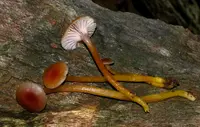
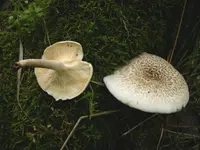
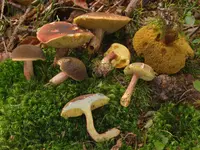
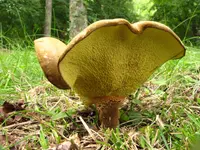
Blackening slime spike, Gomphidius oregonensis, is a gilled mushroom rather than a true plant, often noticed in conifer forests of the Pacific Northwest. It appears with a slimy, pale to grayish cap that slowly darkens or blackens as it ages.

This fungus usually grows on the ground among moss, litter, or near conifer roots, often in small groups. Its changing color and sticky surface make identification easier for those learning to recognize forest fungi.

In cultivation it is rarely grown, since it forms close associations with tree roots and is not suited to typical home growing setups. Anyone wishing to learn how to care for Blackening Slime Spike should understand it is best observed and appreciated in its natural woodland habitat rather than indoors or in containers.

Main Plant Requirements

Care Difficulty

Moderate Care

Light Preference

Partial Shade

Water Requirements

Keep Soil Moist

Temperature Preference

Cool Climate

Hardiness Zone

6–9

Soil Texture

Loamy, Silty, Organic-rich

Soil pH

Acidic (5.5–6.5)

Soil Drainage

Moist but well-drained

Fertilization

Minimal (feed rarely)

Get Personalized Care Plan

Scan your plant to receive care tips personalized for your specific plant

Available on iOS and Android

How to Care for the Blackening Slime Spike

This mycorrhizal fungus prefers cool, forest shade conditions rather than direct open sun.

  • Provide bright open shade or dappled light under conifers, mimicking 2–4 hours of weak, filtered sun through tree canopies.
  • Avoid direct midday and afternoon sun; prolonged exposure can dry the forest floor, reducing fruiting of Blackening Slime Spike and stressing its hyphal network.
  • In summer, rely on denser canopy shade; in spring and autumn, slightly more open light is acceptable as long as the ground does not dry out or overheat.

This forest-dwelling fungus relies on consistently moist, not waterlogged, soil around its host trees.

  • Aim for evenly moist upper soil, allowing the top 1–2 cm to lose surface wetness between rains but never fully dry out.
  • Ensure the site drains freely; standing water, sour smell, and slimy, collapsing fruiting bodies indicate overwatering or poor drainage around Gomphidius oregonensis.
  • In dry or hot spells, increase irrigation to keep the forest floor damp, while in cool, rainy periods, reduce extra watering and let natural rainfall dominate.

This species fruits best in cool to mild conditions typical of shaded conifer forests.

  • Optimal fruiting temperatures are around 50–65°F (10–18°C); growth slows outside this band but mycelium in the soil can persist more broadly.
  • The fungus tolerates brief drops near 32°F (0°C) in soil, but hard, prolonged frost above ground damages or halts fruiting bodies.
  • Sustained heat above 80°F (27°C), especially combined with dry conditions, suppresses fruiting; deep shade, mulch, and soil moisture help moderate temperature swings seasonally.

Humidity is not a key cultivation factor for this mycorrhizal fungus and is best managed through overall site moisture rather than air humidity.

This fungus develops in association with tree roots, so soil preparation focuses on supporting that forest-like environment.

  • Use loose, organic-rich, slightly acidic soil (pH 5.0–6.5) with abundant leaf litter or conifer duff to imitate its natural habitat.
  • Aim for moist but free-draining conditions, avoiding compacted clay where water lingers around the surface after rain.
  • Blend coarse sand or fine bark into heavier ground to improve aeration so fungal mycelium can spread through the upper soil layer.
  • Avoid heavily fertilized, limed, or peat-only substrates, which disrupt the natural balance needed for Gomphidius oregonensis to associate with host roots.

This species is not realistically suited to container growing because it depends on a broad mycorrhizal relationship with host tree roots, so Blackening Slime Spike is best left to open-ground conditions.

This fungus is a forest-dwelling mycorrhizal partner that usually gains nutrients from its tree hosts, so added fertilizer is rarely necessary for Blackening Slime Spike.

Gomphidius oregonensis does not need conventional pruning, as individual mushrooms are short-lived fruiting bodies.

  • Remove only clearly rotten, insect-infested, or moldy fruiting bodies to reduce disease spread in the area.
  • Use clean gloves or a sharp, sanitized knife to cut mushrooms at the base rather than tearing the mycelium in the soil.
  • Avoid disturbing the forest floor or woody debris, as this damages the underlying fungal network and reduces future fruiting.

This species is a wild, mycorrhizal fungus associated with trees, so it is not suited to normal container repotting.

  • Transplanting attempts generally fail because the fungus depends on fine root associations with its host tree in undisturbed soil.
  • If relocation is attempted for study, move intact soil cores with host tree seedlings rather than bare mycelium.
  • Carry out any soil-core moves in cool, moist weather to limit desiccation stress on roots and fungal tissue.
  • Minimize handling and vibration of the soil block so the delicate root–fungus contact remains intact.

Propagation of Gomphidius oregonensis is complex because it relies on a specific mycorrhizal relationship with conifer roots.

  • Spore-based propagation is mainly used in research settings, spreading spores over suitable conifer hosts in cool, moist forest soil.
  • Maintain shaded, humus-rich, low-disturbance conditions to encourage mycelium establishment near fine feeder roots.
  • Allow several seasons for stable mycorrhizal networks to form before expecting consistent mushroom fruiting.

This woodland fungus is naturally cold hardy in its native range and does not need dedicated winter care from gardeners.

  • Undisturbed leaf litter and woody debris act as natural insulation for the soil and fungal mycelium.
  • Avoid deep soil cultivation or heavy foot traffic in winter, which can damage frozen, brittle mycelial strands.

Care Tips

Host Tree Matching

Establish this fungus only near suitable conifer hosts, especially young to mid-aged pines or firs, since it depends on their root systems and will not persist in areas without compatible trees.

Minimal Disturbance Zone

Mark a small no-rake, no-dig ring around fruiting spots so the soil and fine tree roots stay intact, which protects the underground mycelium and encourages regular fruiting.

Leaf Litter Management

Maintain a thin, natural layer of conifer needles or leaf litter over the fruiting area, adding a light top-up in fall to conserve moisture while avoiding a thick, smothering mulch layer.

Targeted Moisture Checks

During dry periods, test moisture 5–8 cm below the surface near the host tree dripline and apply gentle, low-splash irrigation there instead of soaking the entire area, which reduces compaction and fruit damage when growing Blackening Slime Spike.

Spore Spread Assistance

After harvesting, leave a few mature caps in place or gently crumble them in nearby suitable habitat so spores can disperse and potentially establish new mycelial patches around compatible host trees.

Common Pests and Diseases

Mycophagous springtails

These insects feed on fungal tissues and slime, grazing caps and stems of the fruiting body. Symptoms include small surface pits, rough or eroded areas, and sometimes misshapen young mushrooms.

Solution

Remove heavily damaged fruiting bodies, reduce excess surface moisture, and avoid overwatering the surrounding substrate so it stays moist but not waterlogged. Improve air movement at ground level and, if needed, use fine mesh or physical barriers over the fruiting area to limit access while maintaining humidity needed for growing Blackening Slime Spike.

Fungus gnat larvae

This pest lives in moist organic substrates and can chew through developing mushroom stems and bases. Symptoms include weakened, toppled, or hollowed stems with small tunnels or soft spots near the base.

Solution

Allow the upper layer of the substrate to dry slightly between waterings while keeping deeper layers evenly moist, and remove any decaying organic debris that is not needed for the mushroom host. Yellow sticky traps can help reduce adult gnats, and a biological control such as Bacillus thuringiensis var. israelensis (Bti) can be applied to the substrate where this is compatible with other fungi present.

Slug and snail grazing

These mollusks are strongly attracted to moist, protein-rich fruiting bodies. Symptoms include large, irregular bite marks on caps and stems, slime trails, and sometimes complete loss of small mushrooms overnight.

Solution

Hand-pick slugs and snails during cool, damp periods and remove nearby hiding places such as boards, dense ground litter, or overturned pots. Use copper barriers, diatomaceous earth rings, or safe iron phosphate slug baits placed away from the main fruiting zone to reduce grazing pressure without excessively drying the habitat.

Parasitic Hypomyces infection

This disease is caused by parasitic fungi such as Hypomyces species that overgrow mushroom surfaces. Symptoms include white to yellowish, then sometimes darker, felt-like coverings that distort, harden, or arrest development of the fruiting bodies.

Solution

Promptly remove and discard all infected fruiting bodies and nearby visibly colonized debris to reduce spore loads. Avoid overhead watering that splashes contaminated particles, and if infection is recurrent in a managed patch, rest or rotate the area and reduce dense accumulations of old, decaying mushrooms that act as reservoirs of the parasite.

Interesting Facts

Unusual slime veil

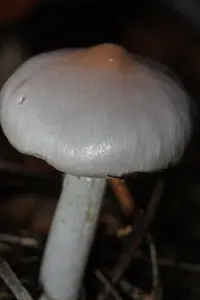
Young caps are covered in a thick, dark slime layer that can stain fingers and nearby debris, a feature that helps distinguish this species from many other slimy-capped mushrooms.

Western conifer associate

This fungus is strongly associated with conifer forests of the Pacific Northwest, especially under Douglas-fir and hemlock, where it fruits on the ground among moss, needles, and forest litter.

Parasitic mycorrhizal lifestyle

Instead of forming a typical mycorrhiza directly with tree roots, this species taps into the mycorrhizal network of certain Suillus fungi, effectively parasitizing their nutrient exchange system while still linking indirectly to the host tree.

Botan icon

Did you know?

Molecular and ecological studies show that this species depends so closely on its Suillus partners that its distribution in a forest is often tightly matched to where those specific Suillus fungi occur, making it a reliable indicator of their hidden underground networks.

FAQs about Blackening Slime Spike

This mushroom is considered inedible or of very poor culinary value. Slime, dark staining, and its close association with conifers make it an unsuitable choice for the table. It is best left for observation only.

Grow Healthy Plants with Botan Care

Keep your plants happy and healthy with plant identification, disease detection, and easy care guidance.

Botan plant care app — identify plants on mobile

Explore More Plants