Heterobasidion parviporum Care

Heterobasidion parviporum

About Heterobasidion parviporum

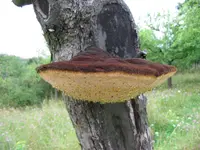
Heterobasidion parviporum is not a typical houseplant but a wood-decaying fungus that colonizes conifer trees, especially spruce, in temperate and boreal forests. It forms perennial, bracket-like fruiting bodies on stumps, roots, and the lower trunk.

This species occurs mainly in northern Europe and parts of Asia, where it causes root and butt rot in managed and natural forests. It spreads through airborne spores and root contacts, which makes it persistent once established.

Because it is a pathogenic fungus that depends on living or recently cut trees, it is not suitable for ornamental cultivation and is difficult to manage in controlled settings. Anyone looking up how to care for Heterobasidion parviporum is usually focused on forest disease control rather than intentional growth.

Main Plant Requirements

Care Difficulty

Moderate Care

Light Preference

Partial Shade

Water Requirements

Moderate Water

Temperature Preference

Cool Climate

Hardiness Zone

2–7

Soil Texture

Loamy, Sandy, Organic-rich

Soil pH

Strongly acidic (4.5–5.5), Acidic (5.5–6.5)

Soil Drainage

Moist but well-drained

Fertilization

Minimal (feed rarely)

Get Personalized Care Plan

Scan your plant to receive care tips personalized for your specific plant

Available on iOS and Android

How to Care for the Heterobasidion parviporum

This wood-decay fungus develops best on host conifers in cool, moderately lit forest conditions rather than direct, exposed sun.

  • Allow 2–4 hours of gentle, filtered morning sun reaching the lower trunk or stump; avoid harsh, unshaded afternoon sun that can dry host tissues too quickly.
  • Maintain partial shade, such as 30–60% canopy cover, since dense shade slows fruiting while full, open sun can overheat and desiccate colonized wood.
  • Monitor seasonal shifts: in summer, protect colonized stumps from full southern exposure, while in spring and autumn slightly increased light can support fruiting body formation.

Moist, well-aerated wood substrates favor this species, while waterlogged or extremely dry conditions limit development.

  • Aim for host wood that stays evenly moist but not saturated; it should feel damp to the touch, not dripping or cracked-dry on exposed cut surfaces.
  • Ensure surrounding soil drains freely so water does not pool around the stump or trunk base for more than 24 hours, which restricts oxygen and can suppress activity.
  • During prolonged drought, moisture stress in the host may increase susceptibility, while long-term waterlogging reduces oxygen, so observe both foliage wilt and persistent puddling as warning signs.

This pathogen favors cool to mild conditions and tolerates cold better than extended high heat.

  • Optimal activity often occurs around 50–68°F (10–20°C), common in cool temperate forests where host roots and stumps stay moist and aerated.
  • It tolerates winter cold below 32°F (0°C) in soil and wood, but rapid freeze–thaw cycles at the surface can damage exposed fruiting bodies.
  • Sustained temperatures above 77–82°F (25–28°C), especially with low moisture, tend to slow growth, so the fungus is most prominent in cool seasons or shaded sites.

Humidity management is not relevant for this wood-decay fungus, which develops inside living or dead conifer wood rather than being grown as an ornamental plant.

Soil manipulation is not a practical care topic for this aggressive root-rot fungus, which colonizes and decomposes conifer roots and stumps rather than being intentionally cultivated.

  • This pathogen prefers compacted or poorly aerated forest soils where root contact and stump infection are more likely to occur.
  • In managed conifer stands, reducing fresh stump surfaces and root contacts is more relevant than adjusting pH or structure.
  • Attempts at Heterobasidion parviporum care focus on preventing spread, not providing supportive soil mixes or amendments.

This species is not suitable for container growing, as it is a pathogenic wood-decay fungus that requires living or freshly dead conifer hosts rather than potting conditions.

This wood-decay fungus is not managed as an ornamental plant and does not benefit from fertilization in typical landscape or indoor settings.

Heterobasidion parviporum is a pathogenic fungus on conifers, so the goal is sanitation pruning of the host tree rather than shaping the fungus itself.

  • Inspect conifer hosts late winter to early spring for dead, thinning, or structurally unsound branches.
  • Remove infected or dying branches back to healthy wood using clean, sharp bypass pruners or a pruning saw.
  • Disinfect tools between cuts with alcohol or a 10% bleach solution to limit pathogen spread.
  • Dispose of removed wood away from healthy conifers to reduce local inoculum pressure.

This fungus is not suited to container culture, so management focuses on how and when infected trees are removed or replaced in the landscape.

  • Plan transplanting of replacement trees in early spring or early fall, when soil is workable and temperatures are mild.
  • Avoid replanting highly susceptible conifers exactly where an Heterobasidion parviporum infected stump or root system remains.
  • Minimize root stress during transplanting by keeping roots shaded and moist and planting promptly at the original soil depth.
  • Water newly transplanted trees deeply after planting and maintain even soil moisture while new roots establish.

Deliberate propagation is not recommended because this fungus is a serious root and butt rot pathogen of conifers.

This pathogenic fungus is naturally cold hardy, so no specific winter care is applied to it in managed settings.

Care Tips

Sanitation of tools

Disinfect saws, drills, and other forestry tools with 70% alcohol or an appropriate disinfectant between sites to reduce mechanical spread of the fungus on equipment.

Stump treatment timing

Apply an approved urea or biological stump treatment to freshly cut conifer stumps within 0–2 hours after felling to significantly lower infection risk through exposed wood.

Species selection planning

When replanting on previously infested sites, favor less-susceptible tree species or mixed-species stands to reduce future disease pressure and slow inoculum build-up.

Root contact management

Thin dense conifer stands before roots become heavily interconnected, as early, moderate thinning reduces the number of root contacts that can serve as Heterobasidion spread pathways.

Targeted stand mapping

Map and mark infection centers using crown thinning, resin flow, and decay symptoms, then prioritize harvest, stump treatment, or species conversion in these zones as part of systematic Heterobasidion parviporum care.

Common Pests and Diseases

Armillaria root disease

This disease attacks conifer roots and lower stems already weakened by Heterobasidion colonization, creating a complex of decay and decline. Symptoms include thin crowns, resin bleeding at the base, and white fungal fans under the bark near roots.

Solution

Reduce stand stress by avoiding overstocking and soil compaction, and remove heavily infected stumps and trees during dry periods to lower inoculum. In managed forests, avoid retaining highly susceptible species on infected sites and consider stump removal or deep grinding where economically feasible.

Ips bark beetles

These insects commonly exploit conifers weakened by butt and root rot, tunneling under bark and further accelerating tree decline. Symptoms include boring dust, small round exit holes in bark, and rapid crown discoloration.

Solution

Promptly remove or debark wind‑thrown, freshly cut, or heavily diseased trees to reduce breeding material. In high‑value stands, maintain tree vigor through appropriate thinning and avoid fresh logging slash during peak beetle flight; pheromone traps may be used as part of an integrated management program.

Pine shoot beetles

These insects often attack stressed or diseased conifers, including those affected by butt rot, by boring into shoots and small stems. Symptoms include dead or wilted shoots, resin exudation, and small entry holes along twigs and upper stems.

Solution

Sanitation felling of heavily infested or severely weakened trees and timely removal or chipping of logging residues can reduce beetle populations. Avoid storing fresh conifer wood near living stands, and schedule thinning outside peak flight periods when possible.

Blue‑stain fungi

This disease complex consists of sapwood‑staining fungi introduced by bark beetles into weakened or dying conifers, further compromising water transport. Symptoms include bluish to gray discoloration of sapwood visible on cut surfaces, often associated with beetle galleries.

Solution

Limit beetle activity by rapid processing, debarking, or removal of infested logs and weakened trees. In production forests, prioritize timely harvest of diseased stands and avoid long‑term storage of infested roundwood to reduce spore sources and vector breeding sites.

Interesting Facts

Host-specialized spruce pathogen

This fungus is highly specialized on Norway spruce and related spruces in boreal and hemiboreal forests, causing a characteristic butt and root rot that rarely attacks broadleaf tree species.

Cold-adapted distribution

It dominates in cooler, northern parts of Europe and high-altitude areas, replacing its close relative Heterobasidion annosum sensu stricto, which is more common on pines and in warmer regions.

Hidden decay progression

Infected spruces may appear outwardly healthy for years while the fungus slowly decomposes the heartwood and roots, predisposing trees to windthrow and stem breakage long before external symptoms are visible.

Botan icon

Did you know?

Heterobasidion parviporum typically initiates infection through freshly cut spruce stumps or wounds, then spreads from tree to tree via root contacts, which allows a single genet, or clonal individual, to occupy large patches of forest soil for many decades.

FAQs about Heterobasidion parviporum

This fungus is not used as an ornamental or edible species and should be treated as inedible. It can cause decay in conifer wood but is not a typical contact toxin for people or pets in gardens.

Grow Healthy Plants with Botan Care

Keep your plants happy and healthy with plant identification, disease detection, and easy care guidance.

Botan plant care app — identify plants on mobile

Explore More Plants