Use host roots
Establish the fungus near compatible pine species and avoid disturbing fine feeder roots, since this mycorrhizal relationship is essential for growing Rosy Spike in a stable, long‑term colony.

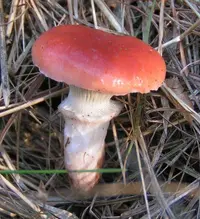
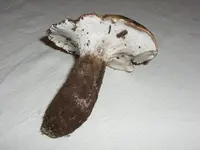
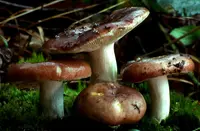
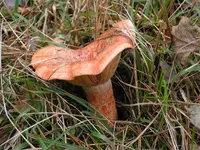
Gomphidius roseus, commonly called rosy spike, is a gilled mushroom rather than a leafy plant. It forms slender pinkish caps on tall, pale stems, often with a slimy surface when fresh.
This species usually appears in conifer forests, especially near pine, in cooler regions of Europe and parts of North America. It often grows close to or among other boletes, reflecting its specialized ecological relationships.
Rosy spike is not considered a good edible mushroom and is generally collected more for study than for food. Its specific habitat needs and association with conifers make it difficult to cultivate, so most people who care for Rosy Spike focus on protecting suitable woodland environments rather than growing it at home.

Care Difficulty
Hard Care

Light Preference
Partial Shade

Water Requirements
Keep Soil Moist

Temperature Preference
Cool Climate

Hardiness Zone
Unknown

Soil Texture
Loamy, Sandy, Organic-rich

Soil pH
Acidic (5.5–6.5)

Soil Drainage
Moist but well-drained

Fertilization
Minimal (feed rarely)
Scan your plant to receive care tips personalized for your specific plant
Available on iOS and Android
This ectomycorrhizal fungus prefers cool, shaded forest conditions rather than direct open sun.
This fungus depends on consistently moist, not saturated, forest soil in partnership with host conifer roots.
This species fruits best in cool to mild conditions typical of coniferous forests.
Humidity is not a significant factor for Gomphidius roseus, which naturally fruits in outdoor forest conditions.
Gomphidius roseus depends on very specific outdoor soil conditions and cannot be maintained in standard garden or potting soil.
This species is not suitable for container growing because it relies on complex mycorrhizal partnerships with conifer roots in undisturbed soil.
This mycorrhizal fungus partners with conifer roots and generally does not need fertilizing in natural or woodland-style plantings.
Gomphidius roseus does not require true pruning, but limited hygienic removal of fruiting bodies can be useful in managed areas.
This species is best maintained in stable ground conditions because it depends on a mycorrhizal association with pine roots.
Propagation of Gomphidius roseus is specialized and not practical in typical home culture because it requires a compatible pine host and soil fungi community.
This fungus is naturally cold hardy in temperate conifer forests and usually needs no special winter care.

Plant Health Check
Not sure what's wrong with your plant? Check your plant's health inside the app.
This fungus does not form its own mycorrhiza with trees; instead, it parasitizes the mycorrhizal network of certain Suillus species, especially Suillus bovinus, and taps into their nutrient exchange system with pine roots.
The distinctive rosy to salmon cap is strongly associated with its main host, the pale Suillus bovinus, and the two species often fruit side by side in pine forests, making their co-occurrence a key field identification clue.
The initially pale to pinkish decurrent gills darken to sooty black as spores mature, a useful diagnostic feature distinguishing it from many superficially similar pinkish mushrooms.

Gomphidius roseus is considered a strong indicator of relatively undisturbed, nutrient-poor pine woodlands in parts of Europe, so its presence is sometimes used by field mycologists as a sign of semi-natural or conservation-worthy forest habitat.
This species is not considered a good edible mushroom. It is sometimes described as inedible or of very poor culinary value due to slimy texture and potential confusion with other fungi. It is better left unharvested.
Keep your plants happy and healthy with plant identification, disease detection, and easy care guidance.