Rotate Rosette
Turn the pot 90° every 2–3 weeks so the rosette develops evenly and does not lean toward the light, which keeps the plant symmetrical and prevents distortion of the central tank.

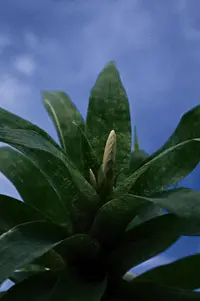
Goudaea ospinae is a small epiphytic bromeliad, typically growing on trees rather than in soil. It forms a rosette of stiff, patterned leaves with a compact habit. Ornamental flower spikes emerge from the center and can be quite long-lasting indoors.
This species is native to tropical regions of South America, where it grows in warm, humid forests with dappled light. It is considered moderately easy to grow for those who learn how to care for Goudaea ospinae. Consistent moisture, good air movement, and bright, indirect light support healthy growth.

Care Difficulty
Moderate Care

Light Preference
Bright Indirect Light

Water Requirements
Moderate Water

Temperature Preference
Tropical / Frost Sensitive

Hardiness Zone
11–12

Soil Texture
Loamy, Peaty, Organic-rich

Soil pH
Acidic (5.5–6.5)

Soil Drainage
Moist but well-drained

Fertilization
Light (every 4–6 weeks)
Scan your plant to receive care tips personalized for your specific plant
Available on iOS and Android
Provide bright, indirect light that mimics a bright forest understory.
Maintain lightly moist but never soggy conditions for healthy roots.
Keep conditions warm and stable, similar to a tropical understory climate.
This bromeliad prefers fairly humid air but adapts if extremes are avoided.
Use a light, fast-draining mix that mimics an epiphytic bromeliad substrate.
This species is well suited to container growing due to its compact, shallow root system.
This bromeliad benefits from light, controlled feeding during active growth but is sensitive to excess salts.
Pruning needs are minimal and focus mainly on hygiene and guiding new rosette growth.
This epiphytic bromeliad prefers stable conditions and is repotted mainly to refresh mix or divide offsets.
New plants are most reliably obtained from offsets rather than from seed.
This tropical species is frost sensitive and suits indoor or greenhouse conditions in cold climates.

Plant Health Check
Not sure what's wrong with your plant? Check your plant's health inside the app.
This species is native to the montane forests of the central Andes in Colombia, where it typically grows as an epiphyte on trees rather than rooted in soil.
It was long placed in the genus Vriesea and only relatively recently transferred to Goudaea based on detailed morphological and molecular studies of bromeliad relationships.
The cultivar Goudaea ospinae 'Gruberi' is especially noted for its bold silver and dark-green transverse banding on the leaves, which has made it a distinctive foliage plant in cultivation.

Goudaea ospinae is considered uncommon in the wild and in cultivation compared with many other ornamental bromeliads, and specialized collections often value it for its combination of patterned foliage and tall, colorful inflorescences.
This bromeliad is most reliable indoors or in sheltered, warm, frost-free spaces. Outdoors it struggles with cold, wind, and intense sun. Stable indoor conditions usually give better foliage color, longer-lasting inflorescences, and more predictable overall performance.
Keep your plants happy and healthy with plant identification, disease detection, and easy care guidance.