Provide climbing support
Install a sturdy moss pole or textured stake and loosely tie vines as they elongate to encourage larger, better-formed leaves and a more stable, upright plant.

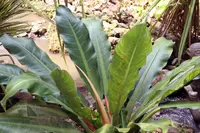
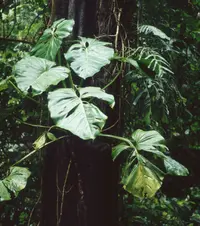
Philodendron davidsonii is a climbing aroid valued for its large, textured leaves and strong tropical look. It is typically grown as an indoor foliage plant or in greenhouses. Native to humid tropical forests of Central and South America, it uses aerial roots to cling to trees and can grow quite tall when given support.
The leaves are usually elongated, deeply veined, and develop more character as the plant matures. It is considered moderately easy for experienced beginners who understand how to care for Philodendron davidsonii.
This species prefers bright, filtered light, evenly moist but not waterlogged soil, and good airflow, which helps prevent common humidity-related problems in indoor conditions.

Care Difficulty
Moderate Care

Light Preference
Bright Indirect Light

Water Requirements
Moderate Water

Temperature Preference
Tropical / Frost Sensitive

Hardiness Zone
11–13

Soil Texture
Loamy, Peaty, Organic-rich

Soil pH
Acidic (5.5–6.5), Slightly acidic (6.5–7.0)

Soil Drainage
Moist but well-drained

Fertilization
Light (every 4–6 weeks)
Scan your plant to receive care tips personalized for your specific plant
Available on iOS and Android
This aroid prefers bright, filtered light that mimics dappled jungle canopy.
Watering should keep the root zone evenly moist but never saturated.
Stable, warm conditions support steady growth and prevent stress.
This species benefits from elevated humidity to keep foliage healthy and growth steady.
This aroid prefers a very airy, chunky, organic-rich substrate that drains rapidly but does not dry out instantly.
This species is well suited to container growing because its climbing habit stays manageable with support.
This aroid benefits from light, consistent nutrition during active growth.
Pruning keeps this climbing philodendron manageable and encourages fuller growth.
This species prefers a slightly snug pot but benefits from periodic repotting into fresh, airy mix.
This philodendron is most often propagated from stem cuttings taken from healthy vines.
This tropical philodendron is not frost hardy and needs protection in cool climates.

Plant Health Check
Not sure what's wrong with your plant? Check your plant's health inside the app.
Young leaves are softly velvety with a fine pubescence, an adaptation that likely reduces water loss and protects tender tissue in its very humid native habitat.
Mature leaves develop pronounced, quilted-style veins and surface corrugation, which increases leaf surface complexity and may improve light capture in the shaded forest understory.
In nature, this species can start as a shingling juvenile, with leaves held closely against tree trunks before transitioning to larger, more spreading foliage as it climbs higher toward brighter light.
This species is best grown indoors or in sheltered patios in most US climates, as it prefers stable warmth and humidity. Outdoors is suitable only in truly frost‑free, humid, shaded locations protected from direct wind and strong sun.
Keep your plants happy and healthy with plant identification, disease detection, and easy care guidance.