common finger-fern Care (Grammitis billardierei)

Also known as: common strap fern
common finger-fern

About common finger-fern

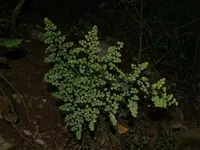
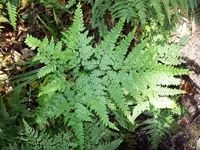
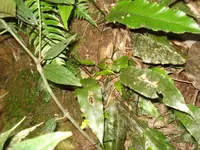
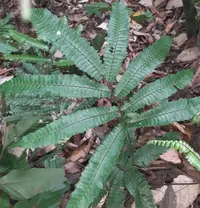
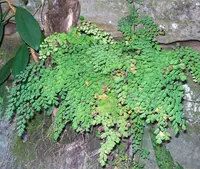
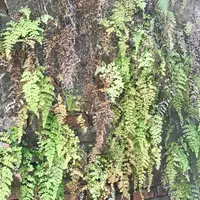
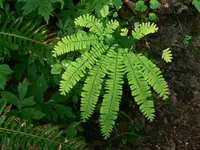
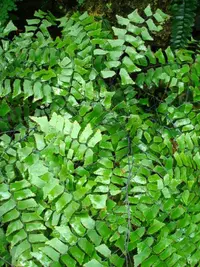
The common finger-fern (Grammitis billardierei) is a small epiphytic fern, often found growing on tree trunks, rocks, or mossy logs. It forms neat clumps of narrow, finger-like fronds that give the plant its name. In nature, it occurs in cool, moist forests of Australasia, where light is filtered and air humidity is consistently high. Its shallow roots and delicate fronds mean it reacts quickly to drying out or overheating. This species can be moderately challenging indoors, as it dislikes low humidity, strong sun, and prolonged drought. Those who care for common finger-fern should provide gentle, indirect light, stable moisture, and a well-drained but moisture-retentive substrate.

Main Plant Requirements

Care Difficulty

Hard Care

Light Preference

Partial Shade

Water Requirements

Keep Soil Moist

Temperature Preference

Warm Climate

Hardiness Zone

10–11

Soil Texture

Loamy, Peaty, Organic-rich

Soil pH

Strongly acidic (4.5–5.5), Acidic (5.5–6.5)

Soil Drainage

Moist but well-drained

Fertilization

Minimal (feed rarely)

Get Personalized Care Plan

Scan your plant to receive care tips personalized for your specific plant

Available on iOS and Android

How to Care for the common finger-fern

This fern prefers soft, filtered light that mimics a shaded forest floor.

  • Provide 2–4 hours of gentle morning sun with bright dappled or filtered light for the rest of the day, avoiding harsh midday and afternoon sun.
  • Grow common finger-fern in partial to full shade outdoors, such as on a shaded rock wall or tree trunk, where it receives indirect skylight.
  • Watch fronds for stress: pale, crispy tips indicate excess sun; sparse, stretched growth signals light is too dim, especially in winter.

This species needs consistently moist but not saturated conditions around its roots and mounting surface.

  • Before watering, check the top 1–2 cm of substrate or moss; water when it feels just barely dry, allowing excess to drain away completely.
  • Increase watering frequency in warm, dry weather, and reduce slightly in cooler seasons, while never allowing the root zone to dry out fully.
  • Signs of excess water include blackened, mushy rhizomes and a sour smell; curling, crisp fronds and very light substrate indicate underwatering in Grammitis billardierei.

This fern prefers cool to mild conditions with limited temperature swings.

  • Aim for 50–70°F (10–21°C) for steady growth, with best vigor often seen around 55–65°F (13–18°C) in shaded, humid sites.
  • Protect from frost, as damage often occurs below 32°F (0°C); brief dips to 28–30°F (-2– -1°C) may be survived but can injure fronds.
  • In hotter periods above 80°F (27°C), increase shade and humidity and avoid hot, drying winds, which quickly desiccate the fine foliage.

This fern prefers consistently moist air and reacts quickly to dry indoor conditions.

  • Aim for 60–80% humidity; it tolerates brief dips to 50% but dries out in heated homes.
  • Crisping frond tips, stalled growth, and curling pinnae indicate humidity stress rather than underwatering.
  • Increase humidity with a nearby humidifier, close grouping of plants, or a pebble tray that allows air circulation around the pot.

This epiphytic fern needs a loose, airy substrate that stays evenly moist but never waterlogged.

  • Use a fine orchid-style mix: 40% fine bark, 30% peat or coco coir, 20% perlite, 10% leaf mold or compost for organic matter.
  • Aim for slightly acidic conditions around pH 5.5–6.5, which support nutrient uptake and healthy root and rhizome growth in Grammitis billardierei.
  • Ensure very rapid drainage; water should flow through in seconds, with no standing water left in saucers or cachepots.
  • Avoid heavy garden soil, high-clay potting mixes, or compacted substrates that reduce aeration and promote root and rhizome rot.

This species adapts well to container culture when its shallow, spreading roots and moisture needs are considered.

  • Choose a wide, shallow pot that matches the fern’s creeping habit and prevents unused, soggy lower soil layers.
  • Select a pot material that balances moisture, such as unglazed clay in humid rooms or glazed plastic/ceramic in drier homes.
  • Use a container with large, unobstructed drainage holes and elevate it slightly so runoff exits freely rather than pooling under the base.

Grammitis billardierei has modest nutrient needs, so aim for light, consistent feeding during active growth.

  • Use a balanced liquid fertilizer (around 10-10-10) at 1/4–1/2 strength every 4–6 weeks in spring and summer.
  • Alternatively, apply a small amount of fine, well-aged compost on the soil surface at the start of the growing season.
  • Avoid slow-release pellets pressed against roots, which can burn this fine-rooted fern.
  • Stop feeding in fall and winter, when growth slows, to prevent weak, leggy fronds.

Pruning for Grammitis billardierei focuses on cleanliness and maintaining a tidy, natural clump.

  • Best time is late winter or early spring, just before new fronds emerge strongly.
  • Use clean, sharp scissors to remove dead, yellowing, or diseased fronds at the base.
  • Thin a few crowded, crossing fronds to improve air flow and reduce fungal issues without overopening the clump.
  • Avoid heavy cutting, as this fern does not respond by producing denser growth after hard pruning.

This fern prefers stable conditions, so repot or transplant only when clear signs of crowding appear.

  • Check for roots circling the pot, pushing out of drainage holes, or slow growth despite good care.
  • Plan repotting or transplanting in spring, allowing the plant a full growing season to recover.
  • Repot every 2–3 years at most, moving only 1 pot size up and using a loose, moisture-retentive, well-drained mix.
  • Handle the root ball gently, keep rhizomes just at the surface, water thoroughly afterward, and keep in shaded, wind-sheltered conditions for 1–2 weeks.

Propagation of Grammitis billardierei is possible but more specialised than for many houseplants.

  • Division is the most practical method; divide small clumps in early spring when new growth begins.
  • Lift the plant carefully, then tease apart sections with several healthy fronds and rhizome pieces each.
  • Plant divisions into a fine, well-drained fern mix, keep evenly moist, and maintain high humidity and shade.
  • Spore sowing is possible but slow; use sterile medium, consistent moisture, and stable warmth for best results.

This fern prefers mild, frost-free conditions and needs some protection in colder climates, especially in containers.

  • In regions below about 25–30°F, grow Grammitis billardierei in pots that can be moved indoors or into a cool greenhouse.
  • Keep indoor winter temperatures around 50–65°F with bright, indirect light and slightly reduced watering.
  • Outdoors in mild zones, add a thin mulch around the root zone, avoiding direct contact with fronds, to buffer temperature swings.

Care Tips

Mounting Technique

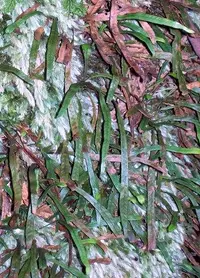
Grow this fern on a slab of cork, hardwood, or tree-fern fiber with a thin layer of fine bark or sphagnum so the short creeping rhizomes can attach and form a dense mat instead of staying cramped in a standard pot.

Gentle Rinsing

Every 4–6 weeks, rinse the foliage and mounting surface with lukewarm, low-pressure water to remove dust, fungal spores, and mites without disturbing the delicate fronds.

Airflow Management

Position the plant where there is light, steady air movement from a fan or nearby vent deflector to reduce fungal issues while avoiding direct drafts that dry the fronds too quickly.

Water Quality Control

Use rainwater, distilled, or reverse-osmosis water if tap water is hard or heavily chlorinated, since mineral buildup on the roots and rhizomes can stunt growth in this species.

Seasonal Rest Adjustment

In winter, slightly reduce watering frequency and avoid repotting or remounting, allowing a mild rest period that aligns more closely with how this species grows in nature and supports long-term Grammitis billardierei plant care.

Common Pests and Diseases

Scale insects

This pest feeds on frond sap, causing yellowing, thinning, and gradual decline of the fine pinnae. Symptoms include small, dome-shaped brown or tan bumps along the frond midribs and on the wiry stipes in sheltered, humid positions.

Solution

Remove heavily infested fronds and gently scrape or wipe remaining scales with a cotton swab dipped in isopropyl alcohol, taking care not to damage the slender fronds. Improve air movement around the plant, avoid honeydew buildup by rinsing foliage with lukewarm water, and repeat manual cleaning every 7–10 days until no new scales appear.

Fern aphids

These insects cluster on the youngest fronds and rachises, distorting the narrow segments and leaving sticky honeydew that can encourage sooty mold in shaded, moist fern collections. This pest is more common on plants grown in sheltered, cool coastal or cloud-forest style conditions.

Solution

Rinse colonies from the fronds with a firm but gentle stream of water, supporting the delicate foliage with your hand. For persistent infestations, apply a dilute insecticidal soap or horticultural oil to both sides of the fronds, repeating at 5–7 day intervals while monitoring new growth closely as part of Grammitis billardierei care.

Fern scale mites

This pest consists of tiny, almost transparent mites that feed on the thin frond tissue under high humidity and low air movement, causing a fine speckling, loss of translucency, and a dull, gray-green appearance. Symptoms include slowed frond expansion and a roughened texture on the normally smooth segments.

Solution

Increase air circulation and slightly reduce humidity peaks, then rinse fronds thoroughly to remove dust and webbing, as dust favors mite buildup. Where needed, treat with a miticidal product labeled safe for ferns, applying to both upper and lower frond surfaces and repeating according to label directions while avoiding heat or strong light during application.

Leaf tip blight

This disease affects the delicate frond tips, especially in constantly wet or poorly ventilated situations, leading to browning and dieback that starts at the apex and slowly moves inward. Symptoms include water-soaked or darkened tissue at the tips of the narrow pinnae that later dries and becomes papery.

Solution

Trim off affected frond tips back into healthy tissue with sterilized scissors and discard the clippings. Reduce overhead watering, allow the fronds to dry between waterings, increase gentle airflow, and if spread continues, use a low-toxicity fungicide labeled for ferns, focusing on newly emerging fronds most at risk.

Bacterial leaf spot

This disease appears as small, translucent, water-soaked spots on the thin frond blades that turn dark brown and may merge into irregular patches, often where water lingers on the foliage. Symptoms include a slight yellow halo around spots and increased damage in crowded, constantly damp plantings or terrariums.

Solution

Promptly remove and discard badly spotted fronds, and disinfect cutting tools between plants. Avoid splashing water onto the fronds, water at the base or from below, increase spacing and air movement, and if the issue persists, apply a bactericide or copper-based product sparingly, following label directions and monitoring new growth for improvement.

Interesting Facts

Epiphytic rock fern

This species often grows as an epiphyte on tree trunks and branches or as a lithophyte on shaded rocks, anchoring itself in moss and leaf litter rather than typical soil.

Tiny, finger-like fronds

Its narrow, simple fronds resemble small green fingers and usually form loose, tufted clumps, a growth form that helps it capture light efficiently in dim forest understories.

Southern Hemisphere native

This fern is naturally found in cool, moist forests of southeastern Australia, Tasmania, and New Zealand, where it contributes to the dense fern layer on trunks, logs, and rock faces.

FAQs about common finger-fern

This species stays low and compact, usually forming small, tufted clumps rather than tall fronds. It suits crevices, terrariums, and small containers where a fine-textured, ground-hugging fern is preferred instead of a tall specimen.

Grow Healthy Plants with Botan Care

Keep your plants happy and healthy with plant identification, disease detection, and easy care guidance.

Botan plant care app — identify plants on mobile

Explore More Plants