Grammitis heterophylla Care

Grammitis heterophylla

About Grammitis heterophylla

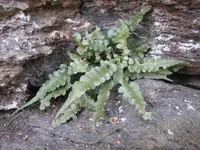
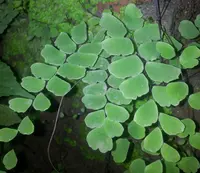
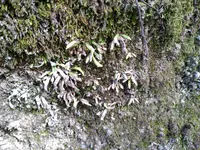
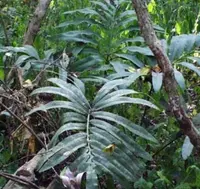
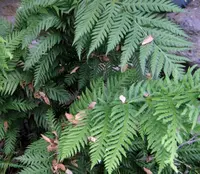
Grammitis heterophylla is a small epiphytic fern that typically grows on tree trunks or mossy rocks in humid tropical forests. It forms delicate, narrow fronds that create a fine, airy texture.

This species is naturally found in shaded, moist habitats, often in higher rainfall areas with consistently damp air. Its thin fronds and small root system make it sensitive to drying out and sudden environmental changes.

Because of this, it is considered a plant for growers who can maintain stable humidity and gentle, indirect light. Anyone who wants to learn how to care for Grammitis heterophylla should focus on keeping moisture even and avoiding harsh conditions.

Main Plant Requirements

Care Difficulty

Hard Care

Light Preference

Partial Shade

Water Requirements

Keep Soil Moist

Temperature Preference

Tropical / Frost Sensitive

Hardiness Zone

Unknown

Soil Texture

Loamy, Peaty, Organic-rich

Soil pH

Acidic (5.5–6.5)

Soil Drainage

Moist but well-drained

Fertilization

Minimal (feed rarely)

Get Personalized Care Plan

Scan your plant to receive care tips personalized for your specific plant

Available on iOS and Android

How to Care for the Grammitis heterophylla

This small epiphytic fern prefers soft, filtered light similar to a bright forest understory.

  • Provide 4–6 hours of bright, indirect light each day, such as dappled light under taller plants or shade cloth outdoors.
  • Tolerates light to medium shade, but fronds become sparse and elongated if grown in very dim spots; move slightly closer to gentle light if growth slows.
  • Protect Grammitis heterophylla from direct midday or afternoon sun, which can scorch fronds; brief early-morning sun is acceptable in cooler seasons.

Moist but airy conditions suit this fern best, mirroring its habit on tree trunks or mossy rocks.

  • Allow the top 1–2 cm of substrate or mounting medium to feel just barely dry before watering again, then soak thoroughly so water drains away freely.
  • In warm, active growth, this may mean watering every few days; in cooler seasons, extend intervals and rely more on touch than on a fixed schedule.
  • Signs of overwatering include limp, blackened rhizomes and sour smell, while crisp tips and curling fronds suggest underwatering; adjust and improve drainage as needed for healthy Grammitis heterophylla.

Stable, mild temperatures support steady frond production and reduce stress for this fern.

  • Aim for 65–80°F (18–27°C) for best growth, with consistent moisture and humidity to prevent leaf tip damage.
  • Short dips to about 50°F (10°C) are usually tolerated if the plant is kept drier, but repeated exposure below this range slows growth and increases rot risk.
  • Avoid frost entirely, as tissue is damaged near 32°F (0°C), and protect from hot, stagnant air above 86°F (30°C) by increasing shade, airflow, and humidity.

This epiphytic fern prefers consistently moist air and reacts quickly to dry conditions.

  • Aim for 60–80% humidity; avoid prolonged exposure below 50%, especially with heating or air conditioning running.
  • Crisping frond tips, pale new growth, and stalled frond expansion indicate humidity stress rather than underwatering.
  • Use a pebble tray, group plants near each other, or run a small humidifier close by to maintain stable humidity around Grammitis heterophylla.

This fern needs a loose, airy, organic-rich medium that drains fast yet stays lightly moist.

  • Use a mix such as 40% fine orchid bark, 30% peat or coco coir, and 30% perlite or pumice to mimic an epiphytic root environment.
  • Ensure rapid drainage so water runs through within seconds; the mix should feel springy, not compact or sticky when squeezed.
  • Keep soil slightly acidic, around pH 5.5–6.5, which supports nutrient uptake and discourages lime-scale buildup on roots.
  • Avoid dense garden soil, heavy clay, or pure peat that compacts over time and suffocates roots; add extra bark and perlite to improve aeration.

This species is suitable for container growing, especially in shallow, well-ventilated pots or baskets.

  • Choose a wide, shallow container to match its fine, surface-hugging roots and prevent waterlogging in deeper layers.
  • Use a pot with many small drainage holes so the loose mix does not wash out while excess water exits quickly.
  • Hanging baskets or slatted orchid-style containers support natural frond arching while allowing air to move freely around the root zone.

This fern grows in low-nutrient habitats, so Grammitis heterophylla needs only light, careful feeding in cultivation.

  • Use a dilute balanced liquid fertilizer (around 10-10-10) at 1/4–1/2 strength during active growth in spring–summer.
  • Apply every 4–6 weeks if growth is pale or weak; skip feeding if fronds look healthy and medium is fresh.
  • Avoid heavy compost or slow-release pellets that can burn fine roots; use a very loose, airy, low-salt mix instead.
  • Stop feeding in fall and winter, when growth slows, to prevent salt buildup and soft, weak tissues.

Pruning needs are minimal and focus on hygiene rather than shaping for Grammitis heterophylla.

  • Best timing is late winter or early spring before new fronds expand, with light touch-ups through the year.
  • Remove dead, yellowed, or damaged fronds at the base using small, sharp scissors or snips to keep the clump clean.
  • Thin only obviously crowded or overlapping fronds to improve air movement without exposing the rhizomes too much.
  • Avoid heavy cutting, which can stress the plant and slow recovery, as this fern maintains a naturally fine texture.

This small fern resents disturbance, so repotting or transplanting Grammitis heterophylla should be infrequent and gentle.

  • Check for roots circling the pot, water running straight through, or slowed growth as signs it needs a slightly larger container or new spot.
  • Plan any move for spring, when active growth helps roots re-establish; avoid disturbing it during heat waves or winter.
  • Typical frequency is every 2–3 years at most, shifting only 1 pot size up and keeping a very airy, bark-rich, well-drained mix.
  • Handle the rhizomes carefully, disturb roots as little as possible, water thoroughly afterward, and maintain high humidity and stable shade until recovery.

Propagation of Grammitis heterophylla is possible but best suited to patient growers with controlled conditions.

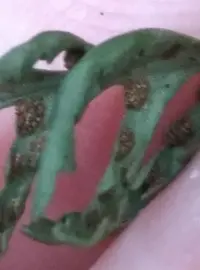
  • Spore propagation is the standard method; collect mature spores from brown, dry sori on older fronds in late summer.
  • Sow spores on sterilized, moist, fine-textured medium under high humidity, stable warmth (68–75°F), and low to medium light.
  • Keep the surface evenly moist, never waterlogged, and avoid drafts; germination and development into small ferns can take months.
  • Division is rarely used and should be very conservative, separating only strong, multi-frond clumps to limit transplant shock.

In mild climates, Grammitis heterophylla needs only modest winter care, but it is sensitive to hard frost.

  • Maintain temperatures above about 40°F; in colder regions, grow in containers and overwinter indoors or in a cool greenhouse.
  • For outdoor plantings in mild zones, add a light mulch around the root zone, keeping material off the crown to prevent rot.
  • Reduce watering in winter while preventing complete drying, as cold, saturated media greatly increase root damage risk.

Care Tips

Mounting technique

Use a hardwood slab or cork bark with a thin layer of long-fiber sphagnum moss and secure the rhizomes with soft plant ties or nylon fishing line, leaving new frond buds uncovered so they can expand freely.

Fine-mist hydration

Provide hydration by using a fine-mist spray directly onto the moss backing until it is evenly moist but not dripping, which mimics cloud-forest conditions without waterlogging the roots.

Airflow management

Position the plant where there is gentle, constant air movement from an oscillating fan or open doorway to prevent fungal issues on the delicate fronds without exposing it to direct drafts.

Careful handling

Handle or reposition the plant only by the mount or substrate, not the fronds, since the thin lamina and wiry rhizomes damage easily and recover slowly.

Regular moss renewal

Refresh the outer layer of sphagnum every 6–12 months by carefully tucking in fresh, rinsed moss around the rhizomes, which maintains aeration and reduces salt buildup when caring for Grammitis heterophylla.

Common Pests and Diseases

Scale insects

This pest feeds on fronds and rachises, causing yellowing, reduced vigor, and sticky honeydew that may lead to sooty mold. Infestations are more common on plants grown in shaded, humid indoor or greenhouse conditions.

Solution

Remove heavily infested fronds and gently scrape or wipe remaining insects with cotton pads dipped in 70% isopropyl alcohol, then rinse with water. Improve air movement around the fern and, if needed, use a light application of insecticidal soap or a horticultural oil labeled safe for ferns, testing on a small area first.

Mealybugs

These insects appear as small white cottony clusters along the frond midrib and at the base of pinnae, where they suck sap and weaken plants. Symptoms include stunted growth, leaf distortion, and honeydew deposits.

Solution

Isolate affected plants, then dab visible mealybugs with cotton swabs dipped in 70% isopropyl alcohol and rinse the plant gently. For persistent infestations, use repeated applications of insecticidal soap, paying close attention to sheltered crooks where fronds emerge, and maintain slightly lower humidity and better airflow without letting the plant dry out.

Fern scale (armored)

This pest forms small, flat, brown or gray scales tightly attached to rachises and older fronds, often going unnoticed until fronds yellow and decline. These insects tolerate high humidity typical for growing Grammitis heterophylla and can build up in dense plantings on mounts or in terraria.

Solution

Prune and discard the most heavily infested fronds, then carefully scrub remaining scale patches with a soft brush in lukewarm water, taking care not to damage thin fronds. Follow up with a low-dose horticultural oil or insecticidal soap treatment, repeat every 7–10 days for several cycles, and avoid overfertilizing, which encourages rapid, soft growth that is more susceptible to scale.

Rhizoctonia blight

This disease causes browning and collapse of young fronds from the base, often accompanied by dark, sunken lesions near the rhizome. Symptoms include thinning clumps and dead patches, especially in warm, constantly wet media with poor air circulation.

Solution

Remove and discard affected fronds and any soft, discolored rhizome tissue, then repot or remount onto a fresh, very well-drained, airy medium and reduce watering frequency. Increase airflow, avoid overhead watering late in the day, and where disease pressure is high, consider a preventive drench with a fern-safe fungicide labeled for Rhizoctonia, following label directions carefully.

Botrytis leaf spot

This disease produces small tan to brown spots on thin fronds that may expand and merge into irregular dead areas, sometimes with a gray fuzzy mold under very humid, stagnant conditions. Symptoms include premature frond death in dense, shaded setups such as terraria or crowded greenhouse benches.

Solution

Promptly remove and discard spotted or moldy fronds, then increase spacing, airflow, and light levels slightly while keeping the substrate just lightly moist rather than wet. Avoid overhead misting, water at the base early in the day, and if the problem persists, use a targeted fungicide labeled for Botrytis on ferns, testing first on a small section of the plant.

Interesting Facts

Epiphytic fern specialist

This species is an epiphytic fern that naturally grows on tree trunks and branches rather than in soil, anchoring its short rhizomes in mosses, bark crevices, and decaying organic matter in humid forests.

Distinctly variable fronds

The species name heterophylla refers to its variable leaf forms, as it can produce fronds of different shapes and sizes on the same plant, a feature that helps taxonomists distinguish it from similar grammitid ferns.

Cloud forest habitat

It is typically associated with cool, moist, montane or cloud forest habitats, where persistent fog and high ambient humidity support its thin, delicate fronds and limited drought tolerance.

FAQs about Grammitis heterophylla

This small epiphytic fern suits indoor displays if humidity remains high and light is gentle and filtered. Mounting on bark or placing in a terrarium works well. Grammitis heterophylla indoor care benefits from stable warmth and consistent moisture.

Grow Healthy Plants with Botan Care

Keep your plants happy and healthy with plant identification, disease detection, and easy care guidance.

Botan plant care app — identify plants on mobile

Explore More Plants