Choose stable substrate
Attach thalli only to long-lived, stable bark or hardwood pieces that will not rot quickly, since this crustose lichen is slow-growing and needs many years on the same surface to form readable pencil-like marks.

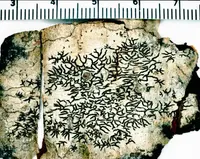
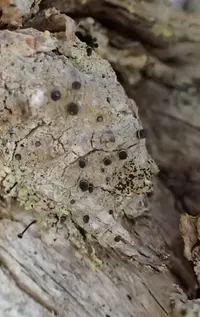
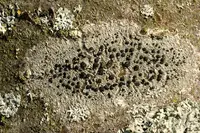
Pencilmark lichen (Graphis scripta) is a crustose lichen, not a true plant, that forms flat, gray patches tightly attached to bark or smooth rock. Its dark, narrow fruiting lines look like tiny pencil marks, which gives it its common name.
This lichen occurs widely across temperate regions, especially in woodlands and hedgerows, where air quality is reasonably good. It grows slowly and depends on clean, stable surfaces and consistent humidity, which can make it challenging to care for pencilmark lichen in artificial settings.
In nature it prefers shaded to lightly filtered light, regular moisture from rain or mist, and stable, undisturbed bark or stone rather than soil.

Care Difficulty
Hard Care

Light Preference
Shade

Water Requirements
Keep Soil Moist

Temperature Preference
Cool Climate

Hardiness Zone
Unknown

Soil Texture
Rocky, Organic-rich

Soil pH
Acidic (5.5–6.5)

Soil Drainage
Moist but well-drained

Fertilization
Minimal (feed rarely)
Scan your plant to receive care tips personalized for your specific plant
Available on iOS and Android
This crust lichen prefers cool, shaded forest conditions with only brief indirect light exposure.
This bark-dwelling lichen relies on ambient moisture rather than traditional soil-based watering.
This species is adapted to cool, temperate woodland climates with moderate seasonal variation.
This lichen needs consistently moist air and surfaces to persist.
This bark-dwelling lichen does not use soil in the way vascular plants do.
This species is not naturally suited to standard container growing but can be kept on bark slabs placed in shallow trays.
Graphis scripta is a crustose lichen that does not require fertilization in cultivation or in nature.
Graphis scripta is not pruned in the usual horticultural sense, as it is a crustose lichen tightly attached to bark or rock.
This species is not suited to conventional repotting; it is usually left on its original bark or rock substrate.
Propagation of Graphis scripta is specialized and rarely attempted outside research or conservation settings, as it depends on slow natural colonization.
This lichen is very cold hardy and normally needs no special winter care when growing outdoors on trees or rocks in suitable climates.

Plant Health Check
Not sure what's wrong with your plant? Check your plant's health inside the app.
This lichen forms elongated, slit-like apothecia that look like fine writing or pencil marks on smooth bark, which inspired both its common name pencilmark lichen and its species name scripta, meaning written.
It typically colonizes smooth bark of deciduous trees such as beech and maple in relatively shaded, humid woodlands, making it a useful indicator of stable, undisturbed forest microhabitats.
Pencilmark lichen is sensitive to sulfur dioxide and other air pollutants, so its presence and abundance have been used in lichen-based air quality surveys in parts of Europe and North America.

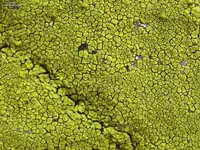
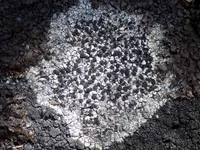
Some studies of temperate forests have used the sharp boundary lines between pencilmark lichen and neighboring crustose lichens on tree bark to investigate slow competitive interactions that can take many years to become visible at the scale of a few millimeters.
This species grows very slowly, often only fractions of a millimeter per year. Growth rate depends on clean air, stable humidity, and an undisturbed substrate such as mature bark or old, unpainted wood.
Keep your plants happy and healthy with plant identification, disease detection, and easy care guidance.