Guepinia Care (Guepinia helvelloides)

Also known as: apricot jelly
Guepinia

About Guepinia

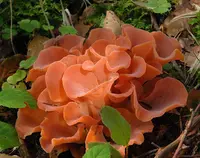
Guepinia helvelloides is a small, jelly-like fungus rather than a true leafy plant. It forms bright orange to salmon, spoon-shaped fruiting bodies that stand upright from decaying wood or soil rich in organic matter. This unusual shape makes it easy to recognize in the field.

It naturally occurs in temperate forests of Europe, North America, and parts of Asia, usually in moist, shaded woodland habitats. It is not commonly grown at home, since it depends on decaying organic material and specific forest-like conditions to complete its life cycle.

For those who want to care for Guepinia under controlled conditions, stable moisture, cool temperatures, and consistently damp, humus-rich substrates are essential but can be challenging to maintain indoors.

Main Plant Requirements

Care Difficulty

Hard Care

Light Preference

Partial Shade

Water Requirements

Keep Soil Moist

Temperature Preference

Cool Climate

Hardiness Zone

Unknown

Soil Texture

Loamy, Silty, Organic-rich

Soil pH

Acidic (5.5–6.5)

Soil Drainage

Moist but well-drained

Fertilization

Minimal (feed rarely)

Get Personalized Care Plan

Scan your plant to receive care tips personalized for your specific plant

Available on iOS and Android

How to Care for the Guepinia

This fungus prefers cool, shaded forest conditions with only brief, gentle sun exposure.

  • Aim for bright shade with dappled light, such as beneath deciduous trees receiving 1–3 hours of early morning sun and no direct afternoon sun.
  • Choose a north- or east-facing woodland edge or similar site where taller vegetation filters light throughout the day, mimicking natural Guepinia habitats.
  • Too much direct sun dries leaf litter and soil, reducing fruiting; deep, dense shade with no indirect light can also limit spore production.

This species thrives in consistently moist, humus-rich forest soil, not in standing water.

  • Maintain evenly moist conditions by allowing the top 1–2 cm of forest floor or substrate to feel just slightly dry before the next thorough soaking.
  • In cool, wet seasons, rely mostly on rainfall; in warm, dry spells, add water when leaf litter feels dry and crisp and caps stop appearing or shrink quickly.
  • Avoid waterlogged sites with puddling or sour, swampy smell, which indicate poor drainage and can cause decay of Guepinia helvelloides structures.

This fungus is adapted to cool, temperate woodland climates with moderate seasonal variation.

  • Optimal fruiting usually occurs around 50–65°F (10–18°C), often in late spring to autumn when days are mild and nights are cool.
  • It tolerates lows near 32°F (0°C) in dormant stages but active fruiting bodies are easily damaged by hard frost or sudden freezes.
  • Sustained heat above 77–82°F (25–28°C) with dry conditions shortens lifespan of fruiting clusters; partial shade and moist soil buffer temperature swings.

This fungus prefers consistently moist air but usually does not need humidity control in typical outdoor habitats.

  • Target ambient humidity around 60–90% in shaded, sheltered sites to support fruiting.
  • It tolerates brief dips into drier air if the substrate remains evenly moist and not crusted.
  • Low humidity stress appears as shriveling, paler fruit bodies; increase moisture by mulching substrate and lightly misting surrounding leaf litter, not the fungus directly.

Guepinia helvelloides develops best in loose, humus-rich forest soil that stays moist yet freely draining.

  • Aim for a crumbly, loamy structure based on leaf mold or composted bark, with some coarse sand to prevent compaction.
  • Ensure fast drainage so water does not pool; the substrate should feel moist but never waterlogged or sticky.
  • A slightly acidic to neutral reaction around pH 5.0–7.0 reflects its natural conifer and mixed woodland habitats.
  • Improve aeration by mixing in coarse organic matter (shredded bark, decomposed wood chips) and avoid dense clay or peat-heavy mixes that seal at the surface.

This species is generally unsuitable for container growing because it depends on complex soil and wood-decay associations in the ground.

This wild ascomycete fungus naturally fruits in nutrient-balanced forest soils and usually needs no supplemental fertilizer in cultivation.

Guepinia helvelloides does not require pruning, as the fruiting bodies are short-lived and the main organism is the hidden mycelium in the soil or substrate.

In cultivation, this species is best managed by moving or renewing its substrate rather than treating it like a typical potted plant.

  • Transplant only when the substrate is exhausted, heavily contaminated, or overly compacted, indicated by reduced or absent fruiting.
  • Time any move to early spring or early fall, when temperatures are mild and moisture is stable.
  • Shift mycelium-colonized material gently into fresh, similar substrate without breaking it apart more than necessary.
  • Keep the new site evenly moist and shaded for several weeks to reduce stress on the mycelium.

Propagation of Guepinia helvelloides is specialized and mostly handled by experienced growers or researchers rather than home gardeners.

This fungus is naturally cold hardy in much of its range and usually needs no special winter care beyond maintaining a stable habitat.

Care Tips

Clustered colony placement

When introducing this fungus to a garden or woodland bed, place several colonized substrate patches within 30–50 cm of each other to encourage a visible fruiting cluster rather than scattered, isolated fruit bodies.

Moisture-retentive mulch

Apply a loose layer of leaf litter or fine wood chips over the inoculated ground so the substrate stays evenly moist while still allowing air flow around the developing fruit bodies.

Gentle harvesting technique

Cut fruit bodies at the base with a clean knife rather than pulling them out, which helps protect the underlying mycelium and supports repeated fruiting from the same spot over several seasons.

Discreet area marking

Mark inoculated or previously fruiting spots with low, unobtrusive labels or stones so foot traffic and raking do not compact or disturb the mycelium network.

Spore spread assistance

After a fruiting flush, leave several mature but still firm fruit bodies in place or move them gently to nearby suitable habitat so they can release spores and gradually expand the patch when growing Guepinia.

Common Pests and Diseases

Slug grazing

This pest commonly feeds on the soft fruiting bodies in damp forest conditions, leaving ragged edges and missing sections. Symptoms include slime trails on or near the fungi and rapid tissue loss, especially at night or after rain.

Solution

Hand-pick slugs in the evening, use beer traps or iron phosphate slug baits around but not directly on the fungi, and reduce dense groundcover where they hide. If cultivating or studying the fungus, use fine mesh barriers or copper tape around beds to limit access while maintaining moisture levels needed for growing Guepinia.

Snail feeding

These pests chew rounded holes in the fleshy structures and can hollow out smaller fruiting bodies. Symptoms include smooth-edged damage, visible snails in early morning, and silvered slime tracks on nearby debris or moss.

Solution

Remove snails by hand during damp periods, and place physical barriers such as copper tape or rough mineral grit around the area of interest. Keep nearby debris slightly thinned to reduce shelter, but maintain enough moisture and organic matter for the fungus to fruit normally.

Fungal parasitism

This disease occurs when other fungi colonize the fruiting bodies, causing deformation, discolored patches, or premature collapse. Symptoms include uneven growth, localized white, gray, or darker overgrowth, and faster decay than surrounding, healthy fruiting bodies.

Solution

Gently remove and discard heavily overgrown or distorted specimens to reduce spore load near healthy fruitings. Avoid excessive disturbance of the substrate, and maintain stable moisture rather than repeated wet-dry extremes, which can weaken the host tissue and favor opportunistic parasitic fungi.

Bacterial soft rot

This disease affects damaged or overly wet tissue, turning it watery, translucent, and foul-smelling. Symptoms include rapid collapse of fruiting bodies in warm, saturated conditions, often starting from insect or mechanical injury sites.

Solution

Remove and dispose of affected fruiting bodies to limit bacterial spread and reduce odor. If managing a cultivated patch, improve drainage slightly and avoid heavy watering directly onto the fungi, keeping the substrate evenly moist rather than waterlogged.

Interesting Facts

Bright jelly fruiting bodies

This fungus produces translucent, orange to salmon-colored fruiting bodies with a gelatinous, rubbery texture that often resemble small tongues or petals emerging from the ground or decaying wood.

Spring and early summer specialist

It typically appears in spring to early summer, often earlier than many other macrofungi, fruiting on soil rich in decaying conifer debris or directly among mosses in coniferous and mixed forests.

Monotypic genus representative

Guepinia helvelloides is the only widely recognized species in the genus Guepinia, making it of particular interest for studying evolutionary relationships within jelly fungi and related groups.

Botan icon

Did you know?

Molecular studies have led to taxonomic re-evaluation of this species, and it is now usually placed in the family Exidiaceae within the order Auriculariales, despite its superficial resemblance to some ascomycete cup fungi, illustrating how DNA data can overturn classifications based solely on appearance.

FAQs about Guepinia

The fruiting bodies are considered edible but are thin, gelatinous, and not highly valued. Identification must be absolutely certain, since some similar-looking cup fungi are inedible or mildly toxic. Always follow local foraging guidelines and expert identification.

Grow Healthy Plants with Botan Care

Keep your plants happy and healthy with plant identification, disease detection, and easy care guidance.

Botan plant care app — identify plants on mobile

Explore More Plants