River Pumpkin Care (Gunnera perpensa)

Also known as: Wild Rhubarb, Wild Ramenas
River Pumpkin

About River Pumpkin

River pumpkin, Gunnera perpensa, is a moisture-loving perennial herb native to wetlands and stream edges in southern Africa. It forms bold clumps of large, rounded leaves held on sturdy stalks emerging from creeping rhizomes underground. The plant produces tall spikes of small, reddish-brown flowers that give it a distinctive architectural look in bog gardens and water margins. It prefers consistently damp to wet soil and does best in full sun to light shade, which makes siting important if you want to care for River Pumpkin successfully. Its need for high moisture and cool, rich soil can make it more demanding than average border perennials, but it rewards suitable conditions with strong, dramatic growth.

Main Plant Requirements

Care Difficulty

Moderate Care

Light Preference

Partial Sun

Water Requirements

Aquatic

Temperature Preference

Warm Climate

Hardiness Zone

9–11

Soil Texture

Loamy, Silty, Organic-rich

Soil pH

Acidic (5.5–6.5), Slightly acidic (6.5–7.0)

Soil Drainage

Waterlogged tolerant

Fertilization

Minimal (feed rarely)

Get Personalized Care Plan

Scan your plant to receive care tips personalized for your specific plant

Available on iOS and Android

How to Care for the River Pumpkin

This moisture-loving perennial needs bright conditions but protection from harsh, drying sun.

  • Provide 4–6 hours of sun daily, ideally morning sun with light afternoon shade, especially in hot climates where leaves scorch easily.
  • Site River Pumpkin where taller plants or structures cast dappled or filtered light during the strongest midday sun.
  • In cooler seasons or mild coastal areas, it tolerates more open sun, but in summer monitor for pale, crispy edges, which signal excessive exposure.

This species is adapted to consistently wet habitats and performs best with saturated, never stagnant, conditions.

  • Maintain soil that stays constantly moist to wet; the surface should not dry beyond 1–2 cm, especially during active growth.
  • Ideal sites are pond margins, bog gardens, or slow-draining swales where Gunnera perpensa can access continuous moisture without standing in foul, anaerobic water.
  • Crisping, drooping leaves indicate underwatering, while foul odor, slimy roots, or collapsing petioles point to chronic waterlogging and poor oxygen levels.

This plant prefers mild, cool to warm conditions and is sensitive to hard frost and extreme heat.

  • For strong growth, aim for 60–77°F (16–25°C), with steady moisture and shelter from hot, drying winds.
  • It usually tolerates brief dips to about 40°F (4°C) if crowns stay wet but not frozen; hard frost can damage leaves and young growth.
  • In heat above 86°F (30°C), provide partial shade and ample soil moisture to limit stress, leaf scorch, and premature dieback.

This semi-aquatic plant thrives in very humid conditions and struggles in dry air.

  • Aim for 70–100% humidity, mimicking boggy or pond-edge conditions for River Pumpkin.
  • Crisping leaf edges, drooping foliage, and slower leaf expansion indicate humidity stress or overly dry air.
  • Raise humidity by placing pots in trays of water with stones, grouping plants near water features, or growing at a consistently wet pond margin.

This species prefers permanently wet, organic-rich soil that stays saturated but not stagnant.

  • Use a heavy loam mixed with plenty of composted organic matter to create a dense, moisture-retentive substrate.
  • Allow very slow drainage only; soil should feel consistently wet, similar to a bog, without foul anaerobic odor.
  • A slightly acidic to neutral pH around 6.0–7.0 suits Gunnera perpensa for nutrient uptake and root health.
  • Avoid sandy, fast-draining, or compacted soils by incorporating leaf mold, fine bark, or garden compost to boost water-holding capacity and aeration.

Gunnera perpensa can be grown in large containers if its need for constant moisture and stability is met.

  • Choose a deep, wide, heavy container that resists tipping as the foliage becomes large and top-heavy.
  • Use a thick, water-retentive soil mix and stand the container in a shallow tray or outer tub that can hold water without covering the crown.
  • Ensure drainage holes are present but kept partially submerged or plugged externally so the lower soil stays saturated rather than freely draining.

Gunnera perpensa benefits from moderate feeding in rich, consistently moist soil during the active growing season.

  • Use a balanced, slow-release fertilizer (around 10-10-10) or well-rotted compost at the start of spring growth.
  • Apply granular slow-release around the root zone, keeping it away from direct stem contact to avoid burn.
  • Feed every 6–8 weeks through the growing season, using half-strength liquid fertilizer if soil is poor.
  • Stop feeding in late fall and avoid fertilization during winter dormancy when caring for River Pumpkin.

Gunnera perpensa has low pruning needs, mainly to keep the clump healthy and tidy.

  • Best time for pruning is late winter to early spring, before strong new growth starts.
  • Remove dead, damaged, or diseased leaves and flower stalks with clean, sharp pruners.
  • Thin out congested older leaves at the base to improve air flow and reduce rot risk.
  • Avoid cutting healthy central crowns, as this can weaken growth and reduce overall vigor.

This species is usually grown in-ground near water, so focus on careful transplanting rather than frequent repotting.

  • Transplant in early spring or early fall when temperatures are mild and soil is moist.
  • Look for signs like slowed growth or crowded clumps before lifting and moving Gunnera perpensa.
  • Lift the plant with a wide root ball, disturbing roots as little as possible to limit stress.
  • Replant at the same depth in organically rich, wet soil, then water thoroughly and shade lightly for 1–2 weeks.

Gunnera perpensa is most often propagated by division or from fresh seed under controlled conditions.

  • Divide established clumps in early spring, when new buds just start to show at the crown.
  • Use a clean spade to split sections with several buds and a good portion of roots attached.
  • Replant divisions into saturated, humus-rich soil and keep consistently wet until strong new growth forms.
  • For seeds, sow fresh on the surface of moist medium, maintain warmth (68–75°F), and provide bright, indirect light.

In mild climates Gunnera perpensa needs little winter attention, but colder regions require added root protection.

  • The plant tolerates light frost but can suffer damage in prolonged freezes below about 25°F.
  • Apply a 5–10 cm layer of coarse mulch around the crown in late fall, keeping the crown itself just exposed.
  • In very cold areas, grow in large containers and move to a cool, frost-free, bright space for winter.

Care Tips

Rhizome Winter Protection

In climates with cold winters, cover the rhizome zone with a 5–10 cm layer of coarse mulch and, in very wet areas, add a breathable frost cloth to reduce freeze damage while still allowing air exchange.

Controlled Water Level

If planted at the edge of a pond or bog bed, keep the crown just above constant water level and adjust planting depth seasonally so the growing point never sits under standing water for long periods.

Nutrient-Rich Topdressing

Apply a thin topdressing of well-rotted manure or high-quality compost around, but not on, the crown at the start of the growing season to support strong leaf and rhizome growth without burying new shoots.

Slug And Snail Barriers

Protect new leaves with physical barriers such as copper tape around container rims or sharp mineral grit rings at the base, as tender spring growth is highly attractive to slugs and snails.

Division For Renewal

Every 3–4 years, divide large, congested clumps in early spring by lifting and cutting the rhizome into sections with several buds each, then replant promptly to maintain vigor when growing River Pumpkin.

Common Pests and Diseases

Snails and slugs

These pests are strongly attracted to the large, soft leaves and can rapidly skeletonize foliage, especially in wet habitats and along pond edges.

Solution

Hand-pick at dusk or dawn, use iron phosphate slug pellets labeled safe for wildlife, and set up physical barriers such as copper tape or rough mulch; reduce dense groundcover and debris near the plant to limit daytime hiding spots.

Leaf spot fungi

This disease causes small water-soaked lesions that enlarge into brown or tan spots, often with darker borders, on the broad leaves of this marsh plant.

Solution

Remove and dispose of affected leaves, avoid overhead watering, improve airflow where possible, and, in severe recurring cases, apply a broad-spectrum fungicide labeled for ornamental foliage plants according to the manufacturer’s directions.

Rhizome crown rot

This disease affects the thick rhizomes and crown in constantly saturated, low-oxygen substrates, leading to soft, foul-smelling tissue and leaf collapse.

Solution

Improve drainage while maintaining moisture by using a coarse, organic-rich substrate, avoid burying the crown too deeply, remove and discard all mushy tissue, and replant only firm, healthy rhizome sections in a better-aerated site to support long-term Gunnera perpensa plant care.

Aphids

These insects cluster on young stems and the undersides of leaves, sucking sap and causing leaf curling, distortion, and sticky honeydew that can attract sooty mold.

Solution

Spray colonies off with a strong stream of water, encourage natural predators such as lady beetles, and, if needed, treat new growth with insecticidal soap or horticultural oil, ensuring thorough coverage of leaf undersides.

Interesting Facts

Southern African native

This species occurs naturally in wet habitats such as stream margins, marshes, and seeps from South Africa northwards into parts of East Africa, where it often forms dense stands in saturated soils.

Striking leaf structure

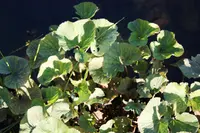
The plant produces large, peltate leaves, meaning the leaf stalk attaches to the underside of the blade rather than the edge, giving the foliage a distinctive shield-like appearance along water edges.

Specialized wetland rhizomes

It has a creeping rhizome system adapted to waterlogged, low-oxygen substrates, allowing the plant to anchor in soft mud and resprout after seasonal disturbance or light frost damage.

Botan icon

Did you know?

Gunnera perpensa is one of the few African members of the primarily South American Gunnera genus, making it biogeographically notable as a disjunct outlier of a lineage better known from the giant Gunnera species of the Andes and New Zealand.

FAQs about River Pumpkin

Lack of flowers usually comes from insufficient light, shallow or dry soil, or plants that are still immature. Ensure constantly moist, rich soil, enough sun, and avoid disturbing the crown; heavy division can delay flowering.

Grow Healthy Plants with Botan Care

Keep your plants happy and healthy with plant identification, disease detection, and easy care guidance.

Botan plant care app — identify plants on mobile

Explore More Plants