scented oakfern Care (Gymnocarpium robertianum)

Also known as: limestone fern, limestone oak fern
scented oakfern

About scented oakfern

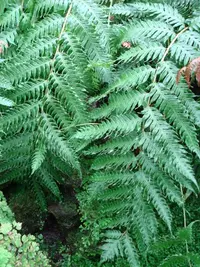
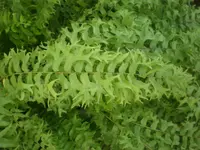
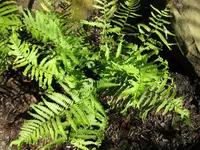
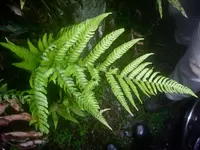
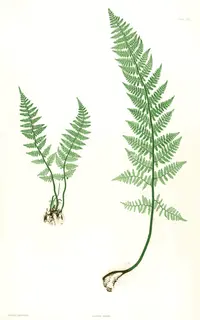
Scented oakfern, Gymnocarpium robertianum, is a small deciduous fern valued for its delicate, airy fronds and subtle, pleasant scent when crushed. It forms low, spreading clumps that create a soft green carpet rather than upright tufts.

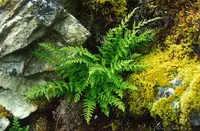
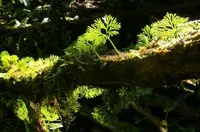
In nature, it grows in cool, humid, often calcareous woodlands and rocky slopes across parts of Europe and North America. It prefers shaded, sheltered sites with consistently moist, well-drained, humus-rich soil.

This species is moderately easy if its need for cool conditions and steady moisture is met, but it can decline quickly in hot, dry, or exposed spots. Gardeners who learn how to care for scented oakfern usually find it a reliable groundcover for shaded rock gardens and woodland plantings.

Main Plant Requirements

Care Difficulty

Moderate Care

Light Preference

Partial Shade

Water Requirements

Keep Soil Moist

Temperature Preference

Cool Climate

Hardiness Zone

4–8

Soil Texture

Loamy, Silty, Organic-rich

Soil pH

Acidic (5.5–6.5), Slightly acidic (6.5–7.0)

Soil Drainage

Moist but well-drained

Fertilization

Minimal (feed rarely)

Get Personalized Care Plan

Scan your plant to receive care tips personalized for your specific plant

Available on iOS and Android

How to Care for the scented oakfern

Gymnocarpium robertianum prefers soft, filtered light similar to a cool woodland floor.

  • Provide bright dappled shade or full shade with brief early morning sun, aiming for 1–3 hours of low-angle light per day.
  • Avoid direct midday and afternoon sun, which can scorch fronds, cause bleaching, and dry the soil too quickly for scented oakfern.
  • In summer, protect from reflective heat and strong sun; in winter, thinner canopy cover usually supplies enough light without any need for exposure adjustment.

Gymnocarpium robertianum performs best in evenly moist, never waterlogged soil.

  • Water when the top 2–3 cm of soil feel slightly dry, using slow, gentle watering so moisture penetrates 8–10 cm deep.
  • Ensure soil is humus-rich and free-draining; standing water, sour smell, or blackened rhizomes indicate overwatering and poor aeration.
  • In spring and summer, check moisture every few days; in cooler or rainy seasons, rely on rainfall and water only if fronds start to droop or soil begins to crack.

This fern prefers cool, stable temperatures typical of shaded woodlands.

  • Ideal growing temperatures are 55–70°F (13–21°C), especially during the active spring and early summer growth period.
  • The plant tolerates brief drops to about 25°F (-4°C) when dormant, but repeated hard freezes below 20°F (-7°C) can damage rhizomes without leaf mulch protection.
  • Heat above 80°F (27°C), particularly with low humidity, stresses the fern; provide deep shade, consistent soil moisture, and organic mulch during hot spells.

This fern prefers consistently moist air similar to a cool, shaded woodland edge.

  • Aim for 60–80% humidity; it copes briefly with 50% but fronds stay lusher in higher humidity.
  • Dry air causes crisping tips, pale fronds, and slowed unfurling of new growth in scented oakfern.
  • Increase humidity with a pebble tray under the pot, grouping plants, or a fine-mist humidifier rather than frequent heavy misting.

This species prefers a loose, humus-rich, slightly moist substrate that mimics rocky woodland soil.

  • Use a mix of roughly 50% fine compost or leaf mold, 30% pine bark fines, and 20% perlite or grit for structure and drainage.
  • Aim for slightly acidic to neutral pH around 6.0–7.0, avoiding strongly alkaline or saline substrates that restrict nutrient uptake.
  • Structure the mix to be crumbly and airy; coarse particles prevent compaction and keep oxygen around the shallow, fibrous roots of Gymnocarpium robertianum.
  • Avoid heavy clay, waterlogged spots, or pure sand; amend such sites with organic matter and mineral grit to balance moisture retention and drainage.

This fern can grow reasonably well in containers when moisture and stability are managed carefully.

  • Choose a broad, shallow pot to match its spreading rhizomes and keep the root zone evenly moist without water pockets.
  • Select thicker-walled clay or ceramic containers outdoors to buffer temperature swings and slow rapid drying of the mix.
  • Elevate the pot slightly on feet or blocks so drainage holes stay clear and excess water escapes quickly after rain or watering.

Gymnocarpium robertianum is adapted to lean woodland soils and usually needs only light feeding in cultivation.

  • Use a balanced, dilute liquid fertilizer (around 10-10-10 NPK at 1/4 strength) for scented oakfern grown in containers or poor substrate.
  • Feed once every 4–6 weeks during active spring–summer growth if fronds look pale or growth is weak.
  • Skip synthetic fertilizer for in-ground plants on rich, humusy soil; a thin layer of compost in spring is sufficient.
  • Stop feeding in fall and winter to avoid forcing soft, weak fronds during dormancy.

Gymnocarpium robertianum needs minimal pruning, focused on keeping the clump clean and healthy.

  • Best timing is late winter to early spring, before new fiddleheads unfurl, or after fronds die back in fall.
  • Remove dead, yellowing, or damaged fronds at the base using clean, sharp scissors or hand pruners.
  • Thin out congested interior fronds lightly to improve air movement and reduce fungal issues in damp sites.
  • Avoid hard cutting back of healthy green fronds, which reduces photosynthesis and can weaken the rhizomes.

This fern is more often transplanted in the garden than kept long term in containers, due to its woodland habit.

  • Consider transplanting when clumps spread beyond their space, growth becomes crowded, or soil dries out too quickly.
  • Carry out division and transplanting in early spring or early fall, when temperatures are mild and soil is evenly moist.
  • Typical garden clumps need lifting and dividing only every 3–5 years to refresh vigor and manage spread.
  • Dig widely around the root zone, keep rhizomes and attached soil intact, replant at the same depth, and water thoroughly to limit transplant shock.

Multiplying Gymnocarpium robertianum is usually done by division rather than by spores, which are slower and more complex.

  • Divide mature clumps in early spring or early fall, when soil is cool and moist.
  • Lift the plant carefully, then separate rhizomes into sections with several buds and healthy roots each.
  • Replant divisions immediately at the same depth in humus-rich, well-drained soil, and water to settle soil around roots.
  • For spore propagation, use sterile, moist medium, stable warmth, and high humidity, recognizing that development is slow.

This fern is generally cold hardy in temperate climates and needs little specific winter care in the ground.

  • Dormant fronds may die back after hard frosts; leave or remove them depending on desired tidiness.
  • In colder regions or exposed sites, apply a light mulch of leaf litter to insulate the rhizomes without smothering them.
  • Container-grown plants benefit from moving to a sheltered, frost-free but cool spot to protect roots from repeated freeze-thaw cycles.

Care Tips

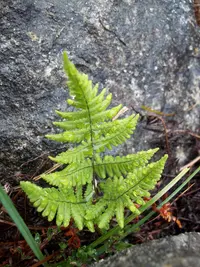
Rocky substrate pockets

When planting in the ground, mix small limestone gravel or broken tufa rock into pockets around the root zone to mimic its natural crevice habitat and improve drainage and root anchoring on slopes or walls.

Leaf-litter mulch

Top-dress with a thin, loose layer of shredded deciduous leaf litter each autumn to buffer soil moisture, slowly add organic matter, and provide a more natural microclimate for emerging fronds in spring.

Shallow division technique

If clumps become congested, divide only the outer, younger rhizome sections in early spring, replanting them shallowly so the rhizomes sit just below the surface to reduce transplant shock and maintain good frond density.

Lime monitoring

In alkaline-loving sites, test soil every 2–3 years and, if pH has dropped, lightly dust the surface with garden lime and water it in so the fern continues to receive adequate calcium without sudden pH swings.

Summer heat protection

In regions with hot summers, install a low, open-sided shade screen or plant near north-facing stone that stays cooler, which stabilizes the microclimate and reduces heat stress on delicate fronds while growing scented oakfern.

Common Pests and Diseases

Fern aphids

This pest feeds on tender fronds and rachises, causing distortion, yellowing, and sticky honeydew that can support sooty mold growth.

Solution

Rinse colonies off with a firm stream of water, then treat remaining insects with insecticidal soap or a light horticultural oil, repeating every 5–7 days until control is achieved; improving air movement and avoiding excess nitrogen fertilizer helps reduce reinfestation when growing scented oakfern in shaded borders or woodland beds.

Scale insects

These insects attach to stems and frond midribs, appearing as small, dome-shaped bumps and slowly weakening the plant by sucking sap.

Solution

Gently scrape or wipe individual scales off with a cotton swab dipped in isopropyl alcohol, then follow with insecticidal soap or horticultural oil, ensuring good coverage of the undersides of fronds and repeating treatments as new crawlers emerge.

Slugs and snails

This pest chews irregular holes in young fronds, often leaving ragged edges and slime trails, especially in damp, shaded sites.

Solution

Hand-pick slugs and snails in the evening, use iron phosphate bait around plantings, and reduce hiding places such as dense debris or boards; maintaining slightly drier surface mulch and spacing plants for airflow also discourages severe damage.

Leaf spot

This disease produces small brown to black lesions on fronds that may coalesce, giving the foliage a scorched or patchy appearance in prolonged damp conditions.

Solution

Remove and discard affected fronds, avoid wetting foliage when watering, and increase spacing and airflow; in repeatedly affected outdoor plantings, a protective copper-based fungicide applied in early spring and during extended wet periods can limit new infections.

Rust fungus

This disease causes small orange to brown pustules on the undersides of fronds, which can lead to premature yellowing and shedding in persistently humid, shaded areas.

Solution

Prune and dispose of infected fronds, avoid overhead watering, and improve air circulation by thinning nearby vegetation; in sites with a history of rust, apply an appropriate fungicide labeled for ferns at the first sign of pustules and repeat as directed to protect new growth.

Interesting Facts

Calcareous rock specialist

This species is tightly associated with limestone and other calcium-rich rocks, often forming scattered colonies in shady crevices and ledges where few other ferns tolerate the alkaline conditions.

Scented, but subtle

Crushed fronds can release a faint, resinous or slightly aromatic scent, which is unusual among small temperate woodland ferns and gives rise to the common name scented oakfern.

Disjunct European distribution

Its natural range is patchy across Europe and parts of western Asia, with strong populations in the British Isles and Scandinavia but large gaps elsewhere, reflecting its dependence on cool, humid, base-rich habitats.

Botan icon

Did you know?

In several parts of its range, this fern can act as a relict species, persisting in ancient, undisturbed limestone woodlands and gorges that serve as long-term refuges for cold-adapted plants since post-glacial times.

FAQs about scented oakfern

This species spreads slowly by short rhizomes, forming loose colonies rather than dense, smothering mats. In typical garden conditions it is not considered aggressive, but it can gradually fill a cool, moist, shaded bed.

Grow Healthy Plants with Botan Care

Keep your plants happy and healthy with plant identification, disease detection, and easy care guidance.

Botan plant care app — identify plants on mobile

Explore More Plants