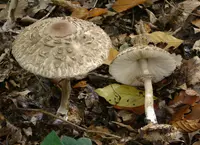
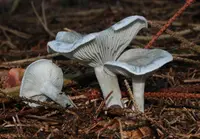
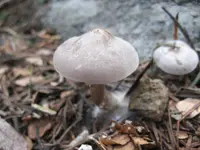
horsehair fungus Care (Gymnopus androsaceus)

horsehair fungus

About horsehair fungus

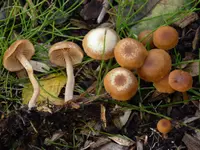
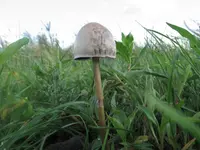
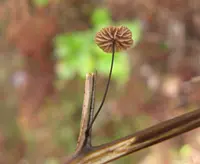
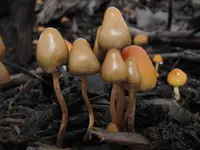
Horsehair fungus, Gymnopus androsaceus, is a small saprophytic fungus that lives on dead conifer needles, twigs, and forest litter. It plays an important role in breaking down organic matter. The mushroom has a tiny, pale brown cap on top of a long, very thin, dark stem that looks like a tough hair. It often forms scattered groups in coniferous or mixed woods across temperate regions. In cultivation it can be challenging, since it prefers cool, stable, moist forest-like conditions and a steady supply of suitable woody debris. Gardeners who want to learn how to care for horsehair fungus should focus on recreating a cool, shaded, well-aerated habitat with consistent humidity.

Main Plant Requirements

Care Difficulty

Hard Care

Light Preference

Shade

Water Requirements

Keep Soil Moist

Temperature Preference

Cool Climate

Hardiness Zone

Unknown

Soil Texture

Loamy, Peaty, Organic-rich

Soil pH

Strongly acidic (4.5–5.5), Acidic (5.5–6.5)

Soil Drainage

Moist but well-drained

Fertilization

Minimal (feed rarely)

Get Personalized Care Plan

Scan your plant to receive care tips personalized for your specific plant

Available on iOS and Android

How to Care for the horsehair fungus

This saprotrophic fungus thrives in cool, shaded forest environments with only brief, gentle sun exposure.

  • Provide bright, indirect light or dappled shade under trees; 1–2 hours of weak morning sun is acceptable, but avoid direct midday or afternoon sun.
  • Horsehair fungus fruits best where leaf litter stays slightly dim, such as north or east sides of woodland edges rather than open, exposed ground.
  • Excessive sun dries the substrate and suppresses fruiting; too little light under dense canopy can reduce host needle or leaf fall, lowering long‑term substrate quality.

This litter‑decomposing fungus depends on consistently moist, but not saturated, forest floor conditions.

  • Aim for evenly moist leaf litter; if managing in a garden bed, let the top 2–3 cm feel just barely dry before lightly re‑moistening.
  • Use loose, well‑drained, organic material so excess water can drain away; standing water or heavy clay promotes rot of the mycelium.
  • In dry or hot periods, mist or gently water the litter when it feels crisp and looks pale, but reduce watering in cool, rainy seasons to avoid soggy conditions.

This species favors cool to mild conditions and fruits most reliably in temperate, moist seasons.

  • Optimal activity and fruiting usually occur around 50–65°F (10–18°C), often in autumn or mild, wet periods.
  • Mycelium can tolerate down to about 32°F (0°C) in leaf litter, but hard, prolonged frost or frozen, exposed soil can damage surface growth.
  • Higher temperatures up to roughly 75°F (24°C) are tolerated if moisture stays high and direct sun is limited; above this, fruiting typically slows or stops.

This fungus tolerates a wide humidity range but fruits best in consistently moist air.

  • Aim for 60–85% humidity to encourage reliable fruiting of horsehair fungus on its substrate.
  • It survives brief drops to 40–50%, but caps may dry, crack, or abort in extended dry air.
  • Increase humidity by misting the surrounding substrate, using a humidity tent, or placing trays of wet leaf litter nearby.

This species prefers a loose, organic substrate that mimics decomposing forest litter rather than typical garden soil.

  • Use a mix built from fine bark, leaf litter, and well-aged compost to provide high organic content and soft structure for Gymnopus androsaceus.
  • Ensure very fast drainage by blending in coarse sand or perlite so water passes through in seconds rather than pooling.
  • Maintain slightly acidic to neutral conditions, roughly pH 5.5–7.0, as strongly alkaline media can suppress mycelium growth.
  • Avoid dense clay, peat-only mixes, or compacted substrates that hold stagnant water, since these restrict aeration and promote anaerobic rot.

This fungus can be grown in containers when the pot is treated as a controlled, moist substrate environment rather than a typical plant pot.

  • Choose a shallow, wide container to spread substrate in a thin layer, which helps maintain even moisture and gas exchange across the mycelium surface.
  • Select plastic or glazed ceramic to slow moisture loss so the substrate stays evenly damp between misting or watering cycles.
  • Elevate the pot on spacers so drainage holes stay clear and air can reach the base, preventing waterlogged zones at the bottom.

Gymnopus androsaceus, commonly called horsehair fungus, usually gains enough nutrients from decaying wood or forest litter, so fertilization is rarely necessary in naturalistic setups.

Pruning Gymnopus androsaceus is minimal and focuses on hygiene rather than shaping growth.

  • Remove spent mushroom clusters promptly using clean scissors to limit mold and bacterial growth around the culture.
  • Trim and discard any visibly moldy, waterlogged, or decaying substrate sections to maintain good air flow.
  • Collect and dispose of old fruiting bodies away from the growing area to reduce spore buildup and pests.

Transplanting Gymnopus androsaceus focuses on renewing its woody substrate rather than handling a typical rootball.

  • Plan to refresh or move the culture when fruiting declines, contamination appears, or substrate is fully colonized and drying quickly.
  • Carry out transplanting during active growth in mild conditions, avoiding temperature extremes that stress the mycelium.
  • Gently transfer colonized wood or substrate onto fresh, similar material, keeping it evenly moist but not waterlogged.
  • Shade the new site or container for several days and maintain stable humidity to limit transplant shock to the mycelium.

Propagation of Gymnopus androsaceus is usually done by spreading mycelium onto fresh woody material rather than by seed-like spores in home settings.

  • Use pieces of well-colonized wood or substrate as starter material and press them firmly against fresh, similar substrate.
  • Work in late spring to early fall when temperatures are mild and humidity can be kept moderate to high.
  • Keep the new substrate consistently moist, shaded, and well ventilated to support mycelium spread and future fruiting.
  • Avoid strong fungicides or disinfectants near the culture, as these can suppress colonization and delay new growth.

Outdoor cultures of Gymnopus androsaceus in temperate climates usually need little specific winter care beyond basic moisture management.

  • In cold regions, keep colonized logs or containers on the ground and lightly mulched to moderate freeze–thaw swings.
  • Ensure drainage remains open so winter rains or snowmelt do not leave the substrate waterlogged.
  • For container setups in very harsh climates, move cultures to an unheated but frost-sheltered area with good air flow.

Care Tips

Substrate layering

Create a thin top layer of fine, well-decomposed conifer needles or beech leaves over coarser woody debris to mimic its natural forest floor environment and encourage more even fruiting.

Branch bundle inoculation

Tie small bundles of pencil-thick twigs or conifer branch tips together, place them on a moist, shaded surface, then introduce colonized material so the fungus can occupy this replaceable wood resource over time.

Ventilation management

Provide gentle but constant air movement with a small fan set on low to reduce stagnant air, which helps limit bacterial film and mold competitors on the delicate fruiting stems.

Clean tool protocol

Sterilize scissors, forceps, and misting equipment with 70% isopropyl alcohol before handling the substrate or fruiting bodies to reduce the introduction of aggressive competitor fungi.

Seasonal resting phase

After a heavy flush, slightly reduce moisture and disturb the substrate as little as possible for 1–2 weeks to allow the mycelium to recover, which often leads to more reliable results when growing horsehair fungus over several cycles.

Common Pests and Diseases

Fungivorous springtails

These insects feed on fungal mycelium and developing fruiting bodies, sometimes grazing caps and stems of horsehair fungus in very moist culture setups. Symptoms include tiny jumping white or gray insects on the substrate surface and slowed or distorted mushroom development.

Solution

Reduce excess moisture by improving drainage and ventilation, and allow the surface of the substrate to dry slightly between misting while still maintaining overall humidity. Trap springtails with shallow dishes of soapy water placed on the substrate surface and, in severe cases, refresh or pasteurize the growing medium and restart with clean, uncontaminated material.

Mite infestation

These pests, often mushroom or soil mites, can feed on mycelium, spores, and young fruiting bodies, leaving pits or scarring on the tiny stems and caps. This pest typically appears in very organic, undisturbed substrates and may be visible as tiny moving specks under close inspection.

Solution

Lower humidity slightly, increase air movement, and remove heavily infested substrate or fruiting bodies to reduce populations. Use only pasteurized or sterilized substrates for growing horsehair fungus and keep culture containers sealed with fine filters or tight-fitting lids that still allow gas exchange to prevent reinvasion.

Green mold contamination

This disease is caused mainly by Trichoderma species that aggressively overgrow the delicate mycelium, producing dense green patches on the substrate. Symptoms include a change from white to bright green or bluish-green areas with a cottony to powdery texture and a noticeable drop in new fruiting body formation.

Solution

Isolate and discard contaminated sections of substrate as soon as green patches appear, since chemical treatment is rarely effective in small-scale culture. Start new cultures with freshly pasteurized substrate, use clean tools and containers, and reduce overly wet, stagnant conditions that favor Trichoderma growth.

Bacterial blotch

This disease appears in very humid, poorly ventilated setups as slimy, wet-looking spots or streaks on the thin stems or caps, sometimes leading to collapse of fruiting bodies. Symptoms include a sour or unpleasant odor and localized softening of affected tissues.

Solution

Improve air exchange and reduce surface wetness by misting less frequently but more finely, avoiding direct water droplets on fruiting bodies. Remove and discard any mushrooms showing slimy lesions, clean the container with hot water between flushes, and avoid handling the fungus with unwashed hands or dirty tools to limit bacterial spread.

Interesting Facts

Hair-thin stem adaptation

This species produces extremely slender, dark stems only about 0.1–0.3 mm thick, which are tough and wiry enough to support tiny caps among pine needles and forest litter.

Specialist on conifer litter

It grows mainly on fallen needles of pines and other conifers, helping break down this tough material and returning locked-up nutrients to the forest soil.

Global but overlooked

Although small and easily missed, it has a wide distribution across temperate regions in North America, Europe, and parts of Asia, especially in dry, open conifer woodlands.

Botan icon

Did you know?

Microscopic study shows that the stem of this fungus contains thick-walled, pigmented hyphae that act almost like tiny structural cables, giving the fruiting body unusual flexibility and resistance to mechanical damage compared with many other delicate woodland mushrooms.

FAQs about horsehair fungus

This species develops slowly. Thin, dark stems and tiny caps often appear over several weeks, especially in cool, moist conditions on decaying wood or conifer litter. Growth accelerates after rain but stalls in prolonged dry or hot weather.

Grow Healthy Plants with Botan Care

Keep your plants happy and healthy with plant identification, disease detection, and easy care guidance.

Botan plant care app — identify plants on mobile

Explore More Plants