




Best Soil for Purple Passion Plant (Gynura aurantiaca)

Loose, organic-rich soil helps Gynura aurantiaca maintain healthy roots by balancing steady moisture with enough air around the root zone.

Soil Texture

Loamy, Sandy, Organic-rich

Soil pH

Acidic (5.5–6.5), Slightly acidic (6.5–7.0)

Soil Drainage

Moist but well-drained

Gynura aurantiaca Soil Guide

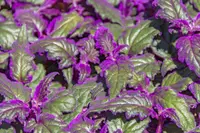
Native to Java in Indonesia, Gynura aurantiaca grows in warm, humid conditions where the ground stays lightly moist but does not stay soggy. That background explains its preference for soil that balances airflow with steady moisture around the roots.

A loose loamy or sandy, organic-rich substrate suits its fine roots because it drains excess water while still holding enough moisture for even growth. The best soil for Purple Passion Plant feels open rather than dense, with mild acidity that supports nutrient uptake without making the root zone heavy or compacted.

A simple homemade mix can give Gynura aurantiaca the balance of airflow and moisture retention it needs in a container.

100% total mix = 20 scoops
15%
pine bark fines or orchid bark3 scoops
20%
perlite or pumice4 scoops
25%
coco coir or peat moss5 scoops
40%
high-quality potting soil8 scoops

The finished blend should feel light, springy, and crumbly, with water moving through evenly instead of pooling.

A slightly acidic to mildly acidic range of about 5.5–6.8 suits Purple Passion Plant well. Within that range, key nutrients stay more available to the roots, which supports steady growth and balanced leaf color.

If the mix drifts too far above or below that range, some nutrients can become harder for the plant to absorb even when they are present in the soil.

This species can decline quickly in poor root conditions, so small changes in the mix are worth checking early.

Compacted soil:

Compacted soil: If the surface hardens and water lingers unevenly, gently loosen the top layer and consider replacing dense material with a more open mix.

Staying wet too long:

Staying wet too long: If the root zone feels heavy for days, reduce moisture retention in the container setup and check that excess water can exit freely.

Dry pockets:

Dry pockets: If water runs down the sides but the center stays dry, pre-moisten the mix evenly and break up hydrophobic sections before they worsen.

Old degraded mix:

Old degraded mix: As Purple Passion Plant soil breaks down, it can lose air spaces, so refresh exhausted soil when it becomes fine, dense, or uneven.

Match Plant to Soil

Botan helps match this plant to a suitable soil setup based on its growth habit, container conditions, and care environment.

FAQ

Yes. Drainage holes help excess water leave the container, which protects air flow around the roots and keeps the potting soil for Purple Passion Plant from staying waterlogged too long.

Everything About Purple Passion Plant

More Plant Soil Guides

Scan for Soil Problems

Use Botan’s photo assessment to check whether a visible issue may be linked to soil conditions and decide what to review next.

Botan app helping with soil and plant care
Best Water for Plants – How to Choose the Right Type

7 min read · 13 Aug 2026

Best Water for Plants – How to Choose the Right Type

Rainwater, filtered, distilled, and tap water affect plants differently. Learn which types support healthy growth and which cause slow damage. Match each to your plants and discover how to easily improve tap water quality.

Plant Care
Best Water for Plants – How to Choose the Right Type
Top 5 Best Indoor Plants for Air Quality

5 min read · 11 Sept 2026

Top 5 Best Indoor Plants for Air Quality

Indoor plants can make a room feel fresher thanks to their air-purifying qualities. Here are 5 of the most suitable choices for your routine and living space.

Plant Recommendations
Top 5 Best Indoor Plants for Air Quality
Banana Peel Water for Plants: 5 Things to Know Before Trying It

5 min read · 9 Jul 2026

Banana Peel Water for Plants: 5 Things to Know Before Trying It

Banana water can provide potassium and some nutrients that may support plant growth, but it is not a universal fix. Use it carefully and only when the plant actually shows signs of nutrient deficiency rather than as a routine treatment.

Plant Care
Banana Peel Water for Plants: 5 Things to Know Before Trying It