Use local substrate
Collect substrate from the same type of coniferous forest where the fungus naturally occurs, including decomposed wood, needles, and topsoil, to inoculate trays or beds and better match the native microbial community.

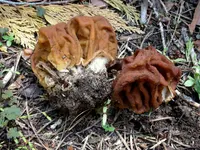
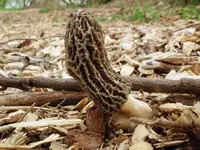
Giant's false morel, Gyromitra gigas, is a spring-fruiting fungus rather than a traditional leafy plant. It forms large, folded, brain-like caps in pale tan to yellow-brown tones, usually emerging in forests where snow has recently melted. This species grows on soil rich in decaying wood or near buried conifer roots, especially in cool temperate regions of Europe and North America.
In cultivation it is challenging and unpredictable, since it depends on complex relationships with trees and specific soil fungi. For most home growers, it is easier to appreciate in nature than to care for Giant's False Morel in a garden setting.

Care Difficulty
Hard Care

Light Preference
Partial Shade

Water Requirements
Keep Soil Moist

Temperature Preference
Cool Climate

Hardiness Zone
3–7

Soil Texture
Loamy, Silty, Organic-rich

Soil pH
Acidic (5.5–6.5), Slightly acidic (6.5–7.0)

Soil Drainage
Moist but well-drained

Fertilization
Minimal (feed rarely)
Scan your plant to receive care tips personalized for your specific plant
Available on iOS and Android
This spring-fruiting fungus prefers cool, forest light rather than direct, open sun.
This species develops best in consistently moist, but not waterlogged, forest soil.
This fungus fruits in cool to mildly warm spring conditions and declines in summer heat.
This fungus needs consistently moist, humid conditions near the forest floor rather than dry air.
Gyromitra gigas fruits best in cool, moist, organic-rich forest soil with steady drainage.
This species is not suitable for container growing, as it depends on complex soil and microbial relationships in the ground.
Gyromitra gigas is a wild fungus that does not need or benefit from routine fertilization in garden or container settings.
Pruning is not part of normal care for Gyromitra gigas, as it is a fungus rather than a leafy or woody plant.
Transplanting is rarely appropriate for Gyromitra gigas, which depends on specific soil fungi-plant relationships in natural woodland habitats.
Practical home propagation of Gyromitra gigas is complex and not recommended for typical gardeners, as it relies on mycorrhizal associations with host trees.
This cold-hardy woodland fungus overwinters naturally in the soil and usually needs no special winter care in suitable climates.

Plant Health Check
Not sure what's wrong with your plant? Check your plant's health inside the app.
This species is one of the earliest macrofungi to appear after snowmelt in boreal and montane forests, often fruiting while patches of snow are still present on the ground.
It typically grows on or near buried or decaying conifer wood, especially spruce and fir, playing a role in breaking down lignin-rich tissues in cold forest soils.
In parts of Northern and Central Europe it has a history of being eaten after careful preparation, but it is legally restricted or discouraged in several countries because related Gyromitra species contain the toxin gyromitrin.

Molecular studies have shown that what was once treated broadly as Gyromitra gigas actually contains several closely related species, and this has led to re-interpretation of older field records and culinary reports that used the name in a very loose sense.
Yes. This fungus contains gyromitrin and related toxins that can damage the liver, nervous system, and red blood cells. Fresh, dried, or undercooked material is unsafe. Children, pets, and anyone foraging should avoid any contact or ingestion.
Keep your plants happy and healthy with plant identification, disease detection, and easy care guidance.