beggarslice Care (Hackelia virginiana)

Also known as: stickseed, virginia stickseed, Sticktight
beggarslice

About beggarslice

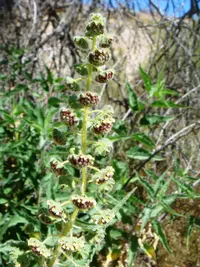
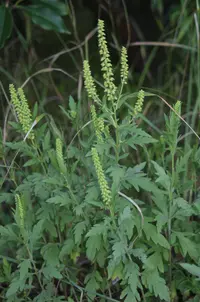
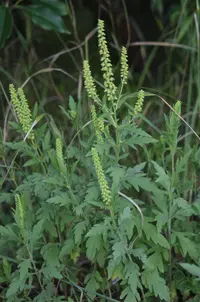
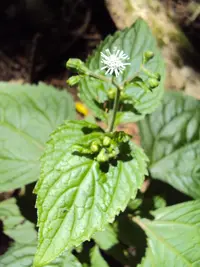
Hackelia virginiana, commonly called beggarslice or stickseed, is a hardy herbaceous perennial from the borage family. It grows upright with slender stems and rough, slightly hairy leaves. Small pale blue to white flowers appear in summer, followed by burr-like seeds that cling to clothing and animal fur. This self-seeding habit helps it spread easily and can make it somewhat weedy in gardens. Beggarslice is native to eastern North America and often appears in woodland edges, disturbed sites, and shaded roadsides. It adapts to a range of soils but prefers moist, well-drained ground and partial shade. These traits make care for beggarslice straightforward in naturalistic or wild-style plantings.

Main Plant Requirements

Care Difficulty

Easy Care

Light Preference

Partial Shade

Water Requirements

Moderate Water

Temperature Preference

Cold Hardy

Hardiness Zone

3–8

Soil Texture

Loamy, Silty, Organic-rich

Soil pH

Acidic (5.5–6.5), Slightly acidic (6.5–7.0)

Soil Drainage

Moist but well-drained

Fertilization

Minimal (feed rarely)

Get Personalized Care Plan

Scan your plant to receive care tips personalized for your specific plant

Available on iOS and Android

How to Care for the beggarslice

This woodland biennial prefers dappled conditions that mimic an open forest edge.

  • Provide bright shade or filtered light with 2–4 hours of gentle morning sun and protection from harsh midday and afternoon rays.
  • Plant beggarslice where nearby trees or shrubs cast shifting shade, allowing enough light for flowering but preventing leaf scorch.
  • In summer, monitor for pale, leggy growth as a sign of too little light and for crisp, brown leaf edges as a sign of excessive direct sun.

This species prefers consistently moist but not saturated soil in its natural woodland habitat.

  • Allow the top 2–4 cm of soil to dry slightly between rain events or waterings, then moisten the root zone thoroughly without puddling.
  • Use a well-drained, humus-rich soil so Hackelia virginiana receives steady moisture while excess water moves away from the roots.
  • In hot, dry periods, watch for wilting or dull, limp leaves as a cue to water, and for yellowing, soft stems as a sign of overwatering.

This hardy North American native tolerates a wide temperature range typical of temperate climates.

  • Active growth is strongest in spring and early summer at about 60–75°F (16–24°C), with cool nights supporting sturdy stems.
  • Established plants survive winter cold down to about -20°F (-29°C) when in the ground, dying back aboveground and resprouting from the rootstock.
  • During hot spells above 85°F (29°C), provide extra mulch and moisture, as prolonged heat and drought can stress plants and reduce flowering.

This species tolerates a wide humidity range and rarely needs special humidity management indoors or outdoors.

Hackelia virginiana grows best in loose, humus-rich soil that stays evenly moist but not waterlogged.

  • Use a loamy mix with 40–60% garden soil, 20–30% compost, and the rest coarse sand for structure.
  • Ensure drainage is moderate to fast so water does not sit around the roots after rain or watering.
  • Aim for slightly acidic to neutral pH, roughly 6.0–7.0, avoiding strongly alkaline substrates.
  • Improve aeration and prevent compaction by working in leaf mold or fine bark rather than heavy clay alone.

This species can be grown in containers, but it performs more naturally in the ground.

  • Choose a pot at least 25–30 cm deep to accommodate its taproot and allow stable upright growth.
  • Use a heavier clay or ceramic container outdoors to prevent tipping as tall stems sway in wind.
  • Raise the container slightly on feet or bricks so gravity helps excess water escape quickly after rain.

Hackelia virginiana is a hardy native that usually needs little or no fertilizer in average garden soil.

Hackelia virginiana benefits from light, targeted pruning to limit spread and tidy growth.

  • Cut back spent flowering stems in late summer to reduce self‑seeding and maintain a neater stand.
  • Remove dead, damaged, or diseased stems at ground level using clean, sharp hand pruners.
  • Thin crowded stems lightly to improve air flow and reduce foliar disease risk.
  • Avoid heavy cutting into green growth during peak bloom to preserve pollinator value.

This species is most often grown in the ground; focus on careful transplanting rather than frequent repotting.

  • Transplant in early spring or early fall when temperatures are mild and soil is evenly moist.
  • Move clumps only when growth declines, plants are overcrowded, or flowering drops noticeably.
  • Lift with a broad root ball to limit disturbance, then replant at the same depth in loosened soil.
  • Water deeply after transplanting and shade temporarily if needed to reduce transplant shock.

Propagation of Hackelia virginiana is usually done by seed rather than by division or cuttings.

  • Collect mature seeds in late summer and sow outdoors in fall for natural winter stratification.
  • Use a free‑draining seed mix and keep it evenly moist, not waterlogged, until germination in spring.
  • If sowing indoors, cold‑stratify seeds at 35–40°F for 8–12 weeks before moving to warmth and light.
  • Label seed areas clearly, since seedlings can resemble other native forbs at early stages.

This cold‑hardy perennial needs little special winter care in most temperate climates.

  • Tolerates normal winter frosts once established, dying back to the root system and resprouting in spring.
  • Apply a light 3–5 cm layer of leaf mulch in late fall in exposed or very cold sites.
  • Container plants in cold regions benefit from moving pots into an unheated garage or against a sheltered wall.

Care Tips

Use light mulch

Apply a thin 2–3 cm layer of shredded leaf mulch around plants to keep the shallow roots cool, suppress weeds, and maintain even surface moisture without smothering young stems.

Manage self-seeding

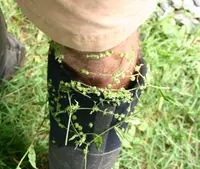
Mark the main patch and deadhead most spent flower stalks before seed bristles mature, leaving only a few to set seed so you control spread while keeping a self-renewing colony.

Protect during clearing

When cutting back roadside or meadow vegetation, flag plants and mow or trim around them by hand to avoid damaging crowns or removing first-year rosettes needed for next season’s bloom.

Encourage gentle competition

Grow plants among low, non-aggressive native groundcovers or grasses to mimic natural woodland edge competition, which can reduce lodging of stems and discourage invasive weeds.

Monitor seed hitchhikers

During late summer walks through the planting, check clothing, pets, and tools for attached burs and drop them only where you want new plants to establish to keep caring for beggarslice intentional rather than accidental.

Common Pests and Diseases

Powdery mildew

This disease causes a whitish, powdery coating on leaves, especially on lower or shaded foliage in mid to late summer.

Solution

Remove and dispose of heavily infected leaves, improve air circulation by reducing crowding from nearby vegetation, and avoid overhead watering late in the day; in high-value plantings, apply a sulfur or potassium bicarbonate fungicide according to label directions if conditions stay humid.

Leaf spot

This disease produces scattered brown to tan spots on leaves that may merge and cause premature yellowing and drop, especially in dense, moist stands.

Solution

Prune or cut back heavily affected stems to reduce inoculum, clear fallen leaves from around the plants, and encourage better airflow; in recurrent cases in managed plantings, use a labeled broad-spectrum foliar fungicide early when new spotting first appears.

Aphids

These insects cluster on tender stems and undersides of leaves, sucking sap and sometimes causing curling foliage and sticky honeydew that can attract sooty mold.

Solution

Wash colonies off with a firm stream of water, pinch or cut back heavily infested tips, and encourage or introduce natural predators like lady beetles; for persistent outbreaks, use an insecticidal soap or neem oil spray, covering stems and leaf undersides thoroughly.

Leaf-feeding caterpillars

This pest chews irregular holes or missing sections from leaves, sometimes skeletonizing foliage on younger plants in mid to late summer.

Solution

Hand-pick caterpillars where feasible and dispose of them, and reduce nearby weedy cover that shelters larvae; if defoliation becomes significant in a managed planting, apply a Bacillus thuringiensis (Bt) product to foliage, targeting young larvae and following label directions.

Interesting Facts

Hooked burr seed dispersal

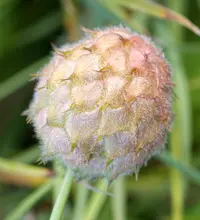
The fruits of this species develop stiff, hooked bristles that easily cling to fur, feathers, and clothing, making it a classic example of epizoochory, or seed transport on animal surfaces.

Shade-tolerant woodland colonizer

This plant often grows in disturbed, shaded forest edges and trails, where its biennial life cycle allows it to quickly take advantage of light gaps in the understory.

Late-season pollinator resource

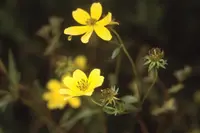
Although not showy, its small white flowers appear in summer and provide nectar and pollen for a range of bees and other insects when some earlier woodland flowers have already finished.

Botan icon

Did you know?

The persistent, clinging burrs of this species have made it a well-known nuisance in North American woodlands and along hiking trails, and field botanists often use its presence on clothing as an informal sign that a site has significant understory disturbance.

FAQs about beggarslice

This species self-seeds readily, and the barbed seeds cling to fur and clothing, spreading it along paths and woodland edges. In garden settings, remove spent seed heads before they dry to limit unwanted spread and maintain control.

Grow Healthy Plants with Botan Care

Keep your plants happy and healthy with plant identification, disease detection, and easy care guidance.

Botan plant care app — identify plants on mobile

Explore More Plants