Chrome-footed Bolete Care (Harrya chromipes)

Chrome-footed Bolete

About Chrome-footed Bolete

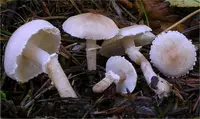
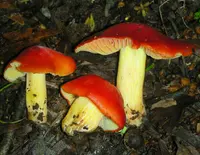
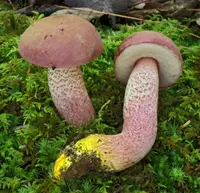
Harrya chromipes, commonly called the chrome-footed bolete, is a fleshy mushroom-forming fungus rather than a leafy plant. It produces thick, stout stems with a striking yellow to chrome-colored base and a smooth to slightly velvety cap that ranges from brownish to reddish tones.

This species typically grows on the ground in mixed or deciduous forests, often in association with hardwood trees. It is found in parts of eastern North America and some other temperate regions.

The fungus depends on a mycorrhizal relationship, meaning it grows in partnership with tree roots, which makes how to care for Chrome-footed Bolete challenging outside natural habitats. It generally prefers undisturbed soil, consistent moisture, and dappled woodland light.

Main Plant Requirements

Care Difficulty

Hard Care

Light Preference

Partial Shade

Water Requirements

Keep Soil Moist

Temperature Preference

Warm Climate

Hardiness Zone

Unknown

Soil Texture

Loamy, Silty, Organic-rich

Soil pH

Acidic (5.5–6.5)

Soil Drainage

Moist but well-drained

Fertilization

Minimal (feed rarely)

Get Personalized Care Plan

Scan your plant to receive care tips personalized for your specific plant

Available on iOS and Android

How to Care for the Chrome-footed Bolete

This fungus prefers dappled woodland light that mimics its natural forest-floor habitat.

  • Provide bright, filtered light under trees or shrubs, with 2–4 hours of soft morning sun and full shade by harsh afternoon hours.
  • Allow partial shade to deep shade; direct midday sun can dry the substrate, stressing both Harrya chromipes and its host tree roots.
  • In summer, increase shade cover if leaf canopy is thin; in early spring or late autumn, brief low-angle sun is acceptable but avoid exposed, bare sites.

Water management focuses on maintaining an evenly moist, not saturated, forest-floor substrate.

  • Aim for consistently moist soil; the top 2–3 cm should feel damp but not soggy, and standing water should never persist longer than a few hours.
  • Use a loose, well-drained mix rich in leaf litter or compost so water drains freely while holding some moisture around fine roots associated with Harrya chromipes.
  • In hot, dry periods, increase watering when the surface feels dry and pale; reduce input in cool, wet seasons to prevent sour, anaerobic, foul-smelling soil.

Stable, mild temperatures support reliable fruiting and mycelial health for this forest fungus.

  • Target 55–75°F (13–24°C) for best growth, matching cool to mild woodland conditions common in temperate regions.
  • Protect from hard frost below 28°F (-2°C), which can damage fruiting bodies, though subsurface mycelium may tolerate brief light freezes under insulating leaf litter.
  • During heat above 85°F (29°C), shade and moisture retention become critical; dry heat combined with direct sun can halt fruiting and desiccate the substrate quickly.

This fungus prefers moderately moist air but adapts to a broad humidity range if the substrate stays evenly damp.

  • Aim for 50–70% humidity while keeping the growing substrate from drying out completely.
  • It tolerates short dry-air periods if the substrate moisture is stable, but prolonged low humidity slows or deforms fruiting bodies.
  • Low humidity stress shows as cracked, shrunken caps and prematurely hard, brittle flesh on the Chrome-footed Bolete.
  • Increase humidity with a humidified fruiting chamber, damp perlite layer, or loose plastic tent that still allows some air exchange.

Harrya chromipes forms mycorrhizal partnerships with tree roots, so the focus is on a suitable forest-like substrate rather than typical potting soil.

  • Use a loose, humus-rich mix mimicking woodland soil, such as shredded hardwood leaf litter blended with aged wood chips and a small amount of loam.
  • Ensure excellent drainage so the substrate is moist but never stagnant; excess water around the tree roots or inoculated wood blocks encourages anaerobic rot.
  • Aim for slightly acidic to neutral conditions around pH 5.5–7.0, avoiding lime-heavy or strongly alkaline materials that suppress fungal activity.
  • Improve aeration by mixing in coarse particles (small bark pieces, chunky wood chips) and avoid compacted, fine-textured mineral soils that restrict gas exchange.

This species is generally unsuitable for standard container growing because it depends on long-term association with living tree roots in soil or buried wood.

This mycorrhizal fungus grows with trees and generally needs no fertilization when in natural soil or woodland-style beds.

Harrya chromipes does not need pruning in the usual horticultural sense, as the visible part is a mushroom body that appears and then decays naturally.

This species is a mycorrhizal partner of trees, so transplanting focuses on the host tree and its root zone rather than the fungus itself.

  • Avoid disturbing established tree roots, since the fungal network lives in close association with fine roots.
  • If a host tree must be moved, transplant in cool, moist weather to reduce root stress and help the fungal symbiosis recover.
  • Maintain original soil as much as possible around the root ball so the existing fungal threads remain intact.
  • Water gently after transplanting to settle soil around roots without creating waterlogged conditions.

Propagation of this fungus is indirect and usually left to natural spore spread in suitable woodland or shade-garden conditions.

This forest fungus is naturally cold hardy in its native range and usually needs no special winter care.

Care Tips

In-situ log use

Whenever possible, leave the bolete on its original decaying hardwood log or stump rather than moving it, since disturbing the wood matrix disrupts the mycelium network that produces new fruiting bodies.

Shaded moisture corridor

Create a cool, stable microclimate by placing soaked hardwood logs in a shaded, wind-sheltered spot and partially burying them, which slows drying and supports consistent mushroom emergence.

Gentle harvest technique

Cut the mushrooms cleanly at the base with a sharp knife instead of pulling, and avoid disturbing surrounding soil and roots to reduce damage to the fungal mycelium and encourage repeat fruiting.

Fruiting-site hygiene

After harvest, remove any badly damaged, moldy, or heavily insect-infested fruiting bodies from the immediate area to reduce spore loads of competing molds and pests around the colony.

Field marking practice

Flag known fruiting spots with unobtrusive markers at the forest edge rather than near the logs, so you can return without trampling the mycelial zone, which is important for caring for Chrome-footed Bolete over multiple seasons.

Common Pests and Diseases

Fungal fruit deformation

Symptoms include misshapen, fused, or overly warty caps that fail to develop the typical bolete structure. This disease is usually caused by parasitic or competing fungi attacking young fruiting bodies in the soil or at emergence.

Solution

Remove and discard any deformed or parasitized mushrooms as soon as they are noticed, and avoid using them for food. Reduce disturbance and compaction in the fruiting area, maintain a stable mulch layer of leaf litter, and avoid excessive surface watering that keeps the soil saturated, which favors parasitic fungi.

Mycelial parasitism

This disease occurs when other fungi invade and overgrow the underground mycelium, leading to fewer or no fruiting bodies over time. Symptoms include thinning flushes, smaller mushrooms, and discolored or cottony competing fungal growth in the soil or substrate.

Solution

If growing Chrome-footed Bolete in a controlled bed, remove and replace heavily colonized substrate and tools that show competing fungal growth. Improve hygiene by using clean tools, avoiding the introduction of foreign spawn or forest soil, and maintaining moderate, not constantly wet, moisture levels to support the original mycelium.

Springtail feeding

These insects feed on tender mycelium and young primordia, sometimes hollowing or scarring small buttons before they reach full size. This pest is most active in constantly damp, organic-rich substrates.

Solution

Lower surface moisture slightly by allowing the top layer of substrate or soil to dry a bit between waterings, while keeping deeper layers evenly moist. Remove heavily damaged fruiting bodies and, in container or bed culture, use fine-mesh covers and good drainage to limit springtail buildup without letting the substrate dry out completely.

Fungus gnat larvae

This pest lives in moist, organic substrates and feeds on mycelium and the base of young fruiting bodies, which can cause stunting, collapse, or decay at the stem base. Adults are small dark flies that hover around damp growing areas.

Solution

Reduce standing moisture by improving drainage and avoiding waterlogged conditions, and remove decaying organic debris that supports larval development. In controlled beds or containers, use yellow sticky traps to monitor adult populations and apply a biological control such as Bacillus thuringiensis israelensis (Bti) to the substrate according to label directions to target larvae while limiting impact on the bolete.

Interesting Facts

Distinctive chrome-yellow stipe

This bolete is easily recognized by its bright chrome-yellow lower stipe (stem) contrasting with a darker upper portion, a combination that is unusual among boletes and inspired its species name chromipes, meaning colored foot.

Color-changing pore surface

The pore surface of the cap starts pale and can bruise or age to darker tones, a trait used by mycologists in the field to separate it from superficially similar boletes that either do not stain or show different color changes.

Specialist hardwood associate

Harrya chromipes forms ectomycorrhizal partnerships with hardwood trees, particularly oaks and other broadleaf species, exchanging mineral nutrients and water for sugars from the host tree and contributing to forest nutrient cycling.

Botan icon

Did you know?

Genetic studies showed that this species was distinct enough from related Tylopilus boletes that it was placed in its own genus, Harrya, highlighting how DNA-based research can significantly reshape bolete classification.

FAQs about Chrome-footed Bolete

This bolete is generally regarded as inedible or of very poor culinary quality. Some related boletes cause gastrointestinal upset. For safety, it is best treated as non-edible and left for observation rather than consumption.

Grow Healthy Plants with Botan Care

Keep your plants happy and healthy with plant identification, disease detection, and easy care guidance.

Botan plant care app — identify plants on mobile

Explore More Plants