

Substrate Anchoring
Press the moss gently but firmly onto rough, stable surfaces like lava rock or unglazed stone so the rhizoids can attach securely and the colony is less likely to dry out or wash away.

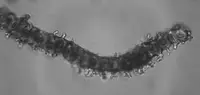
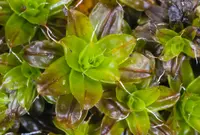
Starry hoarmoss, Hedwigia stellata, is a small, cushion-forming moss often found on rocks, tree bases, and old walls. It forms dense, starry mats that stay attractive year-round.
This moss is native to cool and temperate regions of the Northern Hemisphere, thriving in moist, well-aerated habitats. Its tiny, stiff leaves and compact growth help it tolerate some drying between rains.
Starry hoarmoss grows slowly but is generally low maintenance once established, especially in shaded, consistently damp spots. It prefers gentle light, regular moisture, and stable conditions, so understanding how to care for Starry Hoarmoss increases long-term success in cultivation.

Care Difficulty
Moderate Care

Light Preference
Partial Shade

Water Requirements
Keep Soil Moist

Temperature Preference
Cold Hardy

Hardiness Zone
3–8

Soil Texture
Rocky, Sandy, Organic-rich

Soil pH
Strongly acidic (4.5–5.5), Acidic (5.5–6.5)

Soil Drainage
Moist but well-drained

Fertilization
Minimal (feed rarely)
Scan your plant to receive care tips personalized for your specific plant
Available on iOS and Android
This moss prefers soft, consistent light similar to a bright forest floor.
This moss thrives in evenly moist conditions but suffers from both drought and stagnation.
This moss is adapted to cool to mild climates with good air movement.
This moss prefers consistently moist air but survives a fairly wide humidity range if not allowed to dry out completely.
Hedwigia stellata grows best on a shallow, loose, mineral-rich substrate that stays evenly damp but never stagnant.
This species can be grown in shallow containers if moisture and drainage are tightly controlled.
This moss is adapted to low-nutrient habitats, so Starry Hoarmoss grown on substrates usually needs only very light feeding.
Hedwigia stellata needs minimal pruning, mainly to keep mats clean and healthy.
This species is usually grown attached to rocks, bark, or soil surfaces, so transplanting focuses on refreshing the substrate rather than traditional repotting.
This moss is commonly multiplied by division of cushions rather than by spores for practical home culture.
In most temperate regions, Hedwigia stellata is naturally cold hardy and usually requires little specific winter care outdoors.

Plant Health Check
Not sure what's wrong with your plant? Check your plant's health inside the app.
The leaves end in a long, glassy, hyaline tip that radiates outward, giving patches a distinctly starry appearance that is unusual even among cushion-forming mosses.
In cold, dry conditions the translucent leaf tips reflect light and make colonies appear pale or silvery, so the same patch can look green in wet weather and frosted-white in winter.
This moss frequently colonizes acidic, nutrient-poor rocks and boulders, including exposed granitic outcrops, showing a strong adaptation to harsh, low-soil environments.

Hedwigia stellata is considered a good indicator of long-term habitat continuity on rock outcrops in parts of its range, since it often forms persistent, slow-changing cushions that can remain in the same location for many decades.
Growth is slow to moderate. In good conditions it often extends 0.5–2 cm per year, forming low patches rather than tall tufts. Moisture availability, light, and stable temperatures are the main factors influencing speed when you grow Hedwigia stellata.
Keep your plants happy and healthy with plant identification, disease detection, and easy care guidance.

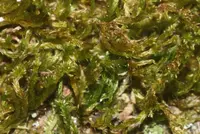
Flat-brocade Moss
Platygyrium repens
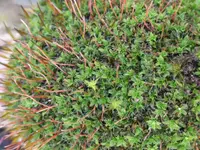
small hairy screw-moss
Syntrichia laevipila
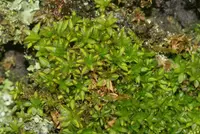
papillose tortula moss
Syntrichia papillosa
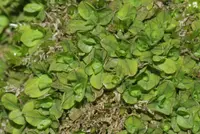
Wideleaf Tortula Moss
Syntrichia latifolia
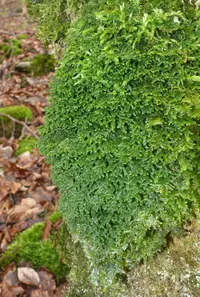
Wall Scalewort
Porella platyphylla
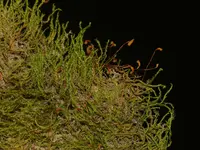
tangled thread moss
Hygroamblystegium varium
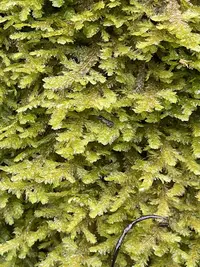
Crisped Neckera
Exsertotheca crispa
brown screw-moss
Syntrichia princeps