

Substrate Anchoring
Press small, flat stones or mesh gently over freshly placed cushions so the moss makes firm contact with the substrate while it re-establishes rhizoids, then remove supports once growth looks secure.

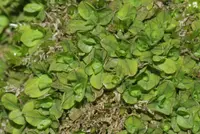
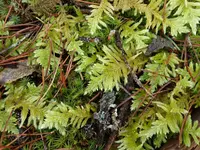
Wideleaf Tortula Moss, Syntrichia latifolia, is a small, cushion-forming moss with broad, tongue-shaped leaves that often curl when dry and open when moist. It usually forms dense, bright to olive green patches on rocks, soil, and tree bases.
In nature it occurs across temperate regions, especially in moist woodlands, shaded slopes, and along stream banks. Its ability to dry out and revive after rewetting makes it relatively forgiving for beginners.
This species prefers consistent moisture, soft indirect light, and a stable, undisturbed surface, which simplifies how to care for Wideleaf Tortula Moss in indoor or terrarium setups.

Care Difficulty
Moderate Care

Light Preference
Partial Shade

Water Requirements
Keep Soil Moist

Temperature Preference
Cold Hardy

Hardiness Zone
3–9

Soil Texture
Loamy, Rocky, Organic-rich

Soil pH
Acidic (5.5–6.5), Slightly acidic (6.5–7.0)

Soil Drainage
Moist but well-drained

Fertilization
Minimal (feed rarely)
Scan your plant to receive care tips personalized for your specific plant
Available on iOS and Android
This moss prefers soft, indirect light resembling a shaded forest floor.
This moss is adapted to intermittent moisture and brief drying cycles.
This species is quite cold hardy but grows best in mild conditions.
This moss prefers consistently moist air and surface conditions rather than strict room-humidity targets.
Syntrichia latifolia anchors best on thin, mineral-based, slightly acidic to neutral substrates rather than deep potting soil.
This species can adapt well to shallow containers, trays, or terrarium-style dishes when moisture is carefully managed.
Syntrichia latifolia usually grows well without added fertilizer, especially in naturalistic or bioactive setups.
Pruning needs for Syntrichia latifolia are minimal and focus on hygiene rather than shaping.
This moss is usually transplanted rather than repotted, since it forms mats on stone, wood, or shallow substrates.
Syntrichia latifolia is commonly propagated by division of existing mats rather than from spores in home settings.
This moss is naturally cold hardy and usually needs little special winter care outdoors.

Plant Health Check
Not sure what's wrong with your plant? Check your plant's health inside the app.
This moss often colonizes compacted soil, concrete cracks, and shaded urban banks, making it a common component of city moss floras across temperate regions of North America and Europe.
Compared with many related tortula-type mosses, it has noticeably broader, tongue-shaped leaves that help field botanists distinguish it reliably under a hand lens.
It frequently establishes in rain gutters, mortar joints, and old brick or stone walls, where it helps trap fine particles and organic matter that gradually build up a thin soil layer.
This species spreads slowly to moderately by fragments and spores, forming low patches rather than large mats. It usually stays where established, so it is unlikely to overwhelm nearby plants under normal garden or terrarium conditions.
Keep your plants happy and healthy with plant identification, disease detection, and easy care guidance.

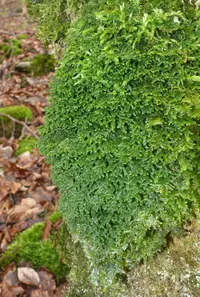
Wall Scalewort
Porella platyphylla
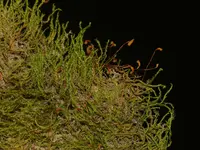
tangled thread moss
Hygroamblystegium varium
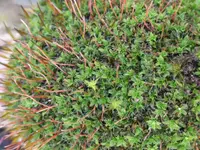
small hairy screw-moss
Syntrichia laevipila
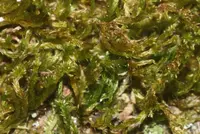
Flat-brocade Moss
Platygyrium repens
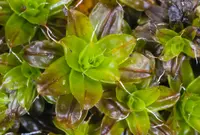
brown screw-moss
Syntrichia princeps
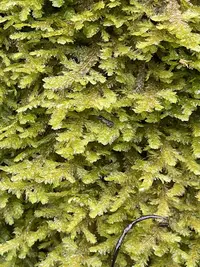
Crisped Neckera
Exsertotheca crispa
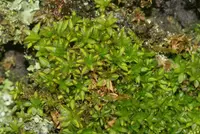
papillose tortula moss
Syntrichia papillosa
trachybryum moss
Trachybryum megaptilum