Anchor On Substrate
Press the moss firmly onto rough bark, stone, or aged wood and secure with biodegradable mesh or cotton thread for 4–6 weeks so rhizoids can attach and form a stable mat.

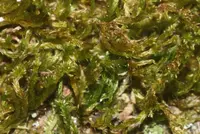
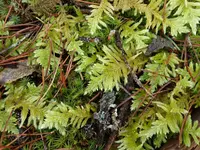
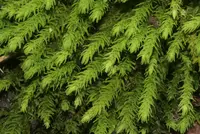
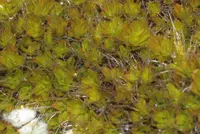
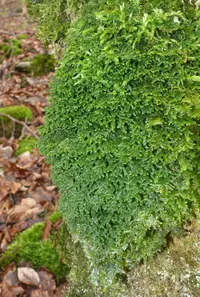
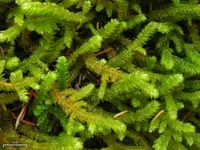
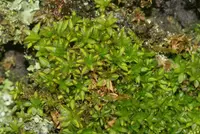
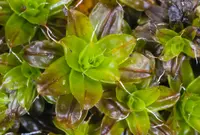
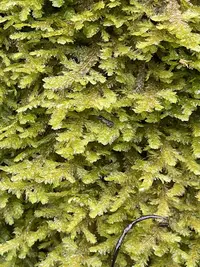
Flat-brocade moss (Platygyrium repens) is a small, creeping moss that forms flat, layered mats over bark, rocks, or decaying wood. Its tightly overlapping, scale-like leaves create a fine, textured surface that often looks like a miniature green brocade fabric.
This species is common in temperate forests of North America and parts of Europe, where it thrives in humid, shaded habitats. It is generally considered easy to maintain in culture, as long as it receives steady moisture, cool to mild temperatures, and protection from strong sun.
Gardeners and terrarium keepers who care for Flat-brocade Moss value its slow, steady growth and ability to stabilize substrates on logs or vertical surfaces.

Care Difficulty
Moderate Care

Light Preference
Partial Shade

Water Requirements
Keep Soil Moist

Temperature Preference
Cold Hardy

Hardiness Zone
3–8

Soil Texture
Loamy, Rocky, Organic-rich

Soil pH
Strongly acidic (4.5–5.5), Acidic (5.5–6.5)

Soil Drainage
Moist but well-drained

Fertilization
Minimal (feed rarely)
Scan your plant to receive care tips personalized for your specific plant
Available on iOS and Android
This moss thrives in cool, shaded woodland-style light with no harsh direct sun.
This moss needs consistently moist conditions around the rhizoids, not saturation or complete dryness.
This moss prefers cool to mild conditions and tolerates a wide outdoor temperature range when moisture is stable.
This moss prefers consistently moist, humid air to maintain dense, healthy growth.
This species thrives on moist, airy, organic-rich substrates that resemble decaying wood or forest litter.
This moss is well suited to shallow containers and terrariums where moisture and humidity are easy to control.
This moss has very low nutrient needs and usually grows well without routine feeding.
Platygyrium repens needs only light grooming to stay tidy and healthy.
This moss is usually grown as a mat on bark, rocks, or soil, so transplanting is more common than true repotting.
Platygyrium repens is commonly propagated by division of existing mats rather than from spores at home.
This moss is quite cold hardy in most temperate climates and usually needs little special winter care outdoors.

Plant Health Check
Not sure what's wrong with your plant? Check your plant's health inside the app.
This moss forms low, flattened, brocade-like mats on tree bark and logs, giving rise to the common name flat-brocade moss due to its overlapping, appressed shoots that resemble woven fabric.
It is strongly corticolous, meaning it is specialized to live on bark, and is especially common on the trunks and branches of deciduous trees in humid, temperate forests.
Its presence is often associated with stable, shaded, and moist woodland microhabitats, so ecologists sometimes use it as part of species lists to characterize relatively undisturbed forest conditions in its native range.
This species forms low, creeping mats only a few millimeters tall. It spreads horizontally along bark, rocks, or soil rather than growing upward, which makes it suitable for detailed terrarium layouts and fine-textured ground or log coverings.
Keep your plants happy and healthy with plant identification, disease detection, and easy care guidance.