

Rock Crevice Mounting
Press small cushions firmly into shallow rock crevices or between broken brick pieces so rhizoids can anchor quickly and resist being washed away by rain or misting.


Tortula moss, now usually classified as Syntrichia montana, is a small, tuft-forming moss often found on dry, open ground and rocky slopes. It forms dense cushions or patches of narrow leaves that curl when dry and open again when moistened, giving it a rugged, resilient look.
This species occurs widely in temperate regions, including parts of North America and Europe, where it tolerates wind, sun, and periods of drought. Its toughness makes it relatively easy to establish in low, open containers, rock gardens, and terrariums if you understand how to care for tortula moss.
It generally prefers bright, indirect light, good air circulation, and a mineral, well-drained substrate that does not stay constantly waterlogged.

Care Difficulty
Moderate Care

Light Preference
Partial Shade

Water Requirements
Moderate Water

Temperature Preference
Cold Hardy

Hardiness Zone
4–9

Soil Texture
Rocky, Sandy, Loamy

Soil pH
Acidic (5.5–6.5), Slightly acidic (6.5–7.0)

Soil Drainage
Well-drained

Fertilization
Minimal (feed rarely)
Scan your plant to receive care tips personalized for your specific plant
Available on iOS and Android
This moss prefers bright, indirect light that mimics open but not exposed natural sites.
This species relies on surface moisture pulses rather than constantly wet conditions.
This moss is strongly cold-tolerant but grows best in cool to mild conditions.
This moss prefers moderately moist air but tolerates drier conditions if its substrate stays damp.
This moss anchors to shallow, gritty, well-drained surfaces rather than deep, nutrient-rich substrates.
This species is suitable for shallow container culture that mimics rocky or sandy habitats.
Syntrichia montana grows slowly and usually needs very little supplemental nutrition in typical moss culture.
Pruning Syntrichia montana is mainly cosmetic and hygienic rather than essential for health.
This moss is usually grown on rocks, wood, or shallow trays, so transplanting focuses on renewing the substrate rather than classic repotting.
Syntrichia montana is commonly propagated by division of small carpet sections rather than by spores in home culture.
Syntrichia montana is naturally cold hardy and usually needs minimal winter care in the ground or on outdoor hard surfaces.

Plant Health Check
Not sure what's wrong with your plant? Check your plant's health inside the app.
This moss is especially common on dry, sun-exposed rocky slopes and outcrops in montane regions of western North America, where many other mosses struggle to survive.
Its narrow leaves often twist when dry and spread out when wet, a structural response that helps reduce water loss during drought and quickly resume photosynthesis after rewetting.
On open, disturbed or shallow soils it can form part of biological soil crusts, helping stabilize the surface and reduce erosion in fragile mountain ecosystems.

The species is dioicous, meaning male and female reproductive structures grow on separate plants, which promotes genetic mixing in its populations across widespread, patchy montane habitats.
Growth is relatively slow. New patches usually expand a few millimeters per month under steady moisture, cool temperatures, and good airflow. Fragmented pieces can knit together faster, but do not expect rapid lawn-like coverage.
Keep your plants happy and healthy with plant identification, disease detection, and easy care guidance.

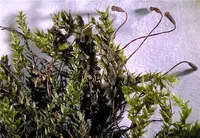
platyhypnidium moss
Rhynchostegium riparioides
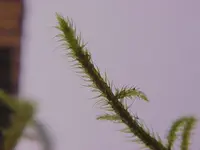
goose neck moss
Rhytidiadelphus loreus

shiny film liverwort
Hymenophyton flabellatum

Tunbridge filmy fern
Hymenophyllum tunbrigense
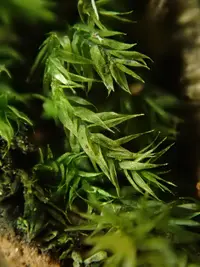
Clustered Feather-moss
Rhynchostegium confertum
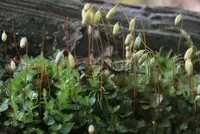
Dotted Thyme-moss
Rhizomnium punctatum
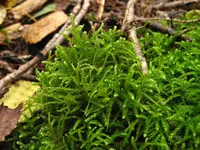
Eurhynchium angustirete
Eurhynchium angustirete
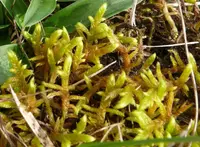
wrinkle-leaved feather-moss
Rhytidium rugosum