

Mimic seepage zones
Place the plant on a shallow, always-damp substrate such as milled sphagnum over fine gravel, and let clean water slowly wick up from below to imitate its natural seepage rock habitat without flooding the thallus surface.

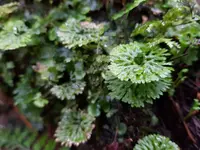
Shiny film liverwort, Hymenophyton flabellatum, is a non-vascular bryophyte that forms thin, flat, fan-shaped mats rather than true leaves and stems. It stays low and creeping, creating a dense, glossy green carpet.
This species is native to cool, damp forests of New Zealand, Australia, and some South American regions, often covering rotting logs, rock faces, and shaded stream banks. It prefers consistently moist, shaded, and humid conditions.
In cultivation it can be demanding, since it dries out quickly and dislikes strong light or disturbance. Anyone wanting to learn how to care for shiny film liverwort should be prepared to provide stable moisture and gentle airflow without direct sun.

Care Difficulty
Hard Care

Light Preference
Shade

Water Requirements
Keep Soil Moist

Temperature Preference
Cool Climate

Hardiness Zone
8–11

Soil Texture
Peaty, Organic-rich, Loamy

Soil pH
Strongly acidic (4.5–5.5), Acidic (5.5–6.5)

Soil Drainage
Waterlogged tolerant

Fertilization
Minimal (feed rarely)
Scan your plant to receive care tips personalized for your specific plant
Available on iOS and Android
Hymenophyton flabellatum naturally grows in dim, sheltered forest habitats with very low direct sun exposure.
This liverwort requires continuously moist conditions that mimic a cool, dripping forest floor.
This species prefers cool, stable conditions and declines quickly in heat or freezing cold.
This species needs very high, constantly moist air to thrive.
Hymenophyton flabellatum prefers a constantly damp, airy, organic substrate rather than true mineral soil.
This species can grow in shallow containers, especially in terrariums or dish gardens.
Hymenophyton flabellatum is a nutrient-sensitive liverwort that needs only very light feeding, similar to many native woodland species that thrive on low fertility.
Hymenophyton flabellatum needs minimal pruning, focused on hygiene rather than shaping.
This liverwort is usually grown on rocks, bark, or very shallow containers, so transplanting Hymenophyton flabellatum is infrequent and should be done carefully.
Hymenophyton flabellatum is usually propagated by division of existing mats rather than from spores at home.
This cool-temperate liverwort tolerates mild cold but needs protection from hard freezes and drying winter winds, especially in containers.

Plant Health Check
Not sure what's wrong with your plant? Check your plant's health inside the app.
This liverwort forms thin, fan-shaped green thalli with regularly forked branches, giving it a distinctive, flattened, fern-like appearance when viewed from above.
It is strongly associated with cool, very humid habitats in temperate rainforests of New Zealand, Australia, and nearby regions, often growing on constantly wet rock faces, rotting wood, and stream banks.
Its thallus contains internal air canals and chambers that help gas exchange and maintain hydration, an adaptation that supports its survival in shaded, saturated environments.

This species is considered an indicator of stable, undisturbed rainforest microclimates, so its presence often signals long-term continuity of cool, shaded, and constantly moist habitat conditions.
This species creeps slowly over moist surfaces, forming thin mats rather than thick carpets. It is not considered aggressive and is easy to confine by controlling constant moisture, shade, and the roughness of nearby hardscape or substrate.
Keep your plants happy and healthy with plant identification, disease detection, and easy care guidance.

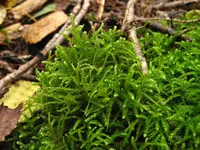
Eurhynchium angustirete
Eurhynchium angustirete
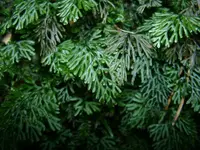
Tunbridge filmy fern
Hymenophyllum tunbrigense
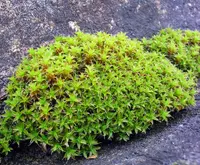
great hairy screw-moss
Syntrichia ruralis
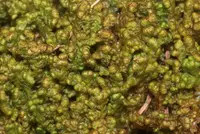
Northern Naugehyde Liverwort
Ptilidium ciliare
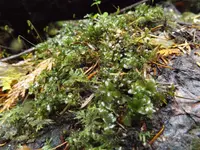
rhizomnium moss
Rhizomnium glabrescens
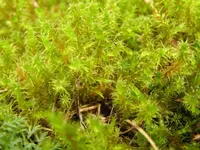
square goose neck moss
Rhytidiadelphus squarrosus
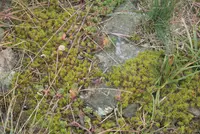
Sand-hill Screw-moss
Syntrichia ruraliformis
wrinkle-leaved feather-moss
Rhytidium rugosum