


Substrate layering
Create a 1–2 cm base layer of long-fiber sphagnum over the soil or rock, then press the moss fronds gently onto it to improve anchoring and keep the rhizoids consistently moist without waterlogging.

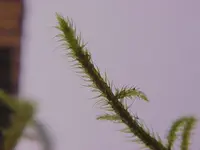
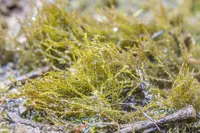
Goose neck moss, Rhytidiadelphus loreus, is a large, trailing moss often forming soft, glossy green carpets. Its arching, curved stems give it a distinctive goose neck look.
This moss is common in cool, moist forests, especially in temperate coastal regions, where it thrives on soil, rotting wood, and sometimes rocks. It spreads by creeping stems rather than standing upright.
Rhytidiadelphus loreus is generally considered hardy if it receives constant moisture, high humidity, and protection from strong sun and drying wind. It prefers shaded, cool locations with soft, acidic substrates.
For anyone learning how to care for goose neck moss, the key traits to note are its need for even moisture, gentle light, and stable, mild conditions.

Care Difficulty
Moderate Care

Light Preference
Partial Shade

Water Requirements
Keep Soil Moist

Temperature Preference
Cold Hardy

Hardiness Zone
6–9

Soil Texture
Loamy, Peaty, Organic-rich

Soil pH
Strongly acidic (4.5–5.5), Acidic (5.5–6.5)

Soil Drainage
Moist but well-drained

Fertilization
Minimal (feed rarely)
Scan your plant to receive care tips personalized for your specific plant
Available on iOS and Android
Rhytidiadelphus loreus thrives in cool, low to moderate light similar to shaded forest floors.
This moss prefers consistently moist conditions without long dry periods or standing water.
This species favors cool, mild climates and dislikes temperature extremes.
This moss needs consistently high humidity to stay lush and avoid drying out.
This species prefers cool, moist, acidic, organic-rich substrates that never fully dry.
This moss can grow in shallow containers if constant moisture and stability are maintained.
Rhytidiadelphus loreus usually performs well without added fertilizer, especially when grown on decaying wood or nutrient-rich forest substrates.
Rhytidiadelphus loreus needs minimal pruning, mainly to keep mats tidy and healthy.
This moss is more often transplanted than repotted, since it is commonly grown as mats on wood, rocks, or shallow trays.
Propagation of goose neck moss is straightforward through division of existing mats rather than from spores for home growers.
This moss is naturally cold hardy in temperate climates and usually needs no special winter care outdoors.

Plant Health Check
Not sure what's wrong with your plant? Check your plant's health inside the app.
This moss forms long, arching shoots that curve over like a goose neck, with leaves arranged to one side of the stem, giving each strand a strongly one-sided, swept appearance unlike many other forest mosses.
It is strongly associated with cool, humid coniferous and mixed forests in oceanic climates, often carpeting the floor beneath spruce, fir, and hemlock, and can be an indicator of relatively undisturbed, mature woodland conditions.
Dense mats of this species can store large amounts of water and slowly release it, helping to regulate moisture on the forest floor and providing a buffered microhabitat for invertebrates and fungal spores.

In some Pacific Northwest and North Atlantic forests, this species can form continuous carpets many meters across on logs, stumps, and soil, creating a characteristic soft, flowing green layer that is used by birds and small mammals as nesting and insulating material.
This moss is functionally evergreen, keeping green foliage through mild winters in temperate climates. Fronds may bronze or dry slightly in harsh cold or exposed spots, but healthy patches usually resume fresh growth once conditions improve.
Keep your plants happy and healthy with plant identification, disease detection, and easy care guidance.

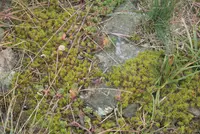
Sand-hill Screw-moss
Syntrichia ruraliformis
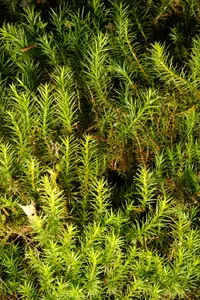
Bank Haircap Moss
Polytrichum formosum
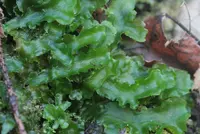
greasewort
Aneura pinguis
American climacium moss
Climacium americanum
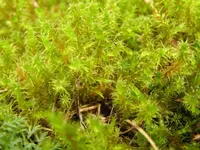
square goose neck moss
Rhytidiadelphus squarrosus
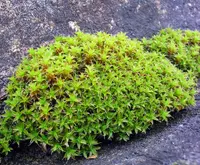
great hairy screw-moss
Syntrichia ruralis
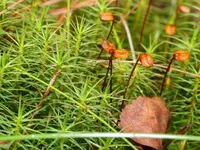
Common Haircap Moss
Polytrichum commune
alternateleaf archidium moss
Archidium alternifolium