Secure Substrate Edges
Use fine, inert mesh or plastic plant edging to gently confine the moss patch in terrariums or ripariums so new shoots can colonize in a controlled band instead of washing away or overgrowing neighboring plants.

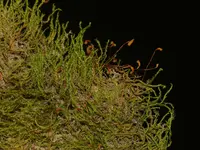
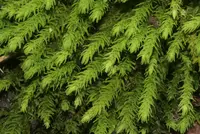
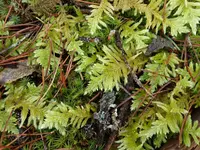
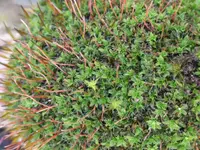
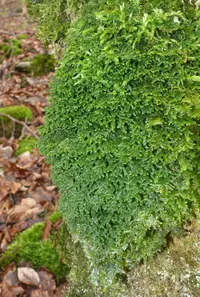
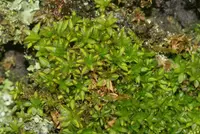
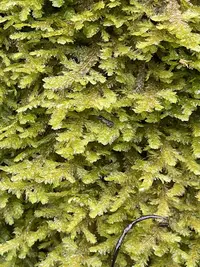
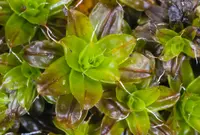
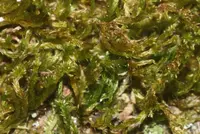
Tangled thread moss, Hygroamblystegium varium, is a small creeping moss that forms loose, bright to yellow-green mats of fine, threadlike stems. It often colonizes damp stone, soil, and wood along streams, ponds, and other consistently moist spots.
This species is common in temperate regions and adapts well to high humidity and mild air movement, which suits terrariums and shaded water features. Its flexible, spreading habit and low nutrient demand make it relatively easy to establish once moisture is stable. For those learning how to care for tangled thread moss, the key traits are its need for constant moisture, gentle indirect light, and a stable, non-compacted substrate.

Care Difficulty
Moderate Care

Light Preference
Partial Shade

Water Requirements
Aquatic

Temperature Preference
Cold Hardy

Hardiness Zone
3–9

Soil Texture
Silty, Organic-rich

Soil pH
Acidic (5.5–6.5), Slightly acidic (6.5–7.0)

Soil Drainage
Waterlogged tolerant

Fertilization
Minimal (feed rarely)
Scan your plant to receive care tips personalized for your specific plant
Available on iOS and Android
This moss prefers soft, filtered light that mimics stream banks and moist woodland edges.
Hygroamblystegium varium thrives in consistently moist conditions without long dry spells.
This moss prefers cool to mild conditions and tolerates a fairly wide outdoor temperature range.
This moss grows best in consistently moist, high-humidity conditions.
Provide a constantly moist, fine-textured, organic-rich substrate rather than typical potting soil.
This species is suitable for containers, especially shallow trays and terrariums.
Hygroamblystegium varium is a low-nutrient moss that needs only very light feeding when actively growing.
Pruning Hygroamblystegium varium is mainly light grooming to maintain an even, healthy mat.
This moss is usually transplanted rather than repotted, and it adapts well if handled gently.
Hygroamblystegium varium is commonly propagated by division of mats rather than by spores in home settings.
This moss is generally cold hardy and often survives typical outdoor winters with little special care.

Plant Health Check
Not sure what's wrong with your plant? Check your plant's health inside the app.
This moss typically grows along the edges of streams, ditches, and wet soil, often forming bright green mats on periodically flooded banks and stones in temperate regions.
In flowing water it can grow fully or partly submerged, with shoots that become more elongated and flexible to tolerate current and movement of water.
This species often colonizes man-made or disturbed wet habitats such as drainage channels, retaining walls, and culverts, showing a strong ability to recover after periodic drying or flooding.

In some central European and North American studies, this moss has been used as a bioindicator species along small streams, because its presence and health can reflect local water quality and the stability of the stream bank microhabitat.
Growth is generally slow to moderate. In stable moisture and cool conditions, it may extend a few millimeters each month, forming denser mats over time. Disturbance, drying, and high heat noticeably slow development and spreading.
Keep your plants happy and healthy with plant identification, disease detection, and easy care guidance.