Sturdy staking strategy
Install tall, firm stakes or a wire grid on the windward side when plants are 30–45 cm high, then tie stems loosely with soft ties at 30–45 cm intervals to prevent lodging as they reach 1.8–3 m.

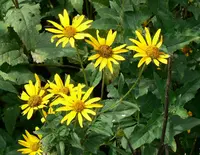
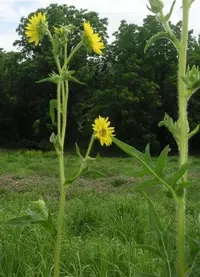
Sawtooth sunflower, Helianthus grosseserratus, is a tall, clump-forming perennial native to prairies, moist meadows, and open roadsides in central and eastern North America. It develops stiff, upright stems with narrow, sharply toothed leaves and many small yellow sunflower heads held high in late summer to fall.
Plants spread by rhizomes, forming dense colonies that suit naturalistic plantings and larger gardens. They are generally easy to grow where there is full sun, moderate to moist soil, and enough space for their height and spread.
Gardeners who want to learn how to care for sawtooth sunflower should note its vigorous growth and choose a site where its expansion is welcome.

Care Difficulty
Easy Care

Light Preference
Full Sun

Water Requirements
Regular Water

Temperature Preference
Cold Hardy

Hardiness Zone
3–8

Soil Texture
Loamy, Silty, Organic-rich

Soil pH
Acidic (5.5–6.5), Slightly acidic (6.5–7.0)

Soil Drainage
Moist but well-drained

Fertilization
Minimal (feed rarely)
Scan your plant to receive care tips personalized for your specific plant
Available on iOS and Android
This tall prairie perennial performs best in strong, direct light for most of the day.
This species prefers evenly moist but not waterlogged soil, especially while establishing.
This hardy perennial tolerates a wide temperature range once established.
Humidity is rarely a concern for Helianthus grosseserratus, as this prairie species is adapted to open, airy conditions.
Helianthus grosseserratus prefers deep, moderately fertile, well-drained mineral soil that still retains some moisture.
This tall, deep-rooted species is generally not ideal for containers, though large, stable outdoor planters can work short term.
Helianthus grosseserratus usually thrives in average garden soil with modest nutrition but responds well to light feeding on poor sites.
Pruning supports tall, sturdy growth and reliable flowering in Helianthus grosseserratus.
This species is usually grown in the ground, so focus on thoughtful transplanting rather than frequent repotting.
This sunflower is most often propagated by seed or by division of established clumps.
This tall native perennial is cold hardy in much of the US and needs minimal winter care in the ground.

Plant Health Check
Not sure what's wrong with your plant? Check your plant's health inside the app.
This species naturally reaches 2–3 m in wet prairies, fens, and along streams, using saturated soils that would stress many other sunflowers.
The long, narrow leaves have sharply serrated margins that give the plant its common name, and the leaf bases partly clasp the stem, helping distinguish it from similar tall sunflowers.
It flowers late in the season, often from late summer into early fall, providing nectar and pollen for bees, butterflies, and other insects when many prairie plants have already finished blooming.

This species is a key structural component of some remnant North American wet prairies, forming tall, dense stands that act as nesting and cover habitat for birds and small mammals while also stabilizing moist soils with its extensive root system.
This species spreads strongly by rhizomes and self-seeding, often forming dense colonies over several seasons. In gardens, use root barriers, regular division, or dedicated wildlife/border areas to prevent it from overwhelming smaller or slower plants.
Keep your plants happy and healthy with plant identification, disease detection, and easy care guidance.