

Deep root training
In the first growing season, water less often but deeply to encourage roots to penetrate 20–30 cm, which makes plants more drought-resilient and better anchored against wind.


The stiff sunflower, Helianthus pauciflorus, is a hardy, clump-forming perennial native to prairies and open fields in central and eastern North America. It spreads by rhizomes, creating dense patches over time.
Plants carry upright, rigid stems with coarse, lance-shaped leaves and bright yellow daisy-like flowers in late summer. The overall look is informal and naturalistic, suited to meadow-style or wildlife gardens.
This species is generally easy to grow where there is full sun, well-drained soil, and moderate moisture. Its toughness and spreading habit mean gardeners should plan space carefully and learn how to care for stiff sunflower to keep it contained.

Care Difficulty
Easy Care

Light Preference
Full Sun

Water Requirements
Moderate Water

Temperature Preference
Cold Hardy

Hardiness Zone
3–9

Soil Texture
Sandy, Loamy, Clay

Soil pH
Acidic (5.5–6.5), Slightly acidic (6.5–7.0)

Soil Drainage
Well-drained

Fertilization
Minimal (feed rarely)
Scan your plant to receive care tips personalized for your specific plant
Available on iOS and Android
This sun-loving prairie perennial flowers best with strong, direct light.
This species prefers moderately moist but not constantly wet soil once established.
This hardy perennial tolerates a wide temperature range once established in the ground.
Humidity is not a significant factor for Helianthus pauciflorus, which thrives in typical outdoor air conditions.
Helianthus pauciflorus prefers moderately fertile, well-structured ground that drains freely yet holds some moisture.
This species can be grown in containers outdoors, but the plant becomes tall and needs careful pot selection for stability.
This prairie perennial needs only modest feeding in average garden soil.
Thoughtful pruning keeps Helianthus pauciflorus upright, flowering well, and within bounds.
This species is usually grown in the ground and spreads by rhizomes, so focus on careful transplanting rather than frequent repotting.
This rhizomatous perennial is commonly propagated by division or seed for new plantings or to refresh mature clumps.
This cold-hardy perennial usually needs minimal winter attention in most temperate climates.

Plant Health Check
Not sure what's wrong with your plant? Check your plant's health inside the app.
This species spreads vigorously by underground rhizomes, forming large, long-lived clonal patches in native prairies and along roadsides, which helps it persist after disturbance such as mowing or grazing.
It is notably tolerant of dry, sandy, or gravelly soils compared with many other sunflowers, and is often one of the last tall forbs to stay green and flowering during late-summer drought in parts of its range.
Despite the name pauciflorus meaning few-flowered, individual plants often carry several relatively large flower heads, each typically bearing 10–20 bright yellow ray florets that are attractive to bees and butterflies over an extended blooming season.

Genetic and morphological studies indicate that this species is closely related to, and sometimes forms natural hybrids with, other perennial sunflowers such as Helianthus tuberosus, which can make field identification challenging even for experienced botanists.
Lack of blooms often comes from too much shade, nutrient-poor or overly rich soil, drought stress, or overcrowding. Young plants may also need 1–2 seasons to establish before flowering reliably.
Keep your plants happy and healthy with plant identification, disease detection, and easy care guidance.

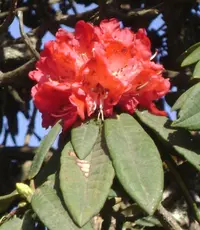
Tree Rhododendron
Rhododendron arboreum

Kenaf
Hibiscus cannabinus
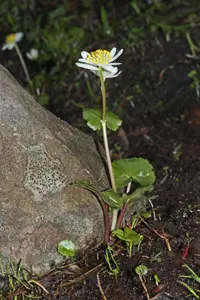
white marsh marigold
Caltha leptosepala
English Lavender
Lavandula angustifolia 'Munstead'
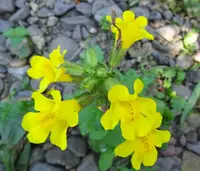
small leaved monkeyflower
Erythranthe guttata
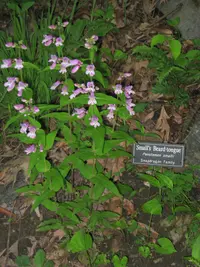
Small's beardtongue
Penstemon smallii
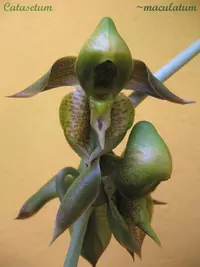
spotted catasetum
Catasetum maculatum
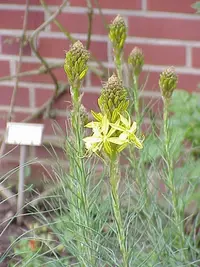
White King's-Spear
Asphodeline taurica