Sturdy staking strategy
Install strong stakes or a low wire grid around young plants by early summer so the tall, flexible stems grow up through support and are less likely to lodge in wind or heavy rain.

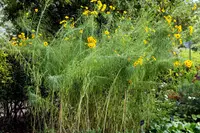
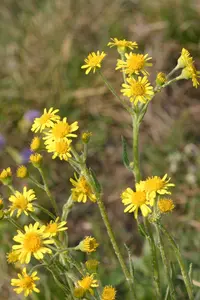
Willowleaf sunflower, Helianthus salicifolius, is a tall, clump-forming perennial from the central United States prairies and open grasslands. It belongs to the sunflower family and is grown mainly as an ornamental.
Plants develop narrow, arching, willow-like leaves on upright stems, topped in late season with many small yellow daisy-type flowers. The overall effect is airy and graceful rather than bulky.
This species is generally robust, cold-hardy, and long-lived when given full sun and well-drained soil. Once established, it tolerates short dry spells and needs only moderate attention, so learning how to care for willowleaf sunflower is straightforward for most gardeners.

Care Difficulty
Easy Care

Light Preference
Full Sun

Water Requirements
Moderate Water

Temperature Preference
Cold Hardy

Hardiness Zone
4–9

Soil Texture
Sandy, Loamy, Clay

Soil pH
Acidic (5.5–6.5), Slightly acidic (6.5–7.0)

Soil Drainage
Moist but well-drained

Fertilization
Minimal (feed rarely)
Scan your plant to receive care tips personalized for your specific plant
Available on iOS and Android
This perennial thrives in open, sunny sites and needs strong light to flower well.
This species prefers evenly moist but not saturated soil, especially during active growth and flowering.
This tall sunflower performs best in warm conditions and tolerates a wide range of outdoor temperatures.
Humidity is rarely a concern for this prairie species in typical outdoor conditions.
Helianthus salicifolius prefers moderately fertile, well-drained mineral soils for strong, upright growth.
This species can be grown in large outdoor containers if those containers provide depth, stability, and fast drainage.
This prairie perennial grows well in modest soils but benefits from light feeding during its active season.
Pruning helps Helianthus salicifolius stay upright, manageable, and floriferous in garden settings.
This tall perennial is usually grown in the ground, with transplanting more relevant than container repotting.
Helianthus salicifolius is commonly propagated by division, stem cuttings, or seeds to expand plantings.
This species is cold hardy in much of the US and needs only simple winter management in the ground.

Plant Health Check
Not sure what's wrong with your plant? Check your plant's health inside the app.
This sunflower has unusually narrow, willow-like leaves that can be less than 1 cm wide, an adaptation that helps reduce water loss in its windy, open prairie habitats.
It flowers very late in the season, often from late summer into fall, providing nectar and pollen for bees, butterflies, and other insects when many other prairie plants have already finished blooming.
Unlike some aggressive sunflowers, this species grows in tight, upright clumps rather than spreading by long rhizomes, which makes it more predictable and controllable in garden and restoration settings.

In its native range on the Great Plains of the central United States, this species often forms tall, swaying stands over 1.5–2.5 m that act as structural shelter for grassland wildlife, giving insects and small animals vertical cover in otherwise low prairie vegetation.
Lack of flowers usually comes from too much shade, excessive nitrogen fertilizer, or overcrowding. Ensure at least one full season of growth, avoid high-nitrogen lawn fertilizers nearby, and divide dense clumps every few years to restore flowering.
Keep your plants happy and healthy with plant identification, disease detection, and easy care guidance.