Rhizome division
Divide and replant clumps every 3–4 years by lifting the rhizomes, cutting them into healthy sections with at least 2–3 shoots each, and replanting at the same depth to keep stands vigorous and flowering well.

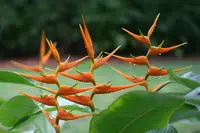
Expanded lobsterclaw (Heliconia latispatha) is a tropical, rhizome-forming perennial grown mainly for its bold foliage and striking, upright flower spikes. It forms tall clumps with banana-like leaves and colorful bracts that attract hummingbirds in warm climates.
This species is native to Central and northern South America, where it grows in humid, frost-free areas along forest edges and clearings. In cultivation it prefers bright, filtered light, consistently moist but well-drained soil, and warm temperatures.
It is moderately easy to grow if given stable warmth, regular moisture, and enough space for its spreading roots. Understanding how to care for expanded lobsterclaw helps prevent issues with cold damage, dryness, and weak growth.

Care Difficulty
Moderate Care

Light Preference
Full Sun

Water Requirements
Keep Soil Moist

Temperature Preference
Tropical / Frost Sensitive

Hardiness Zone
10–12

Soil Texture
Loamy, Sandy, Organic-rich

Soil pH
Acidic (5.5–6.5), Slightly acidic (6.5–7.0)

Soil Drainage
Moist but well-drained

Fertilization
Moderate (every 2–4 weeks)
Scan your plant to receive care tips personalized for your specific plant
Available on iOS and Android
Heliconia latispatha thrives in bright, warm conditions that mimic a tropical understory edge.
This species prefers consistently moist but not waterlogged soil throughout the growing season.
Strong growth depends on consistently warm, frost-free conditions.
This species prefers consistently warm, humid air to support large leaves and vigorous growth.
Heliconia latispatha performs best in deep, rich, well-aerated soil that stays evenly moist but not waterlogged.
This species adapts well to large containers when its size, moisture needs, and top-heavy growth are managed carefully.
Heliconia latispatha responds well to consistent, moderate feeding during its warm growing season.
Pruning Heliconia latispatha keeps the clump tidy and directs energy to healthy flowering shoots.
This species often forms dense clumps that benefit from occasional division and repositioning.
Expansion of Heliconia latispatha is most reliable through division of its rhizomes rather than seed.
In climates cooler than its tropical native range, expanded lobsterclaw needs thoughtful winter management.

Plant Health Check
Not sure what's wrong with your plant? Check your plant's health inside the app.
In its native range, this species is primarily pollinated by hermit hummingbirds, which have long, curved bills that match the flower structure and allow efficient nectar access and pollen transfer.
Unlike many heliconias with drooping inflorescences, this species produces mostly upright, paddle-like bracts that can range from yellow to orange-red, helping shed excess water in heavy tropical rain.
In the wild it often grows along forest margins, riverbanks, and disturbed sites, where higher light levels and regular soil moisture favor dense clumps that can rapidly colonize gaps.

This species is known to hybridize naturally with some other heliconias in areas where their ranges overlap, creating intermediate forms that help scientists study evolutionary relationships and pollination ecology within the genus.
Lack of blooms usually comes from insufficient maturity, low light, nutrient imbalance, or stress from cold or repotting. Stable warmth, bright conditions, and steady nutrition are essential for reliable flowering over several seasons.
Keep your plants happy and healthy with plant identification, disease detection, and easy care guidance.