Secure trunk base
Anchor the trunk base with 2–3 soft ties to sturdy stakes during the first 2–3 years to prevent wind rock, which can damage the shallow root system of this tree fern.

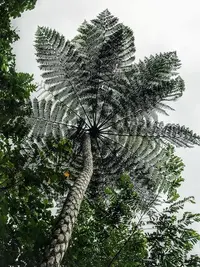
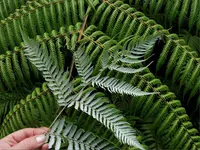
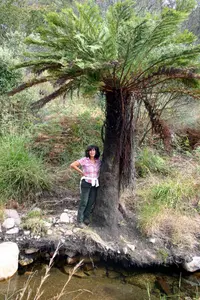
Sphaeropteris glauca is a large tree fern, typically forming a single trunk topped with a wide, fountain-like crown of finely divided fronds. It has an architectural, tropical look that suits spacious gardens or large indoor atrium spaces.
This species is native to moist, shaded forests in parts of Southeast Asia, where it grows in consistently humid, sheltered conditions. It prefers dappled light, evenly moist but well-drained soil, and protection from strong wind and direct, harsh sun.
Because it needs stable warmth, high humidity, and space for its tall trunk and spreading fronds, it is considered moderately challenging for beginners. Gardeners who understand how to care for Sphaeropteris glauca usually find it rewarding in suitable climates or controlled environments.

Care Difficulty
Hard Care

Light Preference
Partial Shade

Water Requirements
Keep Soil Moist

Temperature Preference
Tropical / Frost Sensitive

Hardiness Zone
10–11

Soil Texture
Loamy, Peaty, Organic-rich

Soil pH
Acidic (5.5–6.5)

Soil Drainage
Moist but well-drained

Fertilization
Light (every 4–6 weeks)
Scan your plant to receive care tips personalized for your specific plant
Available on iOS and Android
This tree fern prefers bright, filtered light that mimics a lightly shaded forest understory.
This species needs consistently moist but not waterlogged soil around its root zone and trunk base.
This fern thrives in mild, frost-free conditions with stable warmth and high humidity.
This species needs consistently high humidity to maintain healthy fronds and steady growth.
This fern prefers a loose, organic, consistently moist but well-drained substrate.
This species is suitable for container growing, especially while young or in cool climates.
This tree fern benefits from light, consistent feeding rather than heavy fertilization.
Pruning is mainly cosmetic and hygienic, helping this fern maintain a tidy canopy and healthy trunk.
This species is usually grown in the ground; transplanting must be planned carefully to limit root disturbance.
Propagation is possible but specialized, usually done from spores rather than division.
This tree fern is frost-sensitive and needs thoughtful winter protection in most temperate climates.

Plant Health Check
Not sure what's wrong with your plant? Check your plant's health inside the app.
This species forms a single upright trunk crowned with a rosette of large fronds, giving it the classic tree fern silhouette often seen in moist tropical forests.
It is naturally associated with high-rainfall, misty forest habitats, where constant moisture and filtered light support its persistent evergreen foliage.
This tree fern grows at a moderate rate, often adding 15–30 cm of trunk per year in suitable climates. Growth slows in cooler or drier sites and improves with consistent moisture, organic mulch, and shelter from strong wind.
Keep your plants happy and healthy with plant identification, disease detection, and easy care guidance.