

Host tree selection
Establish this fungus only in mixed woodland or garden areas with compatible ectomycorrhizal trees such as pines, oaks, or birches, since fruiting bodies are much more reliable where a stable host root system is present.

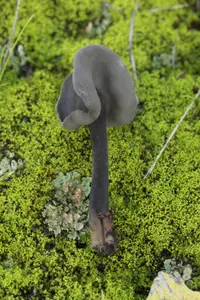
Helvella atra is a small, dark cup fungus, sometimes called an elfin saddle, rather than a traditional leafy plant. It forms irregular, saddle-shaped caps on slender stems, usually black to dark brown.
This species appears on soil or among moss in forests, often in temperate regions of Europe and parts of Asia, sometimes near conifers. It is considered uncommon and tends to fruit in cool, damp conditions.
Because it is a mycorrhizal or soil-decomposing fungus, it is not practical to grow in a normal home setting, and there is limited guidance on how to care for Helvella atra. In nature it prefers moist, well-drained substrates and consistent woodland shade.

Care Difficulty
Hard Care

Light Preference
Partial Shade

Water Requirements
Regular Water

Temperature Preference
Cool Climate

Hardiness Zone
Unknown

Soil Texture
Loamy, Silty, Organic-rich

Soil pH
Acidic (5.5–6.5)

Soil Drainage
Moist but well-drained

Fertilization
Minimal (feed rarely)
Scan your plant to receive care tips personalized for your specific plant
Available on iOS and Android
This fungus prefers cool, shaded woodland conditions with minimal direct sun exposure.
Moist, cool, well-aerated soil is essential for reliable fruiting of this mycorrhizal fungus.
This species favors cool to mild conditions typical of temperate forests.
Humidity is not a major factor for Helvella atra, which naturally grows in outdoor forest conditions.
This fungus depends on naturally moist, organic-rich forest soil rather than a constructed potting mix.
This species is not suitable for container growing because it relies on complex soil and root associations in the ground.
This fungus is usually not fertilized, as it relies on natural soil nutrients and microbial partners rather than added feeds.
Helvella atra does not require true pruning, but limited hygiene work helps keep the fruiting area tidy and reduce disease risk.
This mycorrhizal fungus is normally not grown in pots; transplanting focuses on preserving its association with host trees and soil.
Propagation of Helvella atra is complex and rarely attempted successfully in home settings.
In suitable climates this fungus is naturally cold hardy and typically needs no dedicated winter care.

Plant Health Check
Not sure what's wrong with your plant? Check your plant's health inside the app.
This species forms unusually dark, almost black saddle-shaped fruiting bodies that stand out among the typically pale or gray Helvella species, making field identification more straightforward when conditions are suitable.
It is most often recorded in cool, mossy coniferous or mixed forests in temperate to boreal regions, where it fruits on the soil surface among litter rather than on wood.
For many years, dark Helvella collections from Europe and Asia were lumped under a few names, but modern re-examination of microscopic traits such as spore size and surface ornamentation has helped clarify Helvella atra as a distinct species with its own diagnostic features.
This fungus is considered inedible and potentially harmful if consumed. It contains unstable compounds that may become toxic when undercooked or improperly prepared. It should not be collected for eating, even if local traditions suggest otherwise.
Keep your plants happy and healthy with plant identification, disease detection, and easy care guidance.

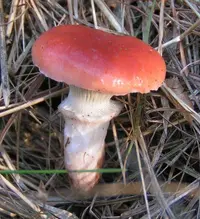
Rosy Spike
Gomphidius roseus
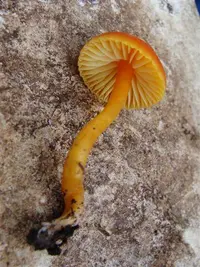
Bitter Waxcap
Hygrocybe mucronella
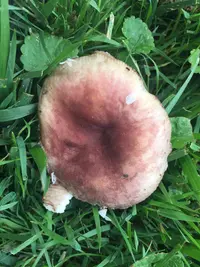
Blackish-red Russula
Russula vinacea
turkey tail mushroom
Trametes versicolor
Boletopsis leucomelaena
Boletopsis leucomelaena
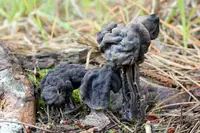
Western Black Elfin Saddle
Helvella vespertina
Taxonomy and Phylogeny
Oudemansiella canarii
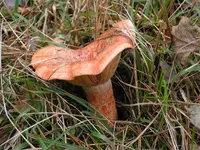
saffron milkcap
Lactarius deliciosus