Host tree mapping
Map where broadleaf host trees such as beech, oak, or birch grow on your site, then focus all efforts for growing Blackish-red Russula within the fine root zone of these trees rather than in isolated beds.

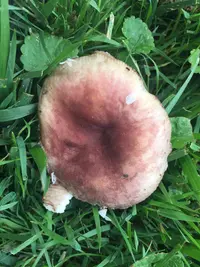
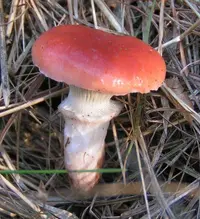
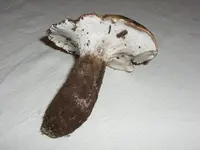
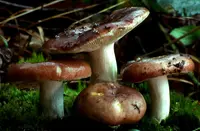
Blackish-red Russula (Russula vinacea) is a fleshy, gilled mushroom rather than a leafy plant. It forms sturdy, round caps in shades of dark red to wine, with a pale to whitish stalk and brittle, easily broken flesh.
This species typically appears on forest floors, often in mixed or deciduous woodlands, where it lives in symbiosis with tree roots. Its growth depends on undisturbed soil, adequate moisture, and the presence of suitable host trees, which makes it difficult to cultivate intentionally.
Those who care for Blackish-red Russula in managed woodland or naturalized areas usually focus on maintaining healthy trees, leaf litter, and moderate soil moisture, rather than treating it as a conventional garden plant.

Care Difficulty
Hard Care

Light Preference
Partial Shade

Water Requirements
Keep Soil Moist

Temperature Preference
Cool Climate

Hardiness Zone
Unknown

Soil Texture
Loamy, Organic-rich

Soil pH
Strongly acidic (4.5–5.5), Acidic (5.5–6.5)

Soil Drainage
Moist but well-drained

Fertilization
Minimal (feed rarely)
Scan your plant to receive care tips personalized for your specific plant
Available on iOS and Android
Russula vinacea is a woodland mushroom that develops best under dappled, forest-like light conditions rather than direct open sun.
This ectomycorrhizal mushroom depends on consistently moist, well-drained forest soil rather than set watering routines.
This forest-dwelling fungus prefers cool to mild conditions that mimic a shaded woodland floor.
Humidity is not a meaningful factor for this forest mushroom, which relies far more on soil and host tree conditions than air moisture.
Russula vinacea depends on specific forest soil conditions rather than a conventional garden bed or potting mix.
This mycorrhizal mushroom is not suitable for container growing because it requires a stable, long-term association with living tree roots in natural soil.
Russula vinacea is a wild mycorrhizal mushroom that should not be fertilized directly, since added nutrients can disrupt its fungal–tree partnership.
Russula vinacea does not require or benefit from pruning because the visible mushroom is a temporary fruiting body of an underground fungus.
This species naturally forms mycorrhizae with host tree roots in the ground, so it is not suited to typical repotting or container culture.
Propagation of Russula vinacea is specialized and rarely attempted outside scientific or forestry settings.
In its natural woodland habitat, the Blackish-red Russula requires no special winter care, as the fungal mycelium remains dormant and insulated in the soil.

Plant Health Check
Not sure what's wrong with your plant? Check your plant's health inside the app.
The cap of this fungus ranges from wine-red to dark vinaceous-purple, but often fades or develops pale patches with age or in strong light, which is one reason it was historically confused with several other red russulas.
Russula vinacea forms ectomycorrhizal partnerships with birch and some other broadleaf trees, exchanging mineral nutrients such as nitrogen and phosphorus for sugars produced by the tree through photosynthesis.
Under a microscope, its spores show a characteristic pattern of warts and partial ridges that often form an incomplete network, a feature that helps separate it from similar red-capped Russula species in scientific identification.
This species is generally considered inedible or at least of poor culinary value. Identification within the Russula group is difficult, and some look-alikes are toxic, so consumption is strongly discouraged unless confirmed by an experienced mycologist.
Keep your plants happy and healthy with plant identification, disease detection, and easy care guidance.