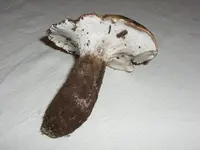
Western Black Elfin Saddle Care (Helvella vespertina)

Western Black Elfin Saddle

About Western Black Elfin Saddle

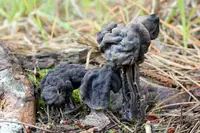
Western black elfin saddle (Helvella vespertina) is a wild, saddle-shaped fungus rather than a true plant. It forms dark, irregular caps on slender pale stems, often appearing twisted or lobed. This species usually grows on the ground in coniferous forests of western North America, often among moss, needles, and forest litter. It typically appears in the cooler, wetter seasons when soil moisture is high. Because it relies on complex relationships with trees and soil fungi, it is not practical to cultivate at home, and attempts to care for Western Black Elfin Saddle in containers or garden beds are rarely successful.

Main Plant Requirements

Care Difficulty

Hard Care

Light Preference

Shade

Water Requirements

Keep Soil Moist

Temperature Preference

Cool Climate

Hardiness Zone

Unknown

Soil Texture

Loamy, Silty, Organic-rich

Soil pH

Acidic (5.5–6.5)

Soil Drainage

Moist but well-drained

Fertilization

Minimal (feed rarely)

Get Personalized Care Plan

Scan your plant to receive care tips personalized for your specific plant

Available on iOS and Android

How to Care for the Western Black Elfin Saddle

This fungus grows in forest habitats where light is filtered and never intense for long periods.

  • Provide bright, dappled forest light or high, open shade, similar to mixed conifer or hardwood woodland edges, rather than open, exposed sites.
  • Aim for 2–4 hours of gentle, low-angle morning sun with the rest of the day in shade; avoid harsh midday and afternoon sun that can dry the fruiting zone.
  • Maintain leaf litter, shrubs, or low tree canopy to create shifting, filtered light; excessive clearing that increases full sun often reduces Western Black Elfin Saddle occurrence.

This fungus depends on steady, natural soil moisture rather than direct watering of the fruiting bodies.

  • Keep the soil or forest floor evenly moist but not saturated; allow the top 2–5 cm of mineral soil or litter to lose surface sheen before adding water nearby, if irrigation is used.
  • Ensure excellent drainage with a loose, humus-rich layer; persistent puddling, sour smell, or slimy litter indicates excess water and poor aeration.
  • During dry, warm periods, light, infrequent irrigation that dampens the surrounding soil profile, not the caps, can support Helvella vespertina where it already grows.

This species is adapted to cool to mild conditions typical of coastal and montane forests.

  • Optimal fruiting usually occurs around 45–65°F (7–18°C), often in cool seasons when soil stays moist and air temperatures are moderate.
  • The organism in the soil tolerates colder periods down to about 20–25°F (-6 to -4°C), but visible fruiting bodies are sensitive to hard frost.
  • Extended heat above 80°F (27°C), especially with dry soil, reduces fruiting; cooler nights and seasonal transitions with stable moisture favor development of Helvella vespertina.

This fungus does not require managed humidity in outdoor settings.

Helvella vespertina grows in undisturbed, naturally structured forest soil rather than prepared mixes.

  • Fruiting bodies appear most often in loose, well-aerated, organic-rich forest soil with abundant leaf litter and woody debris.
  • Moist but freely draining conditions are essential; avoid compacted, waterlogged, or heavily tilled ground that stays saturated after rain.
  • Slightly acidic soil around pH 5.0–6.5 is typical of its conifer forest habitats and supports the necessary fungal associations.
  • To encourage similar conditions, allow natural mulch layers of needles, leaves, and small branches to accumulate instead of clearing them away.

This species is not suitable for container growing because it depends on complex underground relationships with trees and natural forest soil processes.

Helvella vespertina is a wild, mycorrhizal fungus that relies on its tree partners, so added fertilizer is usually unnecessary and can even be harmful.

Pruning is not a standard practice for Helvella vespertina, which fruits seasonally and then naturally decomposes.

  • Limit intervention to gentle cleanup rather than structural cutting.
  • Remove only clearly decayed or moldy fruiting bodies to reduce unwanted spores near walkways.
  • Use gloved hands or a clean knife to cut mushrooms at the base if removal is needed.
  • Avoid disturbing the surrounding soil and tree roots that support the fungal network.

Transplanting Helvella vespertina is generally not practical, as this fungus depends on an undisturbed partnership with nearby trees.

  • Avoid lifting or moving soil and leaf litter where the fungus fruits, since its underground mycelium is extensive and delicate.
  • Do not attempt container culture; the species needs living tree roots and natural forest soil conditions.
  • If site work is unavoidable, leave as much original soil and root zone intact as possible to reduce stress on the fungal network.
  • For gardeners, the best approach is to protect existing habitat rather than trying to relocate or repot it.

Intentional propagation of Helvella vespertina is difficult and rarely attempted outside research settings.

This species is adapted to natural outdoor temperature cycles and typically needs no special winter care.

  • Allow leaf litter and natural mulch to remain over the root zone to buffer temperature swings.
  • Avoid deep soil disturbance or heavy compaction where the fungus occurs during wet, cold months.
  • Container culture is not recommended, so moving specimens indoors is neither practical nor beneficial.
  • In managed landscapes, focus on maintaining healthy host trees to support the underground mycelium year-round.

Care Tips

Use Host Trees

Establish the fungus near compatible host trees such as Douglas-fir or other native conifers by top-dressing the root zone with a thin layer (1–2 cm) of leaf litter and conifer duff from an area where the species is known to occur, rather than disturbing roots or digging.

Mimic Burn Scars

To encourage fruiting, lightly rake a small trial patch to expose some mineral soil, then add a thin layer of well-charred, untreated hardwood charcoal fines mixed with local forest soil to imitate the post-fire conditions where this species often appears.

Limit Foot Traffic

Mark and protect the fruiting zone with small flags or stones so people avoid stepping on the soil, since compaction around host roots can sharply reduce future mushroom production.

Seasonal Debris Management

In late fall, remove only heavy, matted debris while keeping a loose layer of natural leaf litter so the mycelium remains insulated yet still has access to oxygen and gentle moisture fluctuations.

Document Fruiting Patterns

Keep simple notes with dates, weather, and nearby plant conditions when fruiting bodies appear, as this helps refine Helvella vespertina care instructions and adjust irrigation or disturbance levels in future seasons.

Common Pests and Diseases

mycophagous insects

These insects feed directly on fruiting bodies, causing pits, tunnels, and rapid collapse of the saddle-shaped caps. This pest is most common in older or weather-stressed mushrooms in the forest duff.

Solution

Harvest and discard heavily tunneled or collapsing fruiting bodies and avoid leaving cut or damaged mushrooms on site, as they attract more insects. For anyone attempting Helvella vespertina care in controlled culture, maintain good sanitation of growing areas and remove spent substrates promptly to reduce breeding sites.

parasitic fungi

This disease appears as abnormal growth, discolored patches, or fuzzy overgrowth on the saddle surface where other fungi colonize and weaken the tissue. Symptoms include distorted or partially overgrown caps that decay faster than healthy specimens nearby.

Solution

Remove and dispose of parasitized fruiting bodies as soon as they are noticed to limit spore spread around the colony. In any experimental cultivation setting, lower humidity slightly, increase fresh air exchange, and avoid overhead wetting of caps to reduce favorable conditions for fungal parasites.

slugs and snails

These pests rasp away soft tissue, leaving irregular holes, shredded margins, and slime trails on and around the fruiting bodies. Damage is often most evident overnight in moist weather or irrigated areas.

Solution

Hand-pick slugs and snails around fruiting patches and remove plant debris or dense groundcover that shelters them. In garden or research plots, use copper barriers or appropriately placed iron phosphate bait outside the immediate fruiting area to limit feeding while avoiding direct contact with the mushrooms.

fungus gnat larvae

This pest lives within the substrate and fruiting bodies, boring fine tunnels that cause softening, internal browning, and premature collapse. Symptoms include lightweight, spongy, or hollow-feeling mushrooms when handled.

Solution

Discard infested mushrooms and any obviously colonized substrate to break the life cycle. In protected culture, use fine mesh exclusion around vents, avoid overly wet, stagnant substrates, and, if needed, introduce biological control agents such as Bacillus thuringiensis israelensis according to label directions for fungus gnat management.

bacterial soft rot

This disease causes water-soaked spots that quickly turn mushy and foul-smelling, especially after warm, wet periods. Symptoms include slimy, collapsing caps that discolor and break down into a wet mass.

Solution

Promptly remove and discard affected fruiting bodies and avoid handling healthy mushrooms with contaminated tools or hands. In cultivation or display settings, improve air circulation, avoid standing water around the base, and keep irrigation gentle and targeted to the substrate rather than directly onto caps to reduce bacterial spread while growing Western Black Elfin Saddle.

Interesting Facts

Late-season appearance

This species typically fruits in late autumn to winter in the Pacific Northwest, often appearing after many other mushroom species have finished their season.

Conifer forest associate

It forms ectomycorrhizal partnerships with coastal conifers, especially Douglas-fir and Sitka spruce, exchanging mineral nutrients from the soil for sugars from the tree.

Recently distinguished species

It was described as a distinct species in 2013 after molecular studies showed that western North American collections previously lumped with Helvella lacunosa actually represented a separate taxon.

Botan icon

Did you know?

The characteristic dark, saddle-shaped cap and ribbed, hollow stem of this fungus are closely tied to its genus name Helvella, which historically referred to various oddly shaped or club-like fungi noted by early European mycologists.

FAQs about Western Black Elfin Saddle

This species is not recommended for consumption. It belongs to a group of saddle fungi with poorly understood and possibly unsafe chemistry. Identification is difficult, and confusion with toxic relatives is easy, so it is best treated as inedible.

Grow Healthy Plants with Botan Care

Keep your plants happy and healthy with plant identification, disease detection, and easy care guidance.

Botan plant care app — identify plants on mobile

Explore More Plants