Helvella corium Care

Helvella corium

About Helvella corium

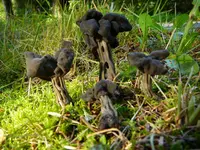
Helvella corium is a small, saddle-shaped ascomycete fungus rather than a typical leafy plant. It forms dark, often blackish caps with irregular lobes on slender stems, giving a delicate, contorted look on the forest floor.

This species occurs mainly in cool, mountainous regions, often in association with conifers or dwarf shrubs, where it appears on soil, moss, or plant debris. It is considered difficult to cultivate because it relies on complex relationships with surrounding plants and soil fungi, so attempts to care for Helvella corium at home are rarely successful.

In nature, it favors cool, moist, well-drained sites with stable humidity and minimal disturbance.

Main Plant Requirements

Care Difficulty

Hard Care

Light Preference

Partial Shade

Water Requirements

Regular Water

Temperature Preference

Cool Climate

Hardiness Zone

Unknown

Soil Texture

Loamy, Silty, Organic-rich

Soil pH

Acidic (5.5–6.5), Slightly acidic (6.5–7.0)

Soil Drainage

Moist but well-drained

Fertilization

Minimal (feed rarely)

Get Personalized Care Plan

Scan your plant to receive care tips personalized for your specific plant

Available on iOS and Android

How to Care for the Helvella corium

This fungus prefers low to moderate light typical of shaded woodland or conifer forest floors.

  • Provide 2–4 hours of soft, indirect light or dappled shade each day, avoiding direct, intense midday sun that can dry the substrate quickly.
  • Site Helvella corium under trees or shrubs where filtered morning sun and afternoon shade mimic its natural understory conditions.
  • In summer, protect from prolonged direct sun exposure; in winter, ensure it still receives ambient daylight, as deep, continuous shade can reduce fruiting.

Watering should keep the surrounding soil or forest-duff layer consistently moist but never waterlogged.

  • Before watering, check the top 2–3 cm of soil or duff; it should feel lightly moist, not soggy or bone dry, to support its mycorrhizal association with tree roots.
  • Increase moisture during active fruiting and in dry spells by gently soaking the area, allowing excess water to drain away through loose, organic-rich soil.
  • Reduce supplemental water in cool, wet seasons; persistent standing water, sour odor, or slimy substrate indicates overwatering, while cracked, dusty soil signals underwatering.

This woodland species prefers cool to mild conditions with moderate seasonal variation.

  • Optimal development occurs around 50–65°F (10–18°C), often in spring or autumn when soil stays cool and evenly moist.
  • The mycelium in soil can tolerate brief drops close to 32°F (0°C), but repeated hard freezes without insulating leaf litter may reduce fruiting.
  • Prolonged heat above 77°F (25°C) with dry soil can suppress Helvella corium fruit bodies, so maintain shade, organic mulch, and soil moisture during hot periods.

Humidity is not a significant controllable factor for Helvella corium in typical cultivation settings.

Helvella corium grows as a mycorrhizal fungus, so focus on site conditions rather than a conventional potting substrate.

  • Use loose, well-drained, humus-rich forest-type soil with plenty of decomposed leaf litter and small woody debris.
  • Ensure the soil stays evenly moist but never waterlogged, as prolonged saturation can damage associated roots and fungal structures.
  • Aim for slightly acidic to neutral conditions around pH 5.5–7.0, avoiding heavily limed or strongly alkaline ground.
  • Improve aeration and drainage by mixing in shredded bark, leaf mold, and a small amount of coarse sand rather than dense composts.

This species is not realistically suitable for container growing outside specialized research or inoculated forestry systems.

This wild ascomycete fungus grows in nutrient-poor forest soils and does not benefit from added fertilizer.

Helvella corium does not require horticultural pruning because it is a wild, short-lived fruiting fungus rather than a typical garden plant.

This species is not suited to container culture, so transplanting attempts are generally unsuccessful.

  • Helvella corium forms specialized relationships with soil fungi and microbes that are hard to recreate in pots.
  • Transplanting fruiting bodies or surrounding soil usually fails to establish stable colonies in new locations.
  • If relocation is attempted for study, move a generous plug of native soil with minimal disturbance.
  • Keep the original soil profile orientation and avoid compaction to reduce stress on the underground structures.

Propagation of this wild fungus is complex and not practical for home growers.

No specific winter care is required because this fungus is adapted to natural outdoor temperature cycles, including freezing.

Care Tips

Host tree selection

Establish this fungus only in sites with suitable mycorrhizal partners, such as established conifers or other native trees in your region, since it relies on these roots rather than standard potting soil or substrate.

Minimal disturbance zone

Mark and protect a 30–60 cm radius around known fruiting spots from raking, digging, or heavy foot traffic so the underground mycelium network remains intact and can fruit reliably in future seasons.

Leaf litter management

Maintain a thin, natural layer of undecayed leaf litter or conifer needles over the fruiting area, topping up lightly each autumn to mimic its woodland habitat while avoiding thick, soggy mulch that can smother developing fruit bodies.

Moisture pulse strategy

If local regulations allow, apply short, deep irrigations to the root zone of the host trees during extended dry spells rather than frequent light watering, aiming to imitate periodic forest rain events that can trigger fruiting.

Fruiting body hygiene

Remove and discard heavily decayed or mold-covered fruit bodies with clean tools and avoid handling healthy ones excessively, which reduces secondary fungal infections and supports a cleaner microhabitat when caring for Helvella corium.

Common Pests and Diseases

Mycophagous springtails

These insects feed on fungal tissue and can scar or distort developing fruiting bodies. Symptoms include small surface pits and irregular margins on the caps and stems.

Solution

Limit persistent surface wetness around fruiting bodies, remove heavily damaged specimens, and improve air movement over the substrate. If populations are high in cultivation setups, use sticky traps around beds and, if necessary, apply a targeted insecticidal soap or neem-based drench to the surrounding substrate, avoiding direct contact with the fungi as much as possible.

Fungus gnat larvae

This pest occurs in damp, organic-rich substrates and larvae chew into young fungal tissue and mycelium. Symptoms include hollowed stems, collapsed young fruiting bodies, and soft, tunneled bases.

Solution

Reduce excess moisture in cultivation beds, use fine mesh over vents or openings, and place yellow sticky traps to catch the flying adults. For persistent issues in controlled environments, introduce biological controls such as Bacillus thuringiensis israelensis (Bti) to the substrate, following label directions, while keeping direct disturbance of fruiting bodies minimal.

Parasitic Hypomyces infection

This disease is caused by a parasitic fungus that overgrows the fruiting body, leading to deformed, thickened, or discolored tissue. Symptoms include a white, yellow, or orange crust-like layer that spreads over the caps and eventually prevents normal spore production.

Solution

Promptly remove and discard infected fruiting bodies and nearby substrate to reduce spore spread. Avoid overcrowded, stagnant, overly damp microhabitats by improving drainage and airflow around natural or cultivated patches, a key step in Helvella corium care instructions.

Slugs and snails

These pests feed on soft fungal tissue, leaving irregular holes, missing margins, and slime trails on or near the fruiting bodies. Symptoms include overnight loss of caps and gnawed, ragged edges.

Solution

Hand-pick slugs and snails during damp evening or early morning periods and remove nearby debris that provides hiding places. In cultivation beds, create physical barriers such as copper tape or rough mineral rings and, if needed, use iron phosphate-based slug baits placed away from the main fruiting area.

Interesting Facts

Dark alpine specialist

This species typically fruits in high-elevation and subalpine habitats, often on calcareous or base-rich soils, making it more associated with cool mountain environments than many other saddle fungi.

Distinctive black stipe

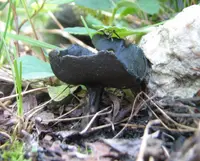
Helvella corium is characterized by a tough, black to dark brown stem and a usually dark, saddle-shaped cap, a combination that helps separate it from paler, more contorted relatives in the same genus.

Cold-season fruiting

In many parts of its range, this fungus fruits in late summer to autumn and can persist into early winter, tolerating low temperatures that limit the activity of many other macrofungi.

FAQs about Helvella corium

This fungus is generally considered inedible due to its tough texture and uncertain safety. Some Helvella species contain toxins that may cause gastrointestinal upset or become more harmful when undercooked, so consumption is not recommended.

Grow Healthy Plants with Botan Care

Keep your plants happy and healthy with plant identification, disease detection, and easy care guidance.

Botan plant care app — identify plants on mobile

Explore More Plants