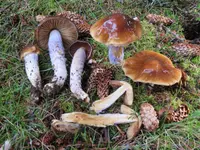
felt saddle fungus Care (Helvella macropus)

felt saddle fungus

About felt saddle fungus

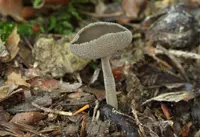
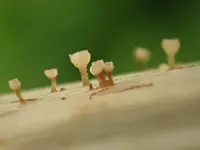
Felt saddle fungus, Helvella macropus, is a small cup fungus rather than a leafy plant. It forms shallow, saucer-like caps with a velvety outer surface on slender stems. Colors range from gray-brown to dark brown, blending into leaf litter.

This species typically appears on soil rich in decaying plant material, often in mixed woodland or forest edges in temperate regions. It is a mycorrhizal fungus, living in association with tree roots, which makes it difficult to cultivate at home.

Because of this close partnership with trees, attempts to care for felt saddle fungus in pots or garden beds usually have limited success. It favors cool, moist, shaded sites with undisturbed organic soil.

Main Plant Requirements

Care Difficulty

Hard Care

Light Preference

Partial Shade

Water Requirements

Regular Water

Temperature Preference

Cool Climate

Hardiness Zone

Unknown

Soil Texture

Loamy, Silty, Organic-rich

Soil pH

Acidic (5.5–6.5), Slightly acidic (6.5–7.0)

Soil Drainage

Moist but well-drained

Fertilization

Minimal (feed rarely)

Get Personalized Care Plan

Scan your plant to receive care tips personalized for your specific plant

Available on iOS and Android

How to Care for the felt saddle fungus

This woodland fungus prefers low to moderate light that mimics a shaded forest floor.

  • Provide dappled or filtered light with no more than 1–2 hours of gentle morning sun, avoiding direct midday or afternoon sun that can dry substrate and damage fruiting bodies.
  • Site felt saddle fungus under deciduous shrubs or trees where 70–90% shade naturally protects it, especially during bright summer periods.
  • In late summer and autumn, ensure some open sky exposure so the area is bright shade rather than deep darkness, which can reduce fruiting quantity.

Moist, well-drained soil is essential for healthy Helvella macropus fruiting.

  • Maintain evenly moist conditions in leaf-litter-rich soil, allowing only the top 1–2 cm to dry slightly between natural rain events or supplemental watering.
  • Use a loose, well-draining substrate with plenty of organic matter so excess water runs off within a few minutes and puddles do not persist.
  • Watch for soft, collapsing fruiting bodies as a sign of waterlogging, and for shriveling or brittle caps as an indicator that the site is too dry.

This species thrives in cool to mild conditions typical of shaded woodland environments.

  • Optimal fruiting occurs around 55–68°F (13–20°C), often in late summer to autumn when days are mild and nights are cool.
  • The mycelium tolerates down to about 32°F (0°C) in the soil, but exposed fruiting bodies are damaged by hard frost and prolonged freeze–thaw cycles.
  • Sustained heat above 77–82°F (25–28°C), especially with dry air, shortens fruiting body life; protect sites with deep shade and leaf litter in hot spells.

This fungus prefers consistently moist air and substrate rather than specific indoor humidity control.

  • Aim for 60–90% ambient humidity by keeping the fruiting area damp and preventing strong drying airflow.
  • Felt saddle fungus reacts to low humidity with shriveling, pale, or cracked cups that fail to expand fully.
  • Use frequent fine misting over the substrate, humidity tents, or a sheltered outdoor microclimate to maintain moisture around developing fruiting bodies.

Helvella macropus develops best in loose, humus-rich forest soil that stays moist yet never stagnant.

  • Use a mix based on leaf mold or well-rotted hardwood compost blended with mineral soil to mimic woodland leaf litter.
  • Ensure rapid drainage by adding coarse sand or fine grit so water moves through while the upper layer remains slightly moist.
  • Aim for slightly acidic to neutral conditions, roughly pH 5.5–7.0, avoiding limed or strongly alkaline ground.
  • Avoid compacted clay, peat-only mixes, or heavily fertilized substrates, which reduce aeration and can disrupt the mycorrhizal association with host roots.

This species is generally unsuitable for container growing because it relies on complex soil and root associations that are difficult to reproduce in pots.

Helvella macropus grows as a wild mycorrhizal fungus and normally does not benefit from added fertilizer in garden or container culture.

Pruning needs for Helvella macropus are minimal and focus only on hygiene rather than shaping or stimulating growth.

  • Remove collapsed or moldy fruiting bodies with clean gloves or scissors to limit spread of secondary fungi.
  • Cut at the base rather than pulling to avoid disturbing the underlying mycelium network in the soil.
  • Discard removed tissue in the trash, not the compost heap, to reduce unwanted fungal spread.
  • Sanitize tools with alcohol if used on other plants to avoid transferring pathogens.

This fungus is rarely grown in containers; management focuses on minimally disturbing its symbiotic relationship with host tree roots when transplanting habitat soil.

  • Transplant only if a site will be destroyed, moving a plug of host tree root zone soil containing mycelium.
  • Best timing is during cool, moist conditions in fall or early spring to reduce desiccation stress.
  • Lift a broad, deep soil block with a spade, keeping roots and soil intact to maintain fungal connections.
  • Replant at the same depth, water gently, then keep the area evenly moist and shaded while the system re-establishes.

Human-directed propagation of Helvella macropus is challenging and rarely successful for home growers because it depends on complex mycorrhizal interactions with host trees.

In typical temperate climates this species is naturally cold hardy and needs essentially no special winter care.

  • Allow felt saddle fungus habitat to remain undisturbed; do not rake away all leaf litter that insulates soil.
  • Avoid deep cultivation or soil compaction over winter so the mycelium stays intact.
  • Container experiments should overwinter in a cold but not continuously frozen spot, such as an unheated garage or cold frame.

Care Tips

Habitat mimicry

Place fruiting containers outdoors in a shaded, undisturbed corner with leaf litter from mixed hardwoods to better mimic the natural forest floor conditions this fungus prefers.

Mycorrhizal partner support

Establish and maintain suitable host trees or shrubs nearby, such as native broadleaf species, because stable fungal colonies depend on long-term association with living roots.

Minimal disturbance

Mark the cultivation area and avoid raking, digging, or compacting the substrate so the fragile fruiting bodies and underlying mycelium remain intact season after season.

Clean harvesting tools

Use a clean, sharp knife or scissors wiped with 70% alcohol between patches when harvesting to limit transfer of competing fungi or bacterial contaminants.

Seasonal observation notes

Keep simple records of weather, host tree condition, and timing of fruiting to refine how to take care of felt saddle fungus in your specific site over several years.

Common Pests and Diseases

Mycophagous springtails

These insects feed on fungal tissue, often grazing fruiting bodies and leaving pitted or shredded surfaces. Symptoms include small surface scars, deformed caps, and accelerated collapse of the saddles in very moist habitats.

Solution

Limit standing water and keep the fruiting area evenly moist but not saturated to discourage population booms, and gently remove heavily infested fruiting bodies. In cultivation or contained displays, improve drainage, reduce excess organic debris, and, if needed, use sticky traps or a targeted biological control labeled for springtails around but not directly on the fungi.

Fungus gnat larvae

This pest lives in wet, organic substrates and can tunnel into soft fungal tissue, causing distorted or partially hollow fruiting bodies. Symptoms include wilting or collapsing saddles, small entry holes, and sometimes visible maggot-like larvae in the substrate or stems.

Solution

Reduce overly wet conditions by improving drainage and avoiding waterlogged substrates, since larvae thrive in saturated organic matter. In controlled environments, use yellow sticky traps for adult gnats and consider a biological control such as Bacillus thuringiensis israelensis (BTI) in the surrounding substrate, following label directions and avoiding direct application on the sporocarps.

Parasitic Hypomyces infection

This disease is caused by a parasitic fungus that colonizes the fruiting bodies, leading to discolored, powdery, or crusty patches that distort the saddle shape. Symptoms include localized bleaching or orange-white crusts and eventual breakdown of the caps.

Solution

Promptly remove and discard infected fruiting bodies to limit spore spread to nearby Helvella macropus clusters. In any managed or semi-cultivated setting, reduce overcrowding of sporocarps, maintain good air movement near the ground, and avoid disturbing infected material so spores are not spread mechanically.

Slugs and snails

These mollusks are attracted to the tender fruiting bodies and can consume large sections overnight, leaving irregular holes and slime trails. Symptoms include missing tissue on the saddles, ragged edges, and moist bite marks on stems and caps.

Solution

Hand-pick slugs and snails during damp evenings or early mornings and remove hiding spots such as loose boards or dense ground debris near the fungi. Where control is needed in a display or research plot, use physical barriers like copper tape or rough, dry mulches and, if necessary, place iron phosphate bait stations at a distance from the fruiting bodies.

Interesting Facts

Cup shape transformation

Young fruiting bodies start with a shallow cup and gradually become a more open, saucer-like disc with a distinct, stemmed base as they mature.

Distinctive two-toned surfaces

The inner fertile surface of the cup is typically darker gray-brown, while the outer sterile surface and stem are paler, creating a clear color contrast that helps distinguish it from similar Helvella species.

Preference for damp woodland

This fungus is most often found on moist soil and leaf litter in deciduous or mixed woodlands, where it fruits in scattered groups rather than dense clusters.

FAQs about felt saddle fungus

This species is generally regarded as inedible or of very poor culinary value due to its thin, tough texture and low flesh. Some related Helvella species are also suspected of containing harmful compounds, so consumption is not recommended.

Grow Healthy Plants with Botan Care

Keep your plants happy and healthy with plant identification, disease detection, and easy care guidance.

Botan plant care app — identify plants on mobile

Explore More Plants