Smoothish-stemmed bolete Care (Hemileccinum subglabripes)

Smoothish-stemmed bolete

About Smoothish-stemmed bolete

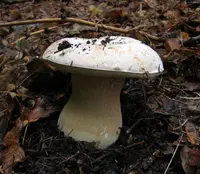
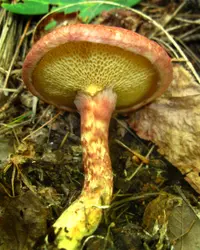
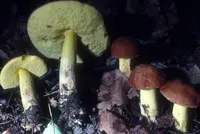
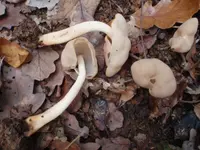
Hemileccinum subglabripes, commonly called the smoothish-stemmed bolete, is a fleshy wild mushroom rather than a leafy plant. It forms thick, pale yellow to olive caps with a smooth, often yellowish stem and a pore surface instead of gills.

This bolete typically appears in summer and fall in mixed or deciduous forests, especially with hardwoods in North America, forming mycorrhizal partnerships with tree roots. It is not a practical species for home cultivation, so learning how to care for Smoothish-stemmed bolete mainly means understanding and protecting its natural woodland habitat.

It favors moist, well-drained forest soils rich in organic matter and dappled light under trees, where it helps support healthy forest ecosystems.

Main Plant Requirements

Care Difficulty

Hard Care

Light Preference

Partial Shade

Water Requirements

Regular Water

Temperature Preference

Cool Climate

Hardiness Zone

Unknown

Soil Texture

Loamy, Sandy, Organic-rich

Soil pH

Acidic (5.5–6.5)

Soil Drainage

Moist but well-drained

Fertilization

Minimal (feed rarely)

Get Personalized Care Plan

Scan your plant to receive care tips personalized for your specific plant

Available on iOS and Android

How to Care for the Smoothish-stemmed bolete

This ectomycorrhizal fungus prefers woodland light conditions rather than full open sun.

  • Provide dappled or filtered light under deciduous trees, with roughly 2–4 hours of gentle morning sun and bright shade the rest of the day.
  • Avoid harsh midday and afternoon sun, which can dry the upper soil and leaf litter, reducing fruiting of Smoothish-stemmed bolete and stressing associated tree roots.
  • In summer, favor shadier sites; in spring and fall, slightly more open canopy is acceptable as long as the forest floor does not fully dry out.

This species depends on consistently moist but not waterlogged forest soil.

  • Aim for soil that stays evenly moist in the top 3–5 cm, with leaf litter that feels slightly damp when pressed but not soggy or slimy.
  • Use well-drained, humus-rich soil; avoid compacted or standing water areas, which encourage root rot in host trees and reduce fruiting of Hemileccinum subglabripes.
  • During dry spells, supplement natural rainfall so the upper soil does not dry completely, watching for cracking soil (too dry) or foul smell and algae growth (too wet).

This fungus fruits best in mild to warm temperate conditions typical of late spring to early fall.

  • Optimal fruiting usually occurs around 60–77°F (16–25°C), especially following warm days and cool nights with consistent soil moisture.
  • The mycelium in soil tolerates down to about 25–30°F (-4 to -1°C), but hard, prolonged freezes can reduce survival in exposed, shallow soils.
  • Sustained heat above 86°F (30°C), combined with dry soil, suppresses fruiting; provide shade, mulch, and moisture to buffer temperature swings through summer.

This ectomycorrhizal bolete occurs outdoors and does not require targeted humidity management in cultivation.

Hemileccinum subglabripes associates with tree roots and needs consistently moist, airy, organic-rich ground rather than standard potted mixes.

  • Use a loose, humus-rich, loamy substrate with plenty of leaf mold or well-rotted woodland compost to mimic forest soil.
  • Ensure steady moisture yet rapid drainage by mixing in coarse sand and fine bark, avoiding dense, peat-heavy or clayey substrates that hold water.
  • Aim for slightly acidic to neutral conditions around pH 5.0–7.0, similar to mixed hardwood or conifer forest soils where this species naturally fruits.
  • Maintain a crumbly, open structure by avoiding compaction from foot traffic, which reduces aeration and can limit mycelial spread.

This species is generally unsuitable for container growing because it relies on complex root and soil relationships in the ground.

This wild mycorrhizal fungus usually does not need fertilization when growing with its native host trees.

Pruning is not a relevant practice for Hemileccinum subglabripes, since it is a fleshy mushroom rather than a woody or leafy plant.

Transplanting focuses on maintaining the associated host tree and soil rather than moving the mushroom itself.

  • Avoid disturbing established sites; this bolete depends on fine root associations and often declines if soil is heavily moved or compacted.
  • If growing a host tree in a container, step up 1 pot size when roots circle the container or growth slows noticeably.
  • Transplant trees in early spring or early fall, keeping as much original soil around the root ball as possible to preserve fungal connections.
  • Water gently after transplanting and keep soil evenly moist, not waterlogged, to limit root and mycelium stress.

Propagation of this ectomycorrhizal mushroom is difficult and not typically controlled by home growers.

This species is generally cold hardy in its native forest habitats and needs no special winter care.

Care Tips

Spore-friendly raking

Lightly rake or disturb the leaf litter under host trees in late summer to expose small patches of soil, which helps released spores contact the ground and can slowly expand the fruiting area over several seasons.

Host root mapping

Mark and monitor the dripline of likely host trees (especially oaks and other hardwoods), then restrict digging, turf renovation, or heavy foot traffic in this band so the fine roots and fungal mycelium remain undisturbed.

Low-impact harvesting

Cut mushrooms at the base with a clean knife instead of pulling them out, then gently replace leaf litter so the underground mycelium and developing primordia are not torn or exposed.

Microhabitat moisture buffer

Create a 2–5 cm layer of loose hardwood leaf litter over the mycelium zone to buffer short dry spells and temperature swings, but keep the layer open-textured so air can still reach the soil surface.

Seasonal observation log

Keep a simple log of flush dates, rainfall, and temperatures when growing Smoothish-stemmed bolete, then use this record to predict likely fruiting windows and adjust site protection and irrigation timing in following years.

Common Pests and Diseases

Mycophagous slugs

This pest feeds on young fruiting bodies, often hollowing caps or chewing irregular holes along the margin and pore surface. Symptoms include slime trails on damaged mushrooms and rapid collapse of small buttons.

Solution

Hand-pick slugs in the evening or early morning and remove nearby debris, boards, or dense groundcover that provide shelter. In managed sites, use iron phosphate slug baits placed away from fruiting bodies and maintain moderate leaf litter rather than thick, wet layers to reduce hiding spots while still supporting growing Smoothish-stemmed bolete habitat.

Fungus gnat larvae

This pest tunnels through developing stems and caps, creating soft spots and internal galleries that can quickly lead to decay. Symptoms include distorted or collapsing fruiting bodies and visible small maggots inside cut tissue.

Solution

Remove and discard heavily infested mushrooms promptly to break the life cycle. In more controlled woodland beds, reduce excess moisture, avoid standing water in nearby organic debris, and use fine mesh covers during peak fruiting to limit adult gnats from laying eggs on young sporocarps.

Parasitic bolete mold

This disease appears as dense white to gray mycelial growth on the pores or cap, leading to water-soaked, misshapen fruiting bodies. Symptoms include rapid softening, color change, and premature decay of affected mushrooms.

Solution

Carefully remove and discard infected fruiting bodies and adjacent heavily colonized leaf litter to reduce inoculum. Improve air movement at ground level by thinning very dense herb or shrub layers and avoid excessive organic piles that stay constantly wet, which favors aggressive parasitic molds on Hemileccinum subglabripes fruiting bodies.

Nematode infestation

These microscopic worms invade mushroom tissue, causing spongy texture, internal browning, and uneven cap development. Symptoms include caps that look healthy at first but quickly become soft and patchy from the inside out.

Solution

Remove and dispose of affected mushrooms as soon as symptoms appear to limit nematode buildup. In semi-managed forest gardens, rotate where woody debris and mulch are placed, avoid long-term waterlogged patches, and encourage diverse soil fauna, which can help keep parasitic nematode populations in balance.

Interesting Facts

North American specialist

This bolete is native to eastern North America and is strongly associated with mixed hardwood and conifer forests, especially under oaks, birches, and pines where it forms mycorrhizal partnerships with tree roots.

Distinct smooth stipe

The species name subglabripes refers to its relatively smooth, often finely velvety stem, which tends to yellow with age and helps distinguish it from many rougher-stemmed boletes.

Non-bluing pore surface

Unlike many closely related boletes, its yellow pore surface and flesh typically do not bruise blue when handled, a characteristic often used by field mycologists to help identify it accurately.

FAQs about Smoothish-stemmed bolete

This species is generally regarded as edible when properly identified and cooked, with mild flavor. However, misidentification with toxic boletes is a real risk, so beginners should only consume specimens confirmed by an experienced local mycologist.

Grow Healthy Plants with Botan Care

Keep your plants happy and healthy with plant identification, disease detection, and easy care guidance.

Botan plant care app — identify plants on mobile

Explore More Plants